As an Amazon Associate, we earn from qualifying purchases. Some links on this site are affiliate links at no extra cost to you. Our recommendations are based on thorough research and editorial judgment.

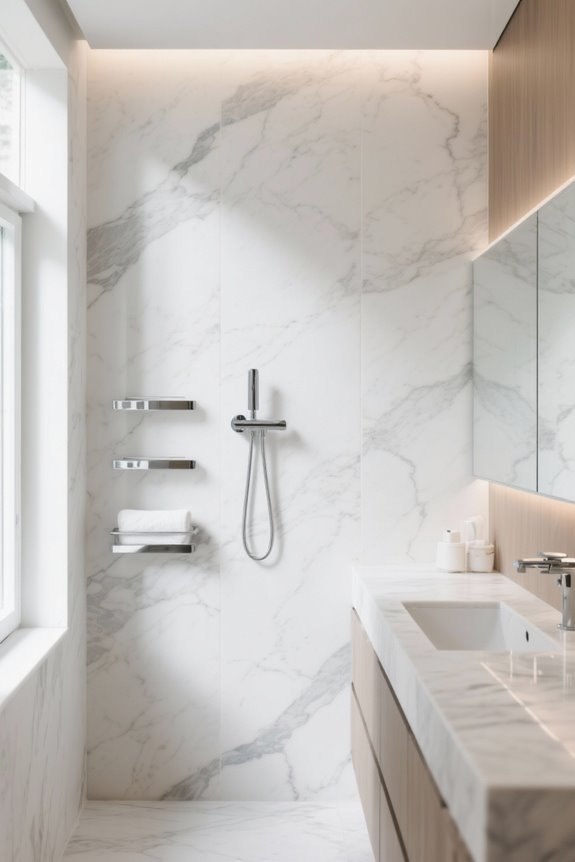
Designing Focal Walls in Small Bathrooms Without Overwhelm

Designing focal walls in small bathrooms involves careful selection of materials, colors, and patterns to create impactful visuals without overwhelming the space. Effective choices include light neutral palettes, which enhance brightness, and durable materials like acrylic or PVC, known for their moisture resistance. Utilizing bold tile patterns or vertical layouts can create depth and enhance the illusion of space. Attention to mirror placement further amplifies natural light and promotes a sense of openness, leading to aesthetically pleasing results. Explore more strategies for ideal design.
Key Takeaways
- Select an ideal accent wall that draws interest without overwhelming the space, focusing on areas behind the vanity or toilet.
- Use light neutral or cool tones for the main wall, reserving bold accents for a single focal wall to avoid clutter.
- Incorporate textured finishes and contrasting grout to add visual interest while maintaining an organized aesthetic in a small area.
- Opt for creative tile patterns in moderation, such as horizontal or vertical placements, to enhance height or width without overwhelming the design.
- Utilize mirrors strategically to amplify light and space perception, balancing visual elements without creating overwhelming clutter.
Choosing the Right Wall for an Accent
You may be interested
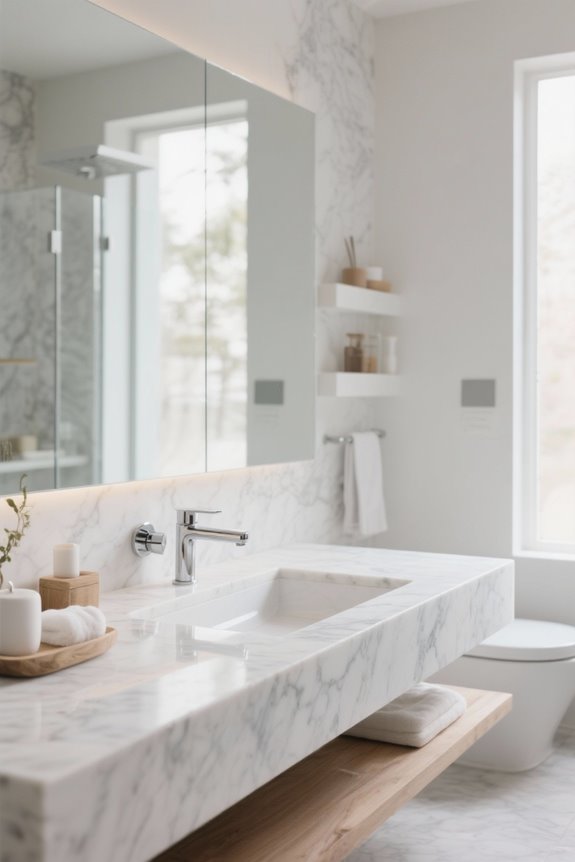
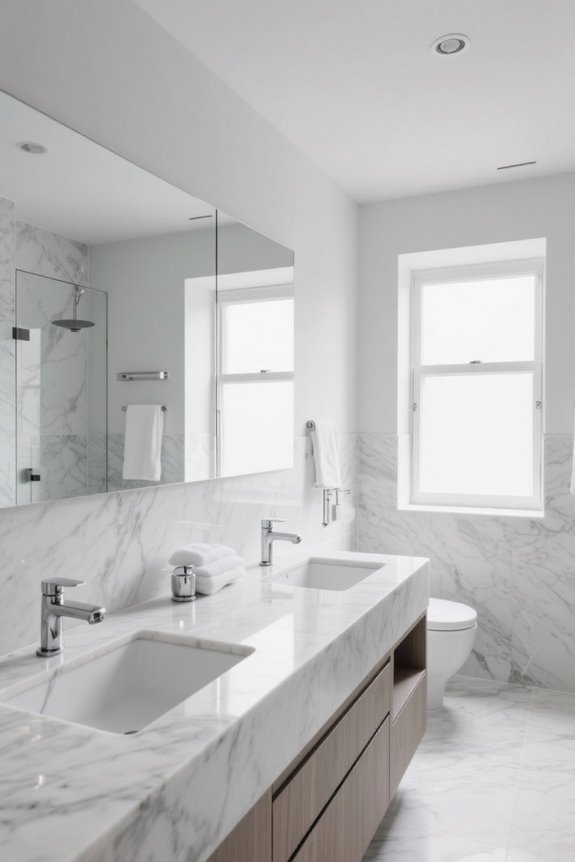
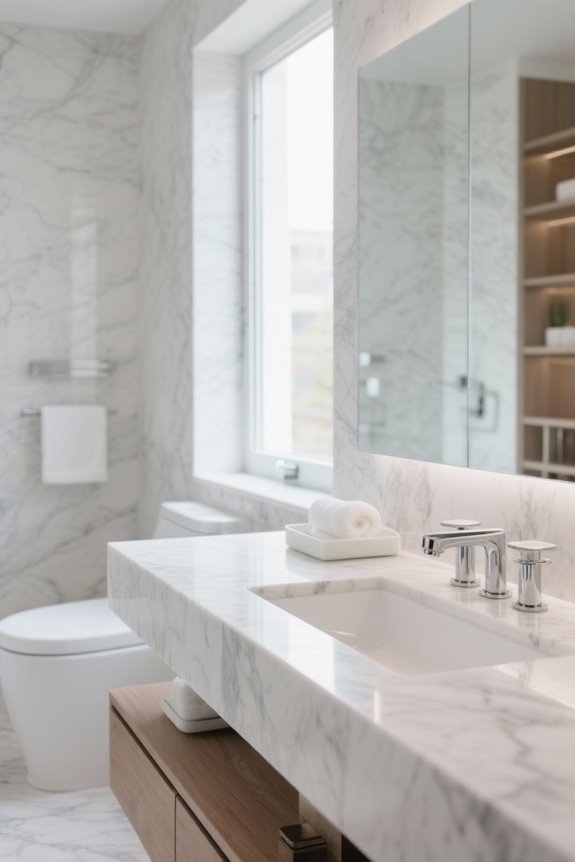
When selecting a wall for an accent in a small bathroom, one might wonder which surface will provide both aesthetic appeal and functional durability. The ideal wall placement should not only draw visual interest but also withstand moisture; consequently, materials like acrylic, PVC, and stone resin are recommended for their water resistance. Accent definition often involves selecting a wall behind the vanity or toilet to maximize impact without overwhelming the space. Additionally, durable options such as natural stones like granite or marble offer long-lasting aesthetics, while lighter or glossy finishes can reflect light, enhancing spatial perception. To ensure a mold-resistant environment, it’s crucial to use high-quality caulks that can withstand high-moisture conditions. Ultimately, choosing the right material guarantees maintenance ease and aligns with the overall design theme, offering both practical benefits and visual delight.
Recommended Products

Slightly wider for added comfort

Slightly wider for added comfort

Made from solid Vikrell material for strength, durability, and lasting beauty
Effective Color Selection for Small Bathrooms
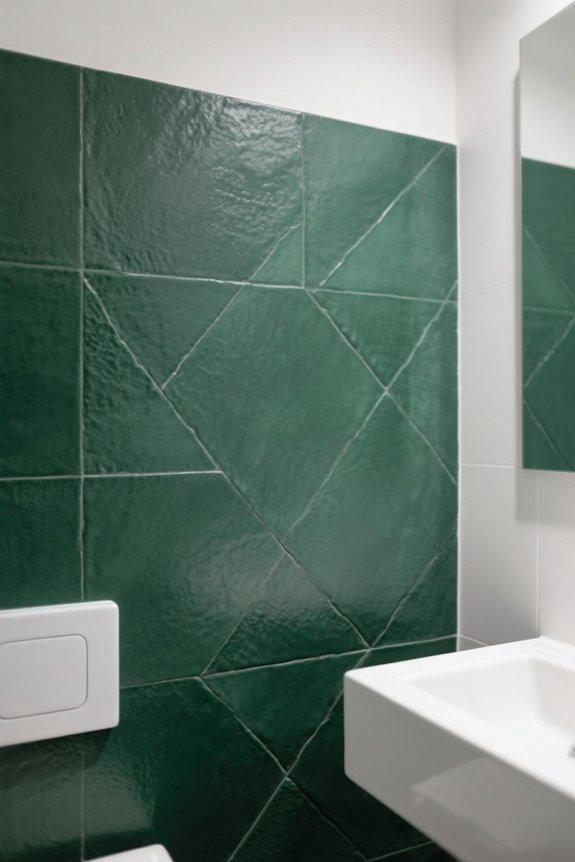
Selecting the right colors for small bathrooms considerably influences the space’s overall appearance, ambiance, and perceived dimensions. Light neutral palettes, including whites and soft greys, are favored in 89% of positive mentions, as they enhance brightness and create a timeless design. For a calming effect, cool tones like blues and greens, which are used in 55% of renovations, evoke a spa-like atmosphere while making spaces feel airy. Pastels, such as light purples and peaches, introduce subtle color interest without compromising light reflection, achieving a gentle ambiance. Meanwhile, bold accents in darker hues provide striking contrast when used strategically on specific walls or accessories. Incorporating monochromatic palettes can offer a sleek design that enhances modern aesthetics. Overall, effective color selection harnesses color psychology while promoting harmony in small bathrooms.
Material Options for Durable Accent Walls
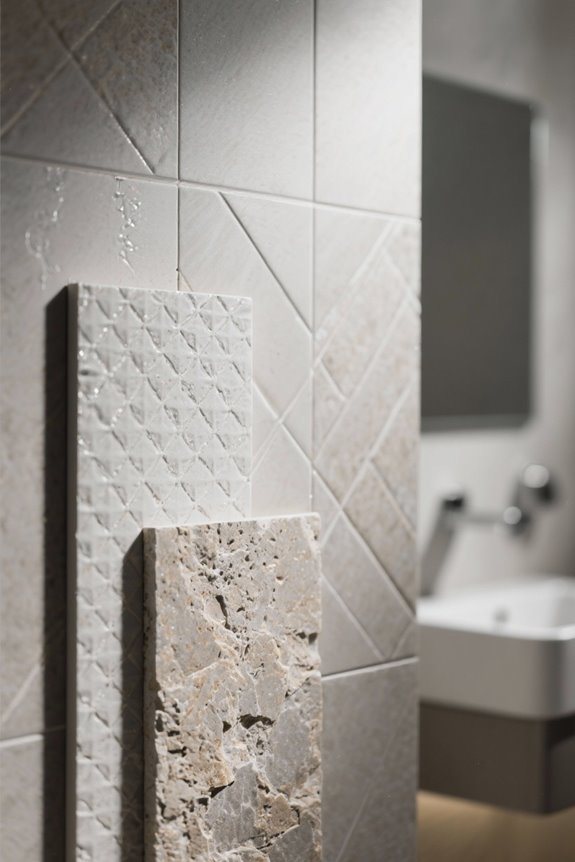
In small bathrooms, where space often comes at a premium, choosing the right materials for accent walls can greatly enhance both aesthetics and functionality. Acrylic advantages include seamless, non-porous surfaces that resist mold, while fiberglass benefits offer cost-effective, smooth finishes for modern styles. PVC features lightweight, moisture-resistant panels ideal for DIY projects. WPC durability combines recycled materials, providing superior water resistance and minimal maintenance. For those seeking luxury, stone aesthetics contribute depth, though they require additional upkeep, and stone resin panels offer a lighter, waterproof alternative. Wood warmth enhances natural beauty, although proper sealing is essential to prevent moisture-related damage. Composite maintenance is easier with treated wood, ensuring longevity without compromising style. Investing in energy efficiency ratings for household appliances like water heaters can further optimize small spaces by reducing utility costs and enhancing performance.
Recommended Products

✅ Premium Composite Material: Made from fiber-reinforced composite using compression molding. This non-porous solid surface is stronger and lighter than standard materials, and resists scratches, stains, and impacts.

【Application Range】Shower door width adjustment range: 67 to 72 3/4 inches; Walk-in width: 28.5 to 34.5 inches; Height: 71 inches; New anti-collision wall-mounted bracket. Minimalist design enhances safety, while spacious dimensions deliver an enjoyable shower experience.

Made of lightweight PVC to provide beautiful crisp design and stunning finish
Creative Tile Patterns and Layout Ideas
Creative tile patterns and layout ideas can dramatically transform small bathrooms, offering both functionality and aesthetic appeal. Utilizing bold tile patterns, such as triangles or diamonds, adds strong visual interest while enhancing depth on accent walls. Geometric shapes, including hexagons and stripes, can further expand the perceived space by introducing dimensionality. For ideal effect, contrasting grout colors, like dark grout with light tiles, emphasize these shapes, enhancing texture. Vertical tile placement draws attention upwards, making ceilings feel higher, while horizontal layouts visually widen narrow spaces. Diagonal arrangements, like diagonal picket tiles, create dynamic movement. Staggered subway tile patterns contribute structure without cluttering, ensuring a sophisticated yet inviting focal wall. These options provide diverse avenues for individual expression. Additionally, incorporating rust-resistant materials like high-grade stainless steel into bathroom designs ensures durability and longevity, particularly in humid environments.
Recommended Products

Luxury Marble Look: Designed to replicate Nero Marquina marble, with deep black tones and bold white veining for a high-end, dramatic appearance.

COMPLETE KIT: Kits include three 84-in wall panels, three 12-in extension panels, two color coordinated inside corner trim pieces, and pencil seam trim

High-Quality Material: The Grey rug made of polyester material which give you a soft and comfortable touch and very soft to walk on and touch. It feels like walking on soft fur and makes your feet happy. The kids love rolling around on it and playing on it. Pets’ loves lying on this rug to sleep.
Incorporating Mirrors for Space Enhancement
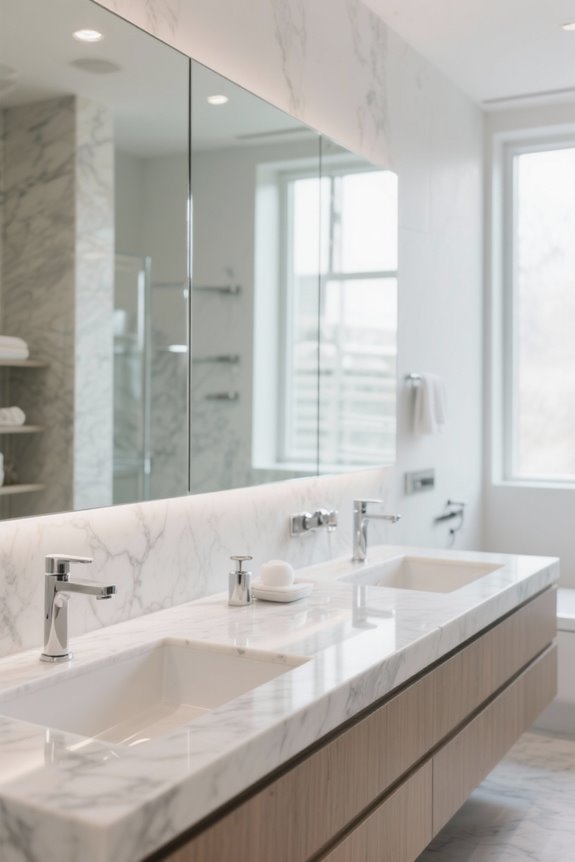
When small bathrooms present space constraints, strategically incorporating mirrors becomes essential in maximizing both functionality and aesthetic appeal. Effective mirror placement involves positioning large frameless mirrors across from windows to amplify natural light and utilizing mirrors opposite textured walls to create layered visuals. Choosing the right mirror styles, such as oval or round designs, enhances vertical space perception and contributes to an airy ambiance. Ideally, mirrors should be proportionate, narrower than the vanity by one to two inches, ensuring a balanced look. For added functionality, mirrors with integrated storage maximize space utilization, while unique shapes can serve as focal points. Each mirror’s placement should align with the overall bathroom design, enhancing functionality without overwhelming the room’s ambiance. For optimal results, consider mirrors with adjustable lighting to enhance visibility and ambiance in the space.
Strategic Lighting to Highlight Focal Walls
Effective lighting can profoundly enhance the visual appeal and functionality of focal walls in small bathrooms, creating both depth and atmosphere. Utilizing recessed spotlights or adjustable track lighting directed at a 30-degree angle can create dramatic effects, while LED strip lights installed along the wall edges or behind the focal wall provide a soft, ambient glow. Wall sconces positioned strategically can emphasize textures and colors, contributing to a cohesive look. Confirming fixtures are mounted at eye level, approximately 60–65 inches from the floor and spaced evenly, avoids glare and harsh shadows. Selecting bulbs in the color temperature range of 2700K–3000K enhances warmth, while high CRI bulbs ensure accurate color representation, making the space inviting and visually appealing. For optimal durability in humid environments, IP44 waterproof rating fixtures are recommended when selecting lighting options for bathrooms.
Recommended Products

Premium Materials: Made from anodized aluminum, the WELLFOR 60"x36" LED medicine cabinet features a waterproof, copper-free silver mirror and a tempered glass back for safety and style.

💡【Edge-Lit Innovation Full Mirror Premium Glow】Unlike central-strip designs that reduce usable mirror area, our outer-edge sandblasted frosted LED strip maximizes mirror space for clear, unobstructed grooming. More decorative than lamp-shaded styles, it maintains elegant aesthetics when lit or off. To address the common dimness issue in sandblasted strips, we widened it to 1 inch—delivering both premium aesthetics and bright, cozy bathroom lighting in one.

Brighter & Energy-Saving – Equipped with a high-density, UL-listed waterproof LED strip (120 LEDs/meter, CRI>90), combined with high light transmittance (>95%) acrylic lamp cover, it delivers a lighting experience that achieves both energy efficiency and brightness with lower wattage.
Balancing Boldness With Cohesion
To achieve a harmonious design in small bathrooms, balancing bold design elements with cohesive features is vital for overall aesthetic success. Utilizing a contrast strategy, designers can select focal wall colors that accentuate surrounding walls without creating dissonance; colors should offer a balance between starkness and subtlety. High-contrast grout can enhance tile patterns, introducing boldness while maintaining unity, particularly when paired with low-contrast options for seamlessness. Incorporating mirrors with shatterproof glass can provide both safety and reflection, while enhancing the perception of space in small bathrooms. Incorporating texture balance through complementary materials, such as matte tiles against glossy wood, guarantees visual interest without overload. Limiting materials to two or three distinct types preserves cohesion, while medium-scale patterns, like herringbone, promote dynamic movement that enhances rather than overwhelms a small space, fostering an inviting atmosphere.
Avoiding Visual Clutter in Design
Visual clutter can considerably detract from the serene ambiance that small bathrooms often aim to achieve, making it essential for homeowners and designers to implement strategic solutions. Utilizing tiered trays and wall-mounted shelves maximizes vertical space, promoting organized spaces and keeping surfaces clear. Labeled bins help categorize items for easy access, while multifunctional furniture such as mirrored cabinets conceals necessities without sacrificing style. Maintaining a minimalist decor approach involves limiting visible items on countertops to essentials, such as soap or lotion, to preserve visual calmness. Regular decluttering and thoughtful selection of functional decor minimize distractions, creating a more inviting environment. By embracing simple color schemes and patterns, bathrooms can achieve a cohesive, tranquil aesthetic that enhances overall comfort. Consider using shower organizers with rustproof stainless steel materials to ensure durability and maintain a sleek appearance over time.
Popular Accent Wall Trends in Bathrooms
While maintaining an organized and minimalist design is foundational in small bathrooms, the incorporation of accent walls has emerged as a popular method to infuse personality and style into these compact spaces. Remarkable accent wall trends include textured finishes, which aim to evoke natural surfaces like stone or wood, enhancing visual interest. Additionally, bold color drenching techniques, where a single hue saturates walls, ceilings, and vanities create impactful focal points. Earth tones, such as sandy taupes and warm grays, promote a calming atmosphere, while moody wallpaper featuring vintage-inspired patterns adds depth. These contemporary styles not only enhance aesthetics but also encourage relaxation, making accent walls a versatile design choice in small bathroom settings. Incorporating rustic plant decor like faux lavender bushes in galvanized metal pots can further enhance the cozy and inviting atmosphere of a small bathroom.
Recommended Products

Natural split face finish with a low sheen and random variation in tone

Size: 6" W x 24" L x 0.75"-1.5" thickness; 100 pieces cover 100 sq. ft.
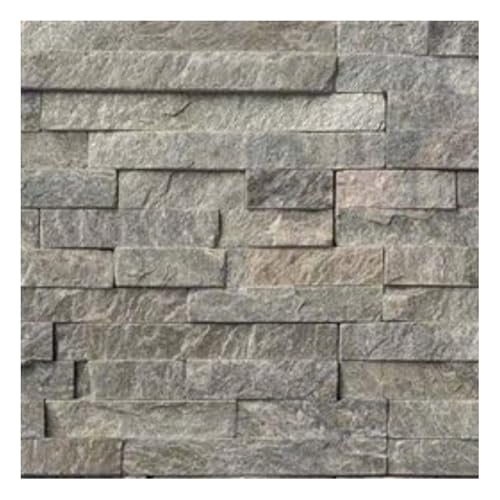
Natural Sage Green Stone – Features authentic split-face sage green stone with subtle earthy undertones, creating a warm, organic look for any space.
Tips for Mixing Textures and Patterns
Incorporating a variety of textures and patterns can greatly elevate the design of small bathrooms, creating a rich and visually appealing environment. Texture combinations, such as natural stone with smooth glass tiles and rustic wood panels, add layered interest. Smaller or medium-scale patterns, like geometric shapes or subtle motifs, guarantee pattern harmony without overwhelming the space. Position bold patterns on a single accent wall to draw attention effectively, while maintaining cohesive color coordination among materials. Utilizing contrasting grout can highlight intricate tile patterns, enhancing their visual impact. For ideal results, limit material mixing to three types, ensuring they complement each other in both color and finish, avoiding chaotic appearances that can detract from the design’s overall balance. Additionally, selecting shower wall panel kits with non-porous materials can aid in easy cleaning and maintenance, contributing to a durable and aesthetically pleasing bathroom upgrade.
Maintenance and Care for Accent Walls
Proper maintenance and care of accent walls is essential for ensuring their longevity and visual appeal, as regular upkeep prevents common issues such as discoloration, mildew growth, and material degradation. Cleaning frequency plays a vital role; daily wiping of tiles with a microfiber cloth minimizes soap scum, while weekly cleaning with a mild cleaner removes grime. Grout care is equally important, necessitating weekly scrubbing of grout lines with a soft brush to prevent mildew and sealant application every six months to one year for protection. For painted surfaces, a damp cloth with mild detergent is sufficient, while natural stone requires pH-neutral cleaners. Regular inspection for damage facilitates prompt repairs, helping to maintain the overall integrity and aesthetic of accent walls.
Frequently Asked Questions
What Is the Best Way to Clean Bathroom Accent Walls?
Like a gentle breeze sweeping away dust, the best way to clean bathroom accent walls combines soft sponges, natural solutions, and diligent maintenance tips, ensuring surfaces shine while preserving their integrity through careful cleaning techniques and meticulous care.
How Can I Incorporate My Personal Style Into an Accent Wall?
To incorporate personal style into an accent wall, one can use personalized patterns and unique textures, such as bold wallpapers, textured tiles, or wood panels, ensuring the design reflects individuality while maintaining cohesive aesthetics in the space.
Can I Use Temporary Options for an Accent Wall?
When it comes to accent walls, one can indeed explore temporary solutions. Removable wallpaper and other options provide flexibility, enabling design changes without long-term commitments, catering to evolving tastes and maintaining bathroom aesthetics effortlessly.
Are There Specific Paints Recommended for Humidity-Prone Areas?
Humidity-resistant paints such as semi-gloss and satin finishes are highly recommended for moisture-prone areas. Additionally, moisture-proof coatings specifically designed for bathrooms can prevent mold growth, ensuring durability and longevity even in steamy environments.
How Do I Choose the Right Wall Art for an Accent Wall?
Choosing the right wall art for an accent wall involves coordinating color schemes with existing decor, selecting art styles that reflect personal taste, and ensuring the artwork complements the overall bathroom design without overwhelming the space.