As an Amazon Associate, we earn from qualifying purchases. Some links on this site are affiliate links at no extra cost to you. Our recommendations are based on thorough research and editorial judgment.

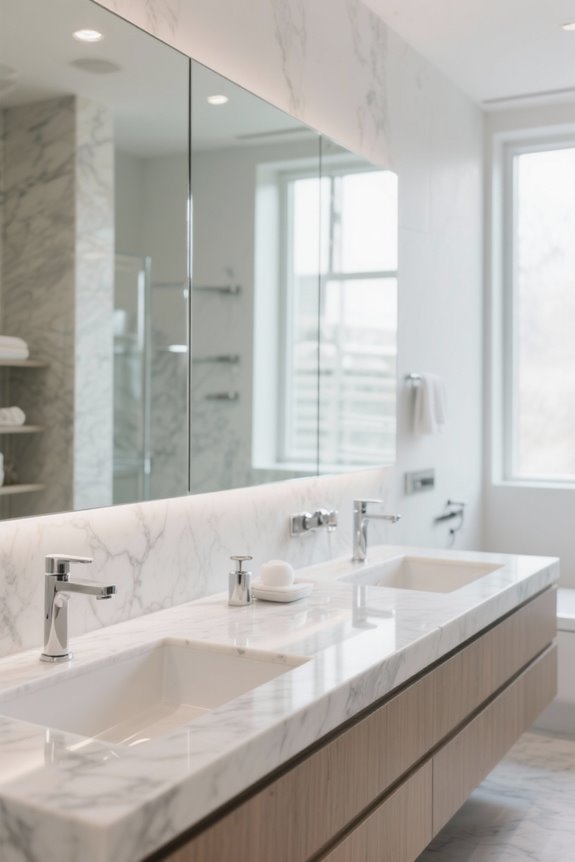
How to Use Mirrors as Decor to Expand Visual Space

Mirrors are essential for expanding visual space in rooms, as they reflect light and create illusions of depth. Large mirrors, ideally over one meter in living rooms or 160-180 cm in bedrooms, should be strategically placed opposite windows to maximize brightness. Choosing the right shape, such as round for softness or rectangular for architectural lines, enhances aesthetics. Maintaining consistency in frame styles and avoiding overcrowding will prevent disjointed visuals. Learning how to creatively position mirrors can further enhance your interior design.
Key Takeaways
- Position large mirrors opposite windows to reflect light, creating a brighter and more spacious environment.
- Use tall mirrors in narrow hallways to enhance depth perception and make spaces feel larger.
- Consider rounded or rectangular mirror shapes based on the desired aesthetic and architectural lines of the room.
- Ensure mirrors reflect visually appealing elements to maintain an engaging atmosphere and avoid disjointed looks.
- Avoid overcrowding mirrors or placing them opposite empty walls to prevent visual chaos and maintain a cohesive design.
The Importance of Mirrors for Room Enlargement
You may be interested
In interior design, mirrors serve a critical function by enhancing the perceived size of a room, making them a valuable addition for anyone looking to optimize space. By strategically placing mirrors, especially large mirrors over a meter long in living rooms or 160-180 cm in bedrooms, one can reflect natural light, effectively illuminating small spaces. This technique not only adds light but also amplifies the sense of space, creating an inviting atmosphere. When positioned opposite windows, mirrors increase brightness, reducing shadows and eliminating feelings of confinement. Additionally, they create an impression of depth and visual interest, particularly in narrow corridors or compact apartments. Consequently, mirrors are indispensable tools for interior design, transforming small areas into open, airy environments. For those interested in detailed grooming tasks, wall-mounted magnifying mirrors offer both functionality and space-saving designs, further enhancing the versatility of mirrors in various settings.
Choosing the Right Mirror for Your Space
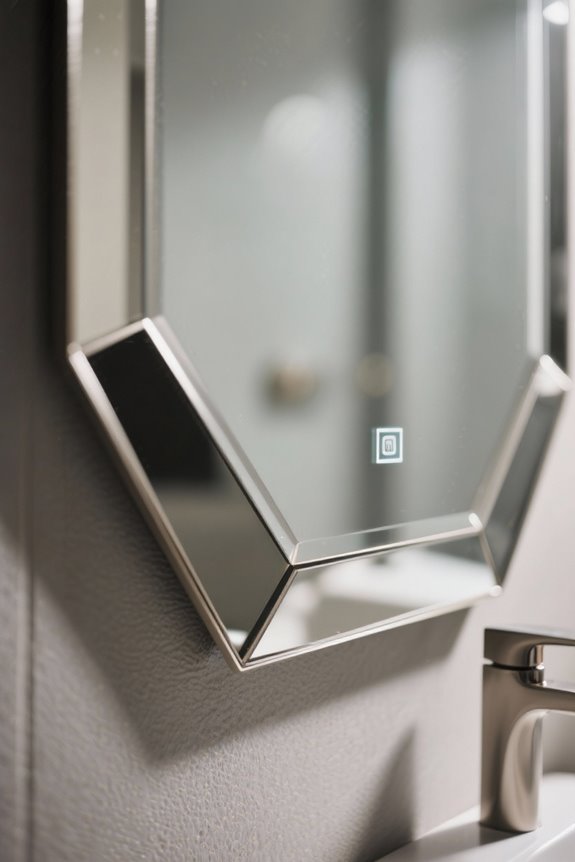
When considering how to choose the right mirror for a space, understanding the various styles, sizes, and materials can greatly influence both functionality and aesthetic appeal. Choosing a mirror involves evaluating its dimensions; for example, large mirrors over 90 cm in hallways, and 160-180 cm in bedrooms effectively maximize space. Round mirrors offer a softer appeal, while rectangular mirrors emphasize architectural lines. Additionally, framed mirrors can enhance the overall look, with options ranging from natural wood for warmth to sleek black metal for a contemporary vibe. Organic-shaped mirrors introduce dynamism, adding depth to a room. Ultimately, selecting the appropriate mirror shape and frame, while ensuring it reflects light around the space, helps unify design elements and amplify natural illumination in any area. High-quality explosion-proof glass is a crucial consideration for safety, especially in bathroom settings where shattering risks need to be minimized.
Strategic Placement of Mirrors to Enhance Light
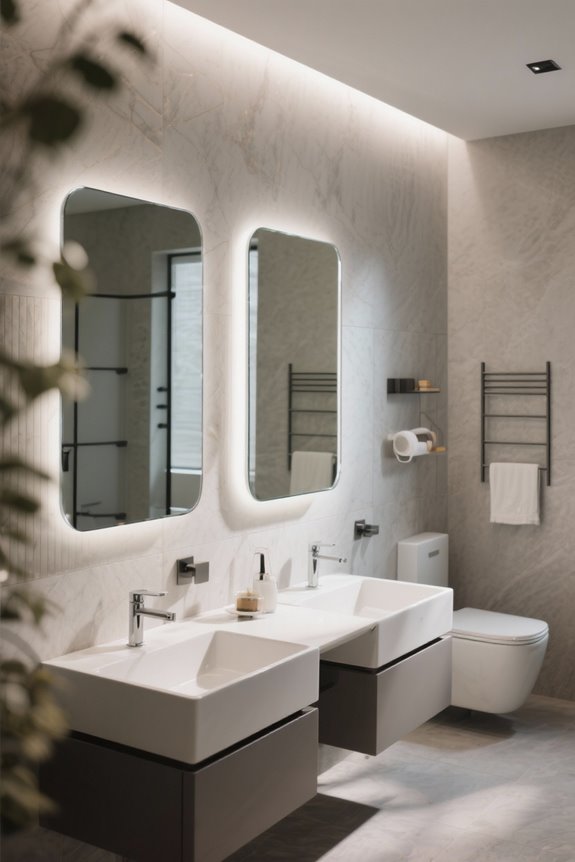
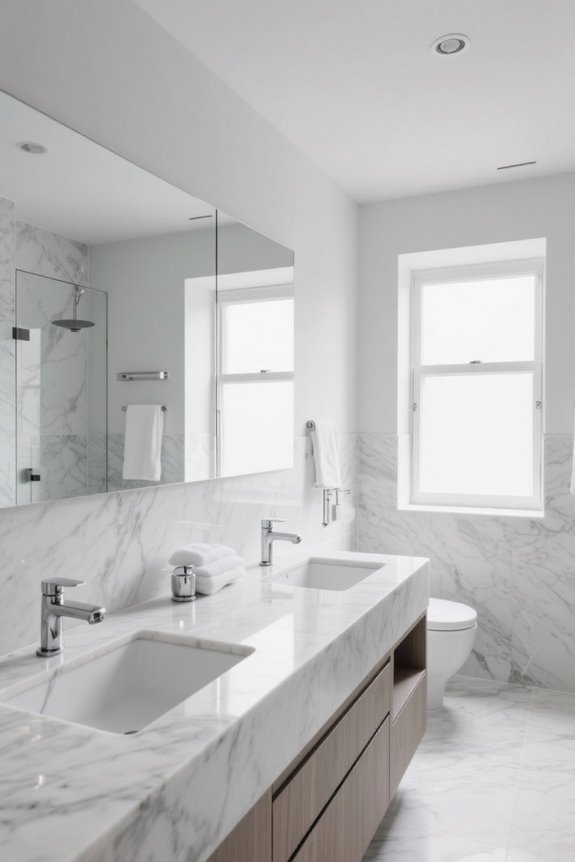
Strategic placement of mirrors can significantly elevate the light quality in a room, transforming the overall ambiance and making spaces feel larger and more inviting. To maximize the effect, position mirrors directly opposite windows, allowing them to reflect natural light throughout the space. Experimenting with the angle of mirrors can enhance light distribution, increasing luminosity across different areas. Larger mirrors are particularly effective in darker corners, reducing shadows while adding visual interest. Additionally, installing mirrors behind lamps creates a soft glow, further enhancing the area’s ambient lighting. It is crucial to guarantee that mirrors reflect aesthetically pleasing elements or light sources instead of empty walls, maintaining an engaging and vibrant environment while effectively utilizing available light. A 3-way shower diverter can also enhance a bathroom’s functionality, adding versatility and improving the user experience.
Common Mistakes to Avoid With Mirrors
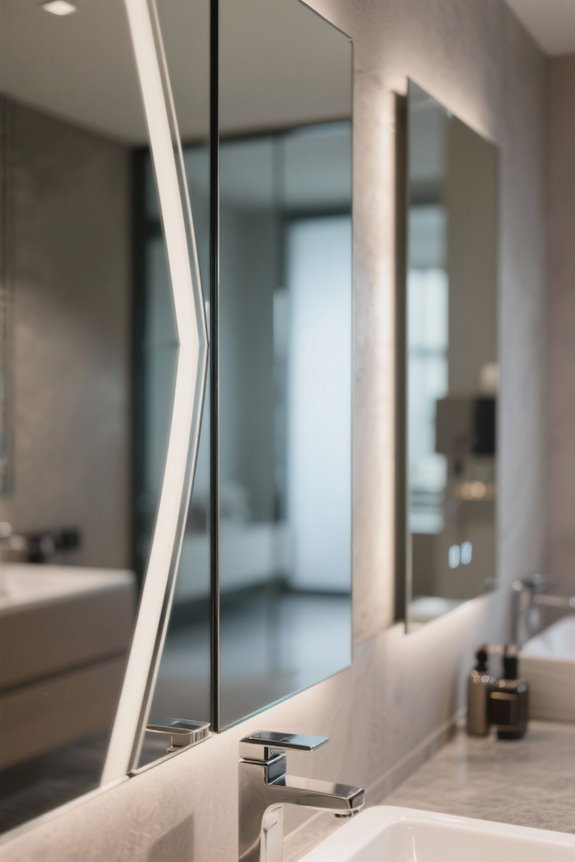
How can the effective use of mirrors be compromised? One common mistake is placing a mirror opposite an empty wall, which can create a disjointed aesthetic that detracts from the room’s brightness and expansiveness. Additionally, overcrowding a room with too many mirrors can lead to visual chaos, overshadowing the intended feeling of space. Ensuring that the size of mirrors is appropriate for the space is essential; a small mirror may lack impact while an oversized one could overwhelm a modest area. Consistency in frame styles is important, as varied designs can disrupt the room’s flow. Finally, careful positioning is critical; poor placement can obstruct light and hinder mirrors’ ability to enhance the environment effectively, negating their design potential. Incorporating adjustable water pressure features in bathroom fixtures like handheld bidet sprayers can further enhance the overall functionality and comfort of the space.
Creative Ways to Incorporate Mirrors in Your Decor
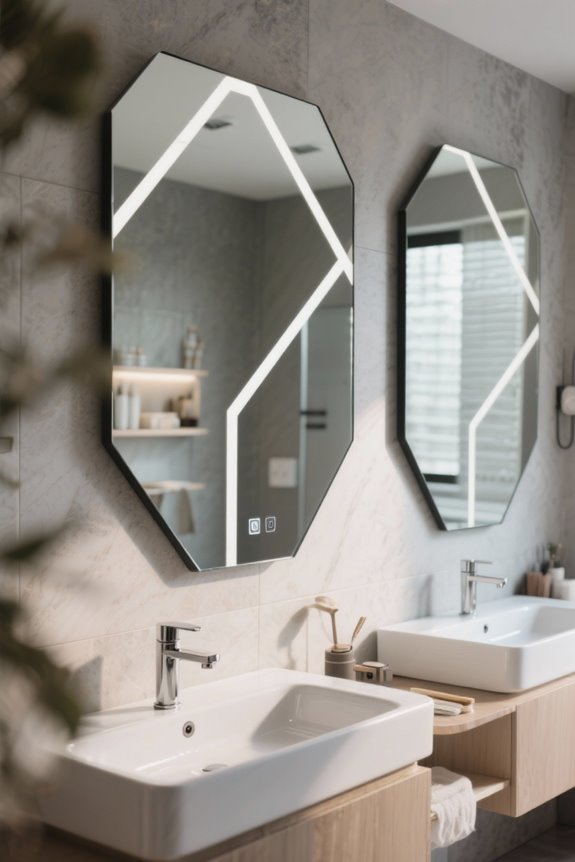
Incorporating mirrors into home decor can transform spaces dramatically, as their reflective properties not only enhance brightness but also create the illusion of larger areas. To effectively use mirrors, position them opposite windows to reflect natural light, thereby expanding visual space. Tall, large wall mirrors in narrow hallways contribute a sense of depth, making cramped areas feel more open. A mirrored backsplash in kitchens adds a modern aesthetic while reflecting light to visually lengthen the room. Free-standing mirrors, propped against walls, provide flexibility and add visual interest without permanent fixtures. Finally, unique decorative elements such as mirrors with distinctive shapes or elegant frames can serve as a focal point, enriching overall design and enhancing modern interiors with a touch of elegance. Consider using adjustable lighting features in bathroom mirrors to further enhance ambiance and functionality, creating a more inviting and versatile space.
Frequently Asked Questions
What Sizes of Mirrors Work Best in Small Rooms?
In small rooms, small round mirrors and tall rectangular options optimize space. Oversized statement mirrors, mirrored furniture, or a cluster arrangement of framed mirrors enhance depth. Wall-mounted and corner mirrors, along with multiple or antique mirrors, also work effectively.
Can Mirrors Create Negative Space in a Room?
Mirrors can indeed create negative space, serving as a canvas for light enhancement and wall reflections. Thoughtful placement fosters visual depth, balances furniture, guides room flow, and enhances focal points, resulting in an intriguing aesthetic impact.
How Do I Clean Mirrors Without Streaks?
To clean mirrors without streaks, one can utilize mirror cleaning techniques like a vinegar-water ratio, DIY mirror cleaner, microfiber cloth benefits, or commercial glass cleaners. Regular cleaning frequency and avoiding sunlight can prevent streaks and guarantee frame care.
Are There Specific Mirror Styles for Modern Decor?
As the saying goes, “Beauty is in the eye of the beholder.” For modern decor, options include oversized designs, round mirrors, geometric shapes, and wall-mounted styles, alongside mirrored furniture and minimalist decorative accents that enhance aesthetics.
Do Mirrors Impact Room Acoustics or Sound?
Mirrors greatly impact room acoustics by influencing sound reflections. Depending on their placement, reflective surfaces can enhance or diminish noise control, affecting spatial acoustics and overall room ambiance, thereby playing an essential role in interior design.