As an Amazon Associate, we earn from qualifying purchases. Some links on this site are affiliate links at no extra cost to you. Our recommendations are based on thorough research and editorial judgment.

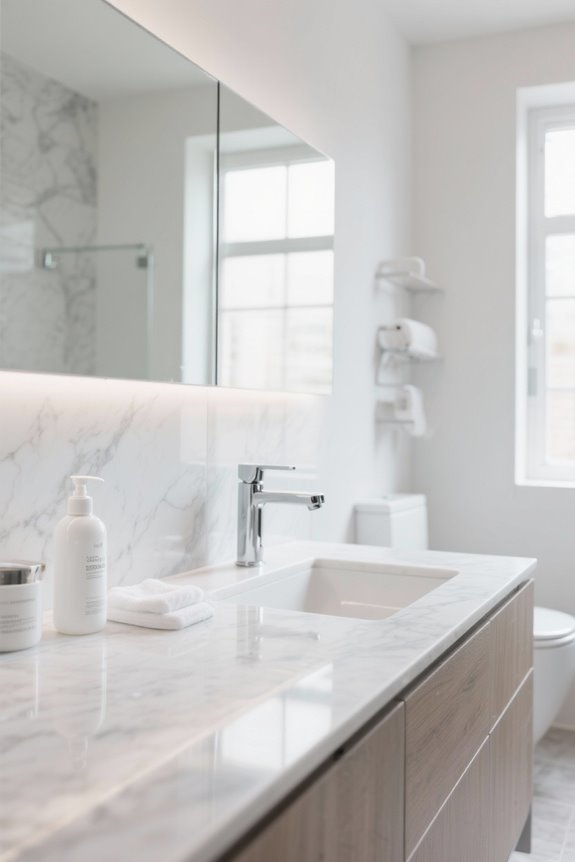
Avoiding Damage to Porcelain With Common Cleaners

To avoid damage to porcelain tiles when cleaning, it is essential to use non-abrasive, pH-balanced solutions, as harsh chemicals can leave water spots and residues. Mild soap mixed with warm water or diluted white vinegar are recommended. Avoid using wax or oil-based cleaners which create sticky residues that attract dirt and can lead to slips. Abrasive sponges may scratch surfaces, while aggressive cleaners can discolor tiles. Understanding proper care will enhance longevity and beauty, enhancing your space’s overall appeal.
Key Takeaways
- Use mild soap and warm water for routine cleaning to prevent damage to porcelain surfaces.
- Avoid strong acids, bleach, and abrasive cleaners that can lead to discoloration and scratches.
- Don’t use wax or oil-based cleaners as they leave residues that attract dirt and create slippery surfaces.
- Stick to pH-neutral cleaning products to maintain the protective glaze and aesthetic appeal of tiles.
- Regularly check for chips or cracks, which may indicate the need for professional repair to avoid further damage.
Importance of Correct Cleaning of Tiles
You may be interested
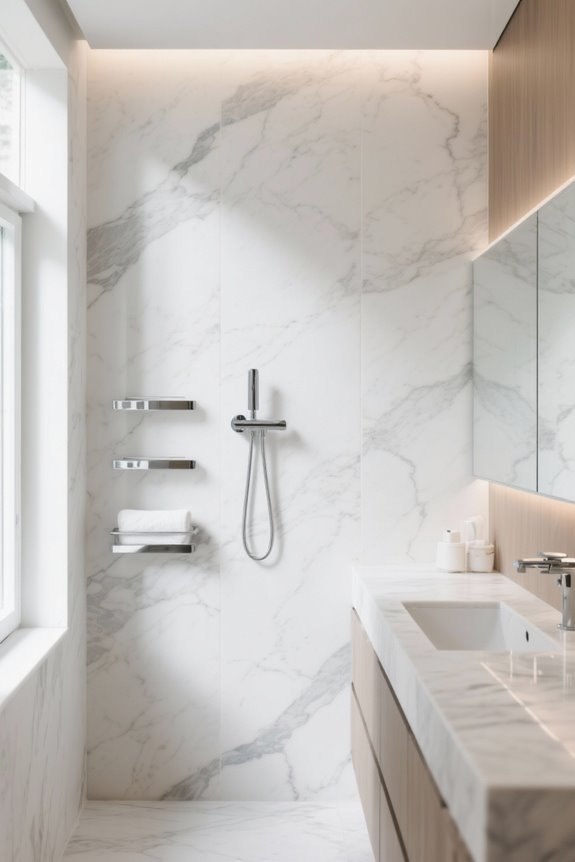
Correct cleaning of porcelain tiles is critical for maintaining their aesthetic appeal and structural integrity, ensuring they withstand daily wear and tear over time. Routine cleaning of porcelain surfaces involves using non-abrasive, pH-balanced solutions that safeguard the finish by preventing stains and dullness. To avoid long-term damage, it is essential to employ gentle cleaning methods, such as using soft cloths and mops that effectively lift dirt without compromising the tile’s surface. Harsh chemicals and damaging residues can lead to water spots and a film that detracts from the tiles’ appearance. By adhering to effective cleaning practices and offering proper care, owners can considerably extend the lifespan and beauty of their porcelain tiles, ensuring they remain an asset within any space. For optimal bathroom organization, consider integrating adjustable shelving options to maximize storage while preserving the aesthetic appeal of your space.
Avoiding Wax and Oil Cleaners
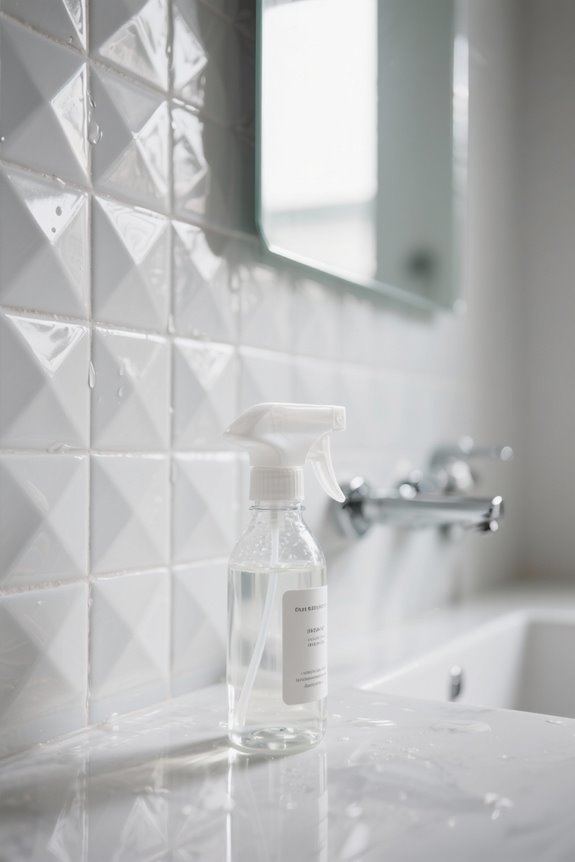
Though many homeowners may be tempted to use wax- and oil-based cleaners for their porcelain tiles, understanding the potential consequences of such products is essential for preserving the tiles’ quality. These cleaning products can leave a sticky residue, attracting dirt, and leading to surfaces looking dirtier despite routine care. Additionally, this residue can create a dangerously slippery surface, especially in high-traffic areas like kitchens and bathrooms. Regular use of these cleaners risks damaging the tile surface and its protective glaze, necessitating a challenging removal process. To maintain clean porcelain effectively, homeowners should avoid these hazardous options altogether. Instead, using residue-free cleaning products allows tiles to remain aesthetically pleasing without the threat of long-term damage or dullness. For bathroom decor, consider adding vibrant colors with metal signs to create an inviting ambiance.
Best Cleaning Products for Porcelain
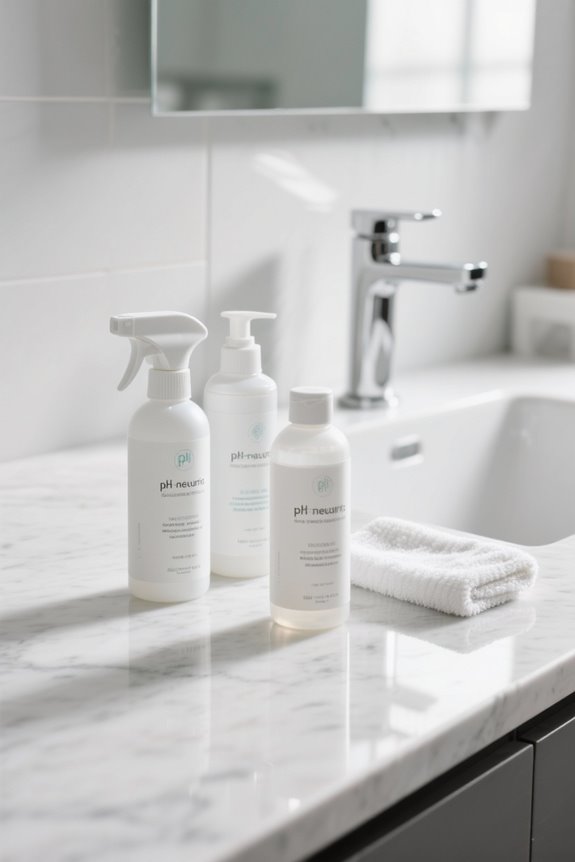
After recognizing the potential damages caused by wax- and oil-based cleaners, homeowners seeking to maintain their porcelain surfaces can benefit from using appropriate cleaning products specifically designed for this material. Mild soap mixed with warm water is ideal for regular cleaning, as it effectively cleans porcelain surfaces without damaging them. For mineral deposits on porcelain tiles, a diluted solution of white vinegar can be a good idea, keeping the dilution strong enough to be effective yet gentle. Additionally, a baking soda paste serves as a gentle, effective solution for tough stains. Utilizing neutral pH cleaners can help maintain the surface coating, ensuring the longevity of porcelain’s shine. Always finish cleaning thoroughly with clean water using a soft cloth for best care. For high-moisture areas, consider using mold-resistant bathroom caulks like GE Advanced Silicone Caulk, which provide robust waterproof protection and help prevent mold growth.
Common Mistakes in Cleaning Porcelain Stoneware
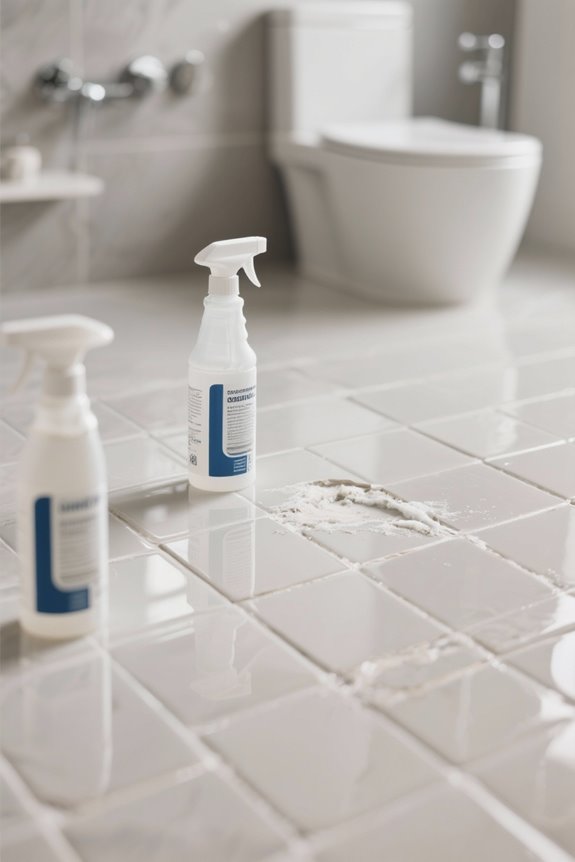
Many homeowners inadvertently make critical mistakes while cleaning porcelain stoneware, undermining its integrity and appearance. One significant mistake is using aggressive cleaners containing strong acids or bleach, which can lead to discoloration and harm grout lines. Additionally, employing abrasive sponges or metal scouring pads poses another risk, as these can scratch the surface and create dull spots. Wax and oily products are also detrimental, forming a film that attracts more dirt. Care should be taken to avoid colored cleaning agents on lighter tiles, as they can stain over time. Instead, using warm water and pH-neutral cleaners, along with gentle methods, helps thoroughly to remove dirt without risking damage, extending the lifespan of the porcelain stoneware. For areas prone to water exposure, using waterproof protection products can help prevent damage and maintain a clean, dry surface.
Signs You Need Professional Porcelain Repair or Refinishing
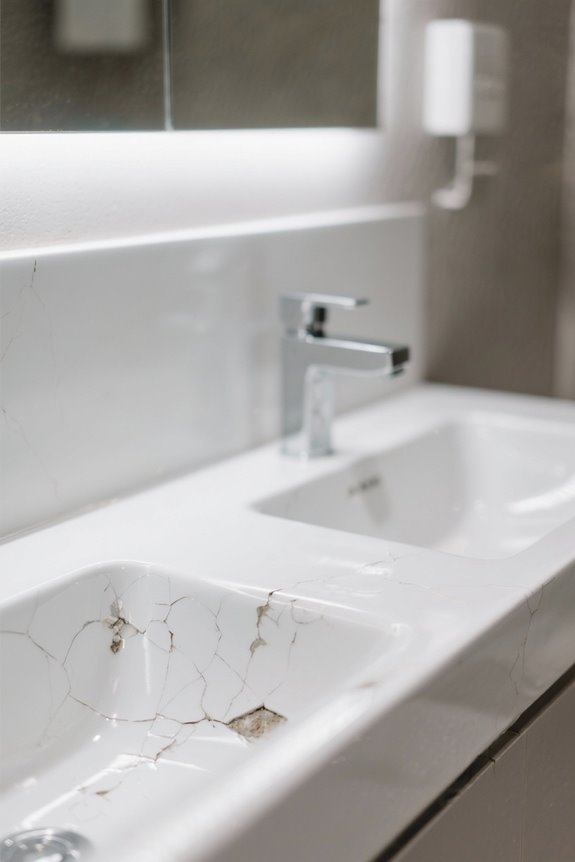
Porcelain items, while renowned for their durability and aesthetic appeal, can succumb to damage over time, requiring professional repair or refinishing to maintain their integrity and functionality. Visible chips or cracks on sinks, tubs, or tiles can compromise their structural integrity, signaling the need for professional porcelain repair. Persistent discoloration, resistant to standard cleaning products, often indicates underlying issues that necessitate refinishing. A rough texture replacing a once-smooth surface may suggest wear or etching, consequently requiring specialized restoration to restore the original finish. In addition, peeling or worn finishes from DIY attempts can worsen damage, while severely stained grout lines may necessitate professional cleaning or repair to avoid further deterioration and staining, ensuring ideal appearance and longevity. Toilet tank lid covers can enhance bathroom decor while providing protection against dust and scratches.
Frequently Asked Questions
What Cleaning Products Are Safe for Porcelain Tile?
Safe cleaning solutions for porcelain tile maintenance include mild soap, diluted vinegar, and baking soda paste. Using neutral pH cleaners and eco-friendly options can enhance porcelain tile lifespan while preserving its glossy finish without harmful household cleaner effects.
Can You Use All-Purpose Cleaner on Porcelain?
Using all-purpose cleaner on porcelain can risk surface damage; consequently, porcelain care necessitates careful cleaner comparison. While some options aid stain removal, safer DIY solutions like mild soap guarantee porcelain durability in maintenance routines.
Can I Use Swiffer Wet Cloths on Porcelain Tile?
Swiffer cloths can effectively clean porcelain tile, but one should consider porcelain tile care practices. Regular cleaning frequency, appropriate stain removal techniques, and floor maintenance advice help maintain shine longevity while protecting surfaces from common household dirt types.
Is Dawn Dish Soap Safe for Porcelain Tile?
Dawn dish soap is safe for porcelain tile care, providing effective grease removal as a gentle cleaner. Proper tile maintenance includes thorough rinsing to avoid soap residue, ensuring a streak-free finish and promoting porcelain longevity.