As an Amazon Associate, we earn from qualifying purchases. Some links on this site are affiliate links at no extra cost to you. Our recommendations are based on thorough research and editorial judgment.
Choosing Safe Adhesives for Humid Bathroom Walls

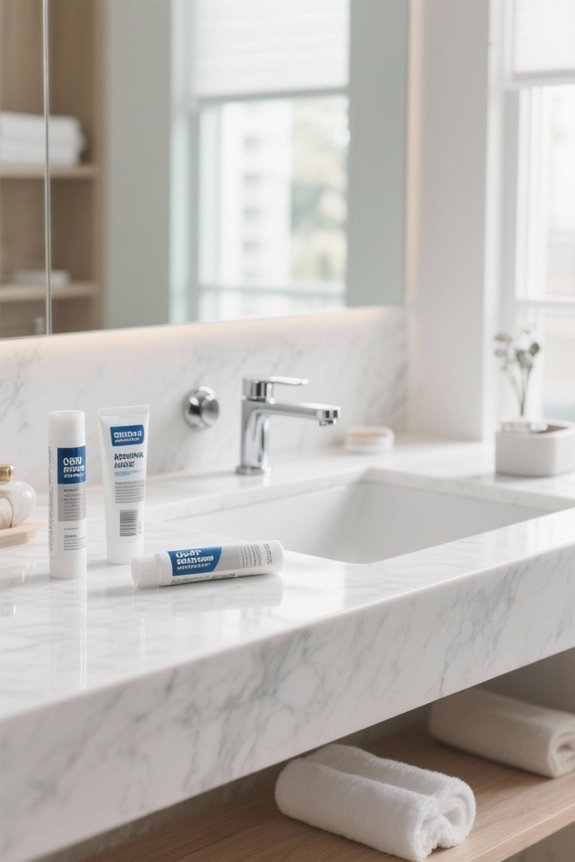
Choosing safe adhesives for humid bathroom walls is vital for preventing damage and ensuring longevity. Moisture-resistant acrylic and waterproof solvent-based adhesives are ideal, as they offer strong adhesion and flexibility. It is important to properly clean surfaces, apply adhesive evenly, and follow manufacturer guidelines regarding curing times. Regular maintenance should include checking for peeling edges, as continued moisture exposure can weaken adhesion. For more information on installation techniques and product recommendations, further insights are available.
Key Takeaways
- Select adhesives labeled as water-resistant or waterproof to ensure durability in high-humidity bathroom conditions.
- Moisture-resistant acrylic adhesives provide strong bonding and flexibility suitable for humid environments.
- Clean surfaces thoroughly before application to enhance adhesion and prevent moisture issues.
- Regularly inspect for peeling or lifting edges to maintain adhesive integrity and prevent damage.
- Consider environmentally friendly adhesives to minimize impact on indoor air quality and ensure safety.
Importance of Selecting Moisture-Resistant Adhesives
You may be interested
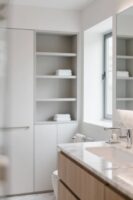
The selection of moisture-resistant adhesives is fundamental for maintaining the integrity of bathroom walls, which are frequently exposed to high humidity levels that can lead to the deterioration of wall coverings like wallpaper and panels. These adhesives must be durable and resistant, providing long-lasting bonds that withstand moisture. Specialty products designed for humid environments guarantee compatibility with various wallpaper types while adhering to manufacturers’ instructions for peak performance. Following these guidelines minimizes risks associated with peeling or lifting edges after installation. Regular maintenance and inspections become considerably less necessary when quality moisture-resistant adhesives are utilized during the installation process, ultimately leading to a more aesthetically pleasing and functional bathroom environment that stands up to the challenges presented by high moisture levels. In addition, mold-resistant bathroom caulks can play a crucial role in preventing mold and mildew growth, ensuring a cleaner and healthier bathroom space.
Types of Adhesives Suitable for High-Humidity Areas
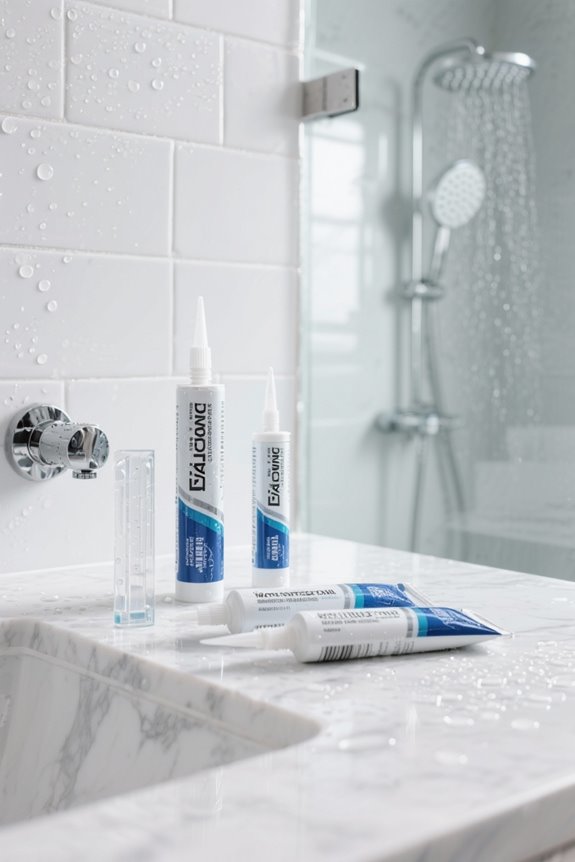
Selecting the right type of adhesive for high-humidity areas like bathrooms is paramount for ensuring longevity and stability in wall coverings. Waterproof adhesives, especially solvent-based options, excel in moisture-prone areas, providing robust bonds resistant to peeling. For lighter materials, moisture-resistant acrylic adhesives are effective, combining flexibility with strong adhesion in damp conditions. Specialty adhesives specifically created for humid environments are engineered to combat moisture-related issues, ensuring installation durability. It is critical to utilize adhesives that are explicitly labeled for damp areas, as they undergo rigorous testing to confirm their effectiveness. Following manufacturer guidelines for specific surfaces and environmental contexts serves not only to improve adhesion but also to reduce potential application-related complications, ensuring a successful long-term installation. Utilizing versatile usages of adjustable shelf cabinets in various environments, including humid bathrooms, can greatly enhance storage solutions without compromising stability.
Key Features to Look for in Adhesives
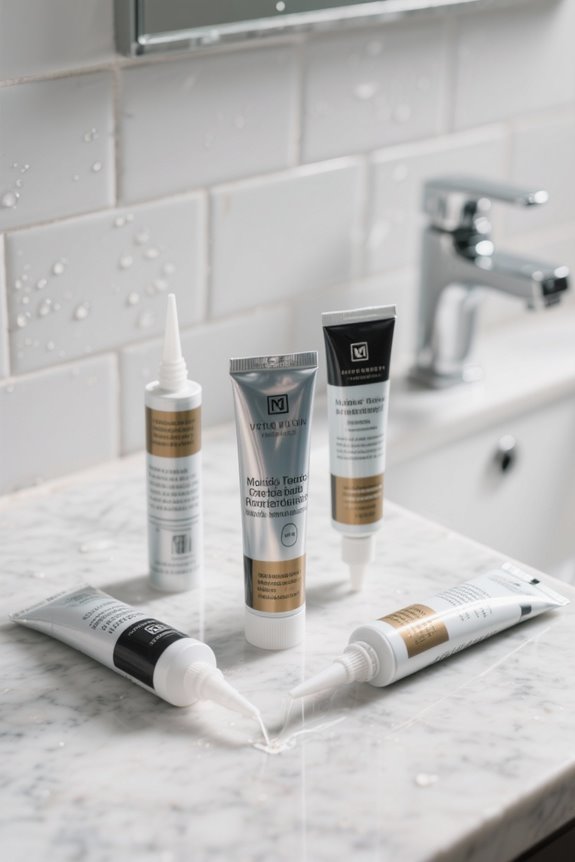
When evaluating adhesives for humid environments like bathrooms, several key features warrant careful consideration to guarantee peak performance and durability. First, adhesives should be labeled as water-resistant or waterproof, ensuring they withstand the humidity typical of bathroom conditions. Additionally, strong bonding capabilities are vital; a robust adhesive helps prevent wallpaper or panels from peeling due to moisture exposure. Compatibility with the specific type of wallpaper or panel is essential for best adhesion, as different materials require tailored adhesives. Among the best options, moisture-resistant acrylic adhesives stand out, offering both strong bonds and significant water resistance, ideal for high-humidity areas. Finally, always adhere to manufacturer guidelines for adhesive selection and application to enhance longevity and reliability in these environments. It is also important to consider the temperature resistance of adhesives, as bathroom environments can experience significant temperature fluctuations that might affect adhesive effectiveness.
Ensuring Proper Installation Techniques
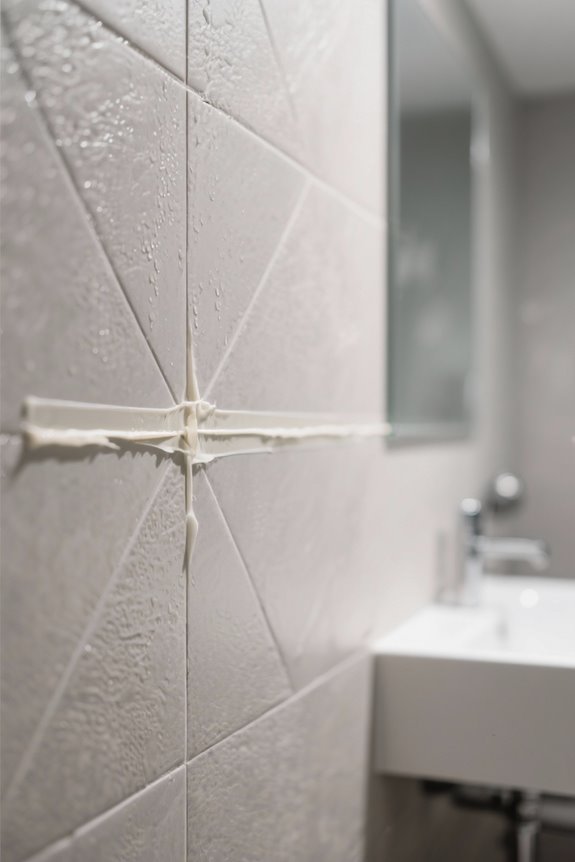
Adhering to proper installation techniques is essential for maximizing the longevity and effectiveness of adhesives in humid bathrooms, a step that complements the selection of suitable adhesive products. To guarantee a strong bond, surfaces must be thoroughly cleaned and prepared, eliminating dust, grease, or moisture. The adhesive should be applied evenly, either in a zig-zag pattern or around the perimeter of the panels, to achieve ideal coverage. Once placed, the panels must be pressed firmly together for 20-30 seconds, securing the adhesive to bond effectively amid humidity and temperature changes. Adhering to the manufacturer’s instructions regarding curing times is critical, especially in high-humidity environments, and maintaining proper ventilation during installation will help prevent moisture-related issues post-installation. For optimal results, consider the durability and materials of your chosen adhesive to ensure it withstands the bathroom’s humid conditions.
Maintenance Tips for Long-Lasting Adhesion
To guarantee long-lasting adhesion in humid bathroom environments, regular maintenance and inspections are essential. Homeowners should conduct periodic checks for peeling or lifting edges on wallpaper and wall panels, facilitating timely repairs necessary for maintaining adhesive strength. Proper ventilation is key; it reduces humidity buildup, preventing moisture-related damage that could weaken adhesives over time. Keeping moisture-prone areas clean minimizes mold and mildew, which can diminish the integrity of adhesive bonds. Additionally, avoiding direct water exposure in wet zones near showers and tubs is critical to preserving adhesive strength. Finally, implementing immediate repairs, such as reapplying glue or replacing damaged panels, not only addresses minor issues but also greatly extends the lifespan of the installation, ensuring a durable bathroom finish. It’s important to choose rust-resistant materials for any shower caddies or fixtures to enhance their durability and prevent degradation in high-humidity areas.
Storing Adhesives and Wallpaper for Optimal Performance
Proper storage of adhesives and wallpaper is essential for guaranteeing ideal performance, particularly in environments that are susceptible to moisture, such as bathrooms. To store adhesives effectively, it is fundamental to select a cool, dry location, thereby maintaining their effectiveness and preventing degradation. In addition, controlling humidity levels in the storage area enhances their longevity, safeguarding their integrity. When storing wallpaper, it should always be kept upright in a sheltered area to avoid creasing or damage, assuring optimal condition for application. Moreover, it is significant to confirm proper sealing of opened adhesive cartridges to prevent air exposure, which can lead to drying out. Finally, avoiding direct sunlight is necessary to prevent UV-related fading and material weakening over time. It is also crucial to select caulks compatible with various surfaces like glass, ceramics, and metals to ensure versatile application and effectiveness during sealing projects.
Recommended Products for Humid Bathroom Environments
When considering adhesive options for humid bathroom environments, the selection of the proper products plays a significant role in guaranteeing both durability and effectiveness. Waterproof adhesives, such as moisture-resistant acrylics, offer superior bonding while resisting moisture damage. Loctite Power Grab is notable for its strong initial adhesion, making it suitable for various applications. Similarly, Soudal Fix All provides flexibility and excellent moisture resistance, enhancing installation longevity to prevent wallpaper from peeling. Users must follow manufacturer guidelines for adhesive selection to guarantee compatibility with different wallpaper types and the specific environmental conditions of their bathrooms. Additionally, regular maintenance, including monitoring for peeling edges and maximizing ventilation, is essential to prolong the life of adhesives in these humid settings. Consider environmentally friendly materials like food-grade silicone when selecting soap dishes to complement your bathroom’s aesthetic and functionality.
Frequently Asked Questions
What Adhesive Is Best for High Moisture Areas?
What adhesive is truly ideal for high moisture areas? Mold resistant adhesives and waterproof glue options, combined with proper application techniques, guarantee effective adhesion, minimizing issues like peeling and maximizing durability in damp environments.
Does Humidity Affect Adhesive?
Humidity greatly affects adhesive performance, reducing adhesive longevity. Moisture resistance is essential in such environments, as improper adhesion can lead to materials lifting or peeling, ultimately compromising the structural integrity of installations under high humidity conditions.
What Is the Safest Adhesive for Walls?
The safest adhesive for walls often includes eco-friendly options with low VOC content, enhancing adhesive durability. Research shows moisture resistance is essential, especially in humid environments, preventing damage and ensuring long-lasting performance in various applications.
What Is the Best Adhesive for Bathrooms?
The best adhesives for bathrooms are waterproof adhesive types such as hybrid polymer or acrylic-based options. Effective bathroom renovation tips include proper adhesive application techniques and selecting moisture-resistant products to guarantee durability and prevent peeling.