As an Amazon Associate, we earn from qualifying purchases. Some links on this site are affiliate links at no extra cost to you. Our recommendations are based on thorough research and editorial judgment.

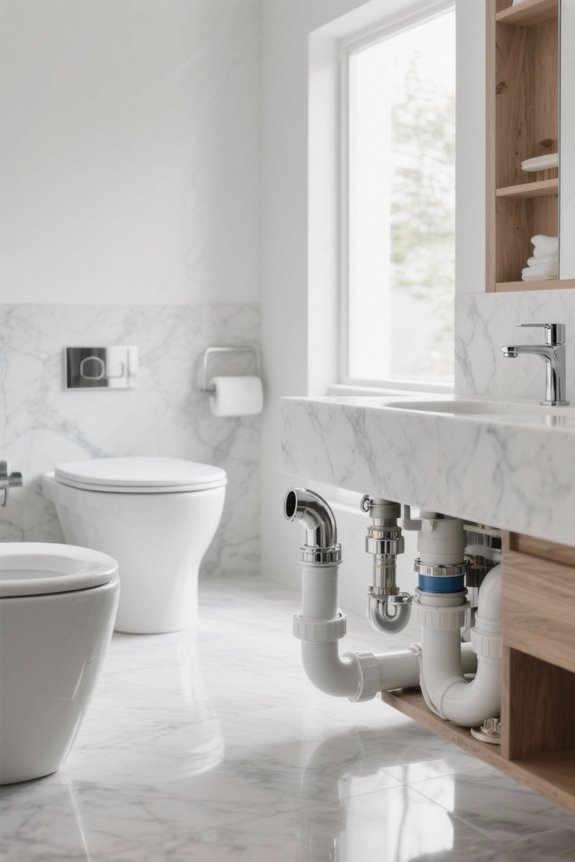
Understanding Trapways and Siphon Action

Trapways and siphon action are critical components in toilet design, influencing flushing efficiency and waste removal. Trapways serve as the pathway for waste to pass through, with regulated minimum diameters ensuring efficient flow. Siphon toilets use S-shaped or P-shaped trapways to create a vacuum effect; this initiates a whirlpool during flushing, enhancing waste evacuation. The smooth, glazed surfaces within trapways reduce friction, promoting hygiene. Understanding these elements reveals important distinctions among toilet types, leading to informed choices for ideal performance.
Key Takeaways
- Trapways are crucial in toilet design, guiding waste from the bowl to the plumbing system and affecting flushing performance.
- Siphon action in toilets generates suction through water filling, creating a vacuum that efficiently removes waste.
- The S-shaped or P-shaped design of trapways in siphonic toilets enhances the vacuum effect, reducing clog risks.
- Larger flush valves and smooth, glazed trapway surfaces improve solid waste evacuation and minimize odors in siphonic toilets.
- Choosing a siphonic toilet can often lead to better hygiene and flushing efficiency compared to washdown models.
The Role of Trapways in Toilet Design
You may be interested
The trapway, a critical component in toilet design, serves as the pathway for waste to exit the toilet bowl and enter the plumbing system, greatly affecting flushing efficiency and the likelihood of clogs. Trapways, particularly in siphonic toilets, utilize a specific diameter and shape, such as the S-shape, to create a suction effect that facilitates effective waste evacuation. This design not only impacts the performance of the toilet during a flush but is also subject to federal regulations that dictate minimum trapway diameters. Additionally, the smooth, glazed surface of trapways minimizes friction, promoting ideal flushing action by allowing water to flow more freely. Consequently, the design and characteristics of trapways are essential for ensuring reliable toilet functionality. Freestanding designs eliminate the need for wall installation, offering versatility in placement and style for bathroom accessories.
Recommended Products

Bidet Toilet Combo ● EPLO iX7-MT Smart Toilet with Bidet built in, Heated Seat, High Speed Dryer,Tankless, Siphonic Jet Flush Technology, Automatic Flushing,Kick Flushing, Soft Close, Night Light, Warm Wash, High-Speed Dryer, LED Temp Display, Remote Control

NO TOOLS REQUIRED: Easy and simple DROP-IN installation that does NOT require any tools or toilet tank removal.

Compatible with Gerber 99-788: High efficiency and long life lasting toilet flapper replacement kit for 3 inch toilet flush valves. It is compatible with Gerber toilet flapper 99-788. NOTE: Please confirm the size of your toilet flush valves based on our picture
How Siphon Action Facilitates Waste Removal
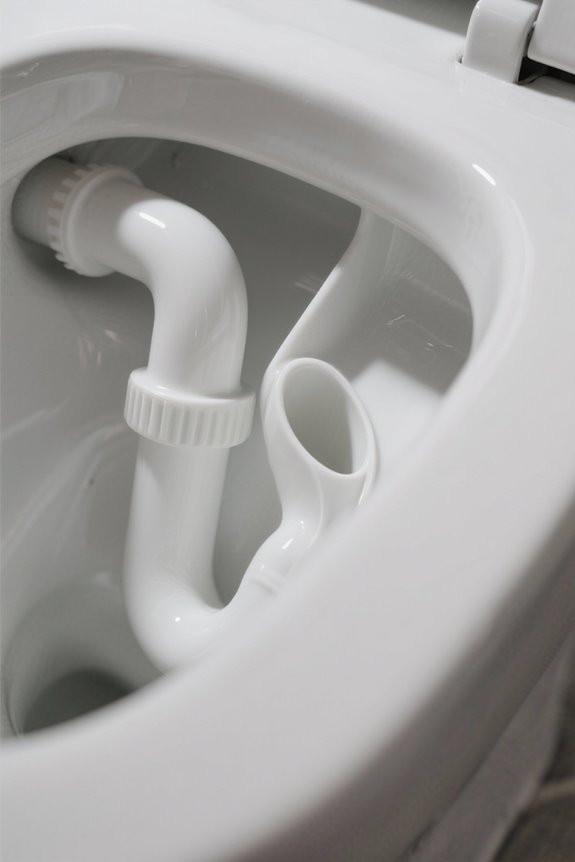
Siphon action operates as a fundamental mechanism in toilet design, particularly in siphonic toilets, where the coordinated movement of water plays an essential role in effective waste removal. During flushing, water rapidly fills the toilet bowl, initiating a whirlpool effect that generates suction and creates a vacuum within the trapway. This vacuum efficiently draws waste through the typically larger trapway, facilitating quicker removal compared to washdown toilets. As the water level decreases, a pressure difference is maintained, allowing the siphon action to continue until air enters the trapway, breaking the vacuum. This efficient process guarantees ideal hygiene by thoroughly evacuating waste, reducing odors and residue, all while minimizing water usage, making siphonic toilets an effective solution for modern sanitation needs. In addition to these benefits, WaterSense standards in modern toilet designs ensure that water-saving capabilities align with efficiency goals, promoting environmental conservation.
Recommended Products

Water Saving Flush | WaterSense certified dual flush technology gives you a choice between a 1.1 GPF light flush and a 1.6 GPF full flush, helping reduce household water consumption without sacrificing flushing performance for daily residential use. The push-operated system works with a gravity-assisted mechanism that delivers consistent clearing power for shared family bathrooms and frequently used guest spaces

[Diamond-Cut Design with Gold Button] The geometric silhouette sets this black toilet apart from ordinary models. The gold flush button against glossy black delivers a luxury aesthetic ideal for modern bathroom renovations.

Luxurious Modern Toilet for Bathrooms: skirted 1-piece toilet integrates the tank and bowl into a seamless, easy-to-clean design, no leaking tank problem
The Mechanics Behind the Siphonic Flush
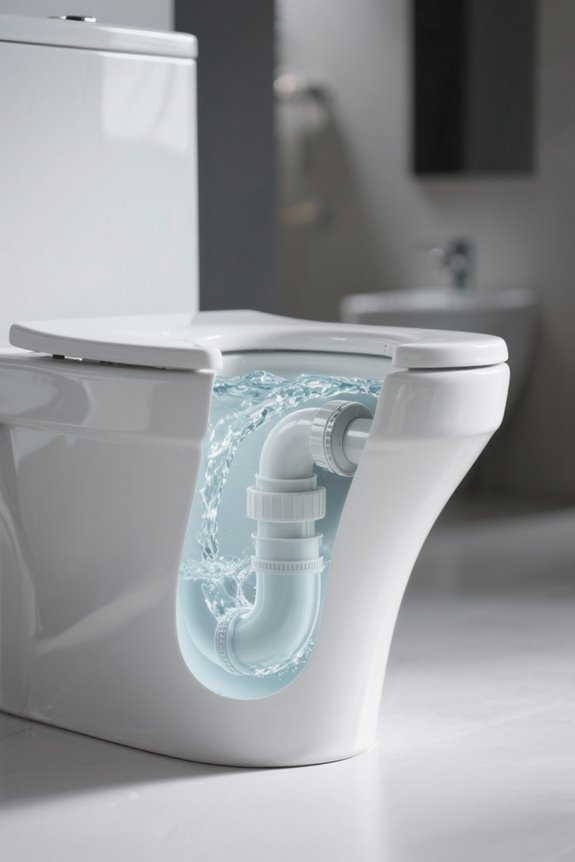
Understanding the intricate mechanics behind a siphonic flush reveals how carefully engineered components work together to guarantee efficient waste removal. The siphonic flush system utilizes a long, narrow S-shaped or P-shaped trapway that creates a vacuum during the flushing process. When the flush valve opens, water rushes from the tank, filling the bowl and initiating siphon action as the water level rises. This action leads to a visible whirlpool, indicating successful suction. Siphonic toilets are designed with a larger diameter flush valve for faster drainage, enhancing effective evacuation of solid waste. The siphon action persists until air enters the trapway, breaking the vacuum and allowing for the bowl refill, ensuring complete waste removal. For optimal performance, some toilet handle levers are equipped with a spring-loaded mechanism to prevent sticky handle issues.
Advantages of Siphonic Toilets Over Washdown Variants
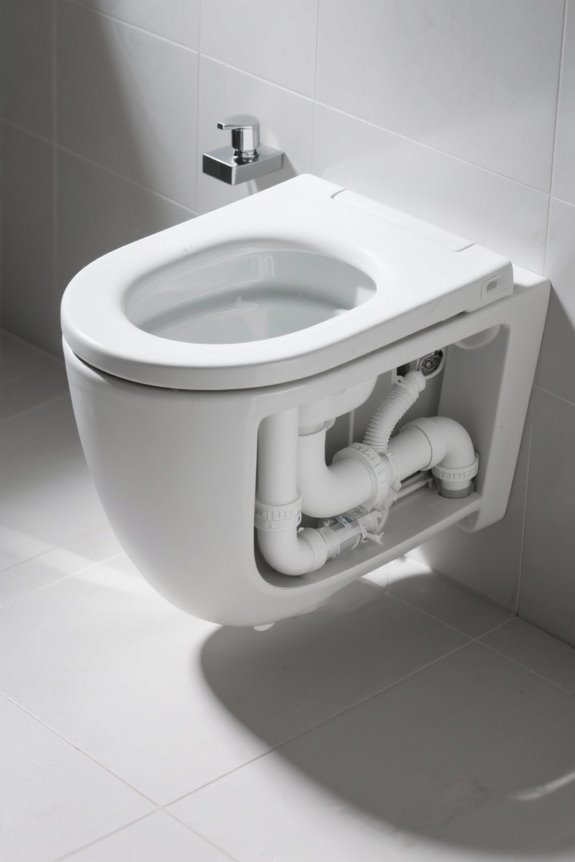
Numerous advantages distinguish siphonic toilets from their washdown counterparts, particularly in waste removal efficiency and overall performance. Siphonic toilets utilize a vacuum effect during flushing, which enhances waste removal compared to washdown toilets that depend solely on gravity and water flow. Their S-shaped trapway design, larger and more curved than the straighter designs of washdown toilets, promotes reliable evacuation and reduces clogging risk. Additionally, siphonic models maintain a higher water level in the bowl, facilitating odor minimization and cleanliness, whereas washdown varieties often struggle with smaller water surfaces prone to fouling. Siphonic toilets also provide a quieter operation, minimizing the noise associated with flushing action, contributing to a more pleasant bathroom environment overall. For people interested in integrating technology into their bathrooms, waterproof bathroom TVs can enhance the relaxation experience, making it ideal for such settings.
Choosing the Right Toilet for Your Needs
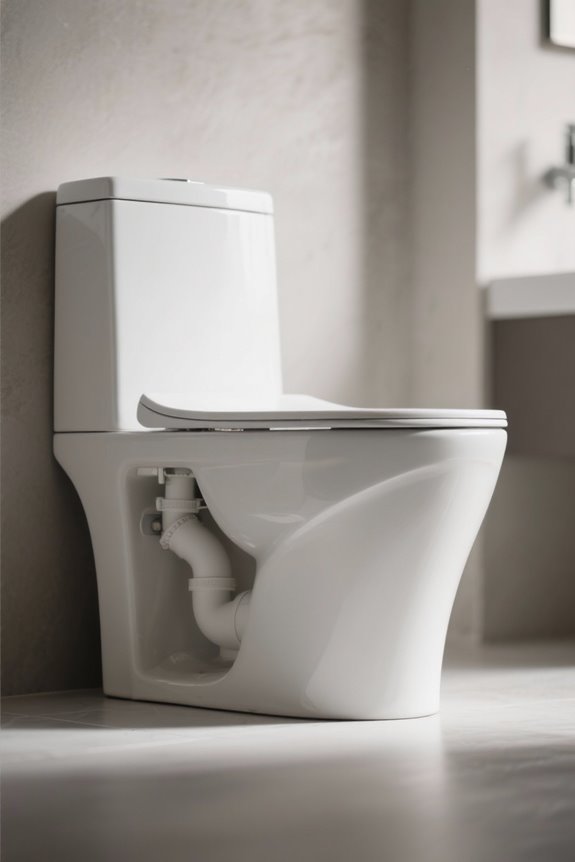
When selecting a toilet, it is essential to take into account various factors that can greatly influence performance and user satisfaction. The trapway design is vital; siphonic toilets, with their S-shaped trapways, excel in waste removal through vacuum action, enhancing flushing efficiency. In contrast, washdown toilets, although modern, may struggle with clog prevention and are often deemed inefficient. Consider the water surface area of siphonic options, which contributes to better hygiene by reducing stains and odors. Additionally, dual flush systems present an opportunity for significant water conservation while maintaining excellent flushing performance. Ultimately, weighing these features can lead to a more informed and satisfying toilet choice tailored to specific needs and preferences. When dealing with clogs, a toilet auger is an essential tool that can efficiently clear blockages without damaging the toilet.
Recommended Products
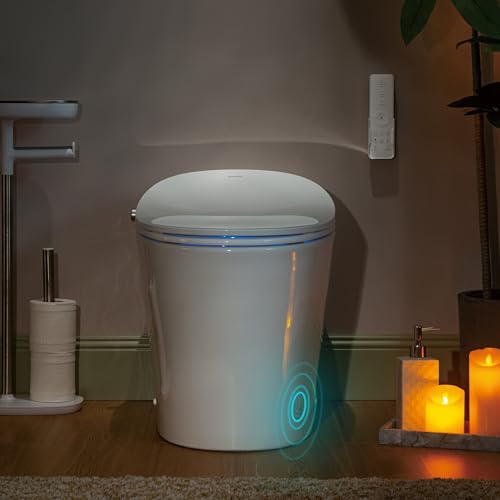
✅ [AUTO OPEN and CLOSE LID]: The lid will open automatically when you approach,and auto close when you leave. No manual operation is required.

【Hands-Free for Flushing Convenience】Advanced motion sensors enable foot-kick operation for seamless control of auto flushing—no need to bend or touch surfaces. Enjoy a more hygienic, accessible, and touch-free experience, ideal for all ages.
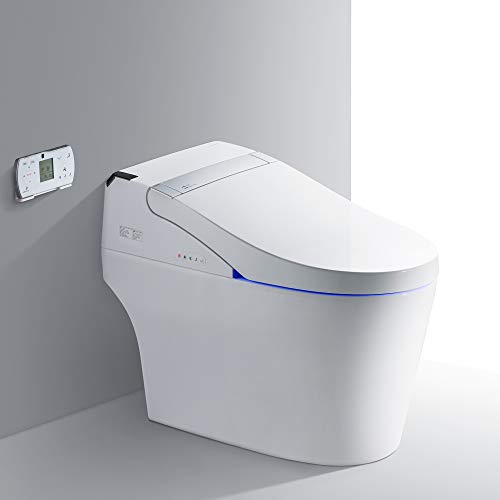
✅ [ADA Compliant Toilet]: Features 17-1/8" height from floor to seat. comfortable height seating, it makes visiting the toilet to be more comfort as there is less strain sitting on or standing up.
Frequently Asked Questions
How Does a Siphon Work in Simple Terms?
A siphon operates on siphon principles, creating a pressure difference that allows liquids to flow from high to low. Various siphon types exist, showcasing applications in irrigation, laboratories, and experiments, with notable advantages in simple design and maintenance.
What Are the Disadvantages of Siphonic Toilets?
Siphonic toilet problems include installation challenges due to larger trapway sizes, maintenance issues like bowl cleaning difficulties, clogging potential, noise concerns from louder flushes, and less water usage efficiency compared to cheaper, less complex alternatives.
Does Trapway Size Matter for a Toilet?
Trapway size considerably affects toilet performance, influencing flush efficiency, clog prevention, and water flow. Various trapway designs dictate maintenance requirements, noise levels, installation considerations, and overall usability factors, underscoring the importance of material quality in manufacturing.
Which Is Better, Siphonic or Washdown?
Siphonic toilets outperform washdown models in flushing efficiency, maintenance, and clogging tendencies. User experiences indicate better aesthetics and lower environmental impacts, while installation can be challenging. Noise levels vary, with user preferences leaning towards modern siphonic designs.