As an Amazon Associate, we earn from qualifying purchases. Some links on this site are affiliate links at no extra cost to you. Our recommendations are based on thorough research and editorial judgment.

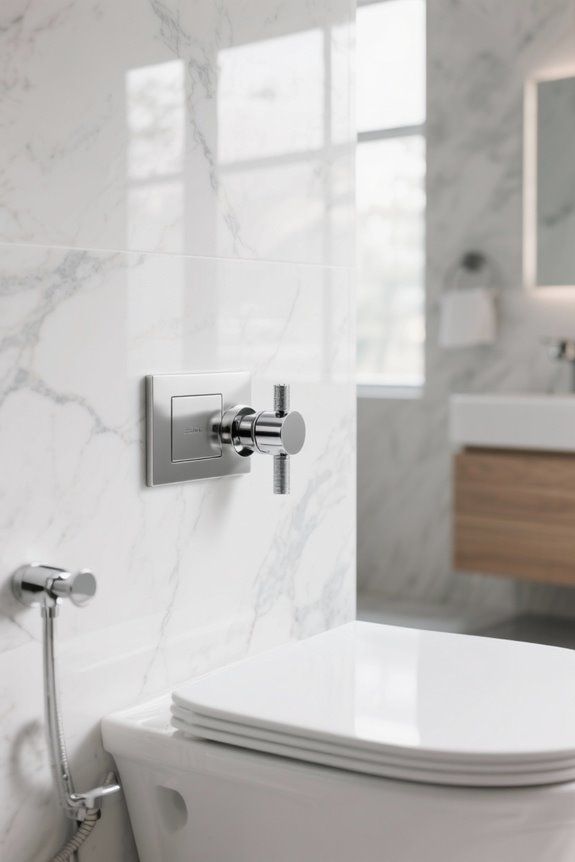
Dual-Flush Settings: Tuning for Effective Performance

Dual-flush toilets operate with two settings: 1.6 gallons per flush (GPF) for solid waste and 0.8 GPF for liquid waste, promoting water conservation. Proper tuning involves adjusting the flush valve dials, ensuring the GREEN setting is for half flush and BLUE for full. Regular maintenance, including checking water levels and leak inspections, is essential for peak performance. Utilizing high-quality materials in fixtures can enhance durability. For detailed instructions on adjustments and troubleshooting, further insights await.
Key Takeaways
- Ensure the flush valve dials are calibrated correctly: GREEN for half flush and BLUE for full flush for optimal performance.
- Regularly inspect the water level in the tank; it should be at least one inch below the overflow pipe.
- Test both flush settings using toilet paper to verify and make necessary flush adjustments.
- Position the refill tube correctly to direct water into the overflow pipe, enhancing flush efficiency.
- Routine cleaning of the Duo Flush valve prevents mineral buildup, ensuring effective operation and longevity.
Understanding Dual-Flush Mechanisms
You may be interested


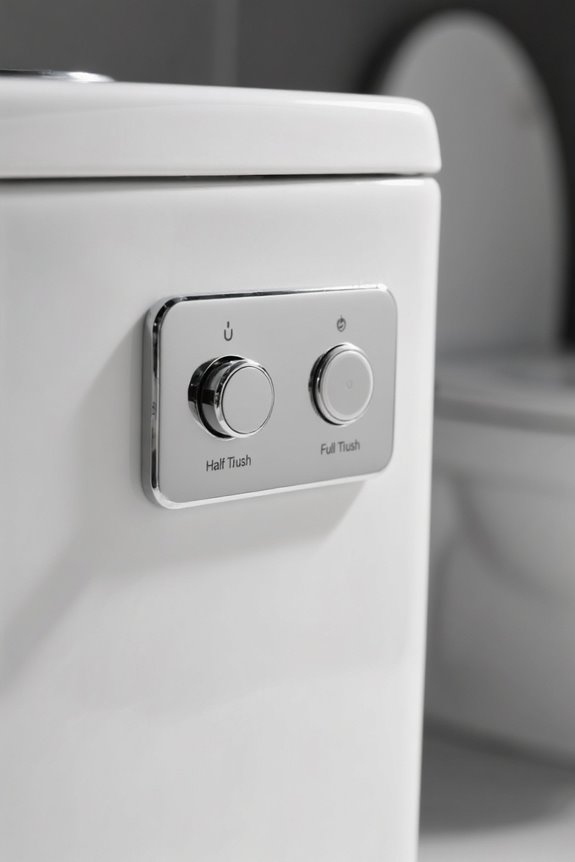
A dual-flush mechanism, which is increasingly recognized for its efficiency and water-saving capabilities, operates by offering users two distinct flushing options tailored to the type of waste being disposed of. The system typically includes two buttons, enabling a full flush of approximately 1.6 gallons per flush (GPF) for solid waste and a half flush that uses around 0.8 GPF for liquid waste, thereby promoting water conservation. Existing standard toilets can be retrofitted with a converter kit to adopt this technology seamlessly. Proper functioning involves calibrating the flush valve dials, often labeled as GREEN for half flush and BLUE for full flush, ensuring peak water usage. Regular maintenance, including cleaning and leak checks, is essential for maintaining effective performance. Many flush valve kits recommended for dual-flush toilets, like the Fluidmaster K-400H-040-T5, offer easy installation and include components necessary for setup, ensuring efficient water use.
Common Issues With Dual-Flush Toilets
While dual-flush toilets are celebrated for their water conservation benefits and efficient waste management, users may encounter several common issues that can hinder performance. Immediate flush closure is one such problem, often requiring adjustments to the water level and dial settings. Additionally, a toilet bowl that fails to clear effectively may necessitate ensuring the water level reaches its maximum capacity and that the refill tube is correctly positioned. Ghost flushing can occur when water leaks from the tank into the bowl, indicating misalignment or seal issues with the flush valve, which may require the attention of a professional plumber. Finally, sticking tank levers can impede the flushing mechanism, necessitating disassembly for realignment or replacement to maintain ideal flushing performance. A durable stainless steel toilet tank bolt kit can also improve the longevity and performance of the toilet by ensuring a sturdy and leak-free installation.
Adjusting Dual-Flush Settings: A Step-by-Step Guide
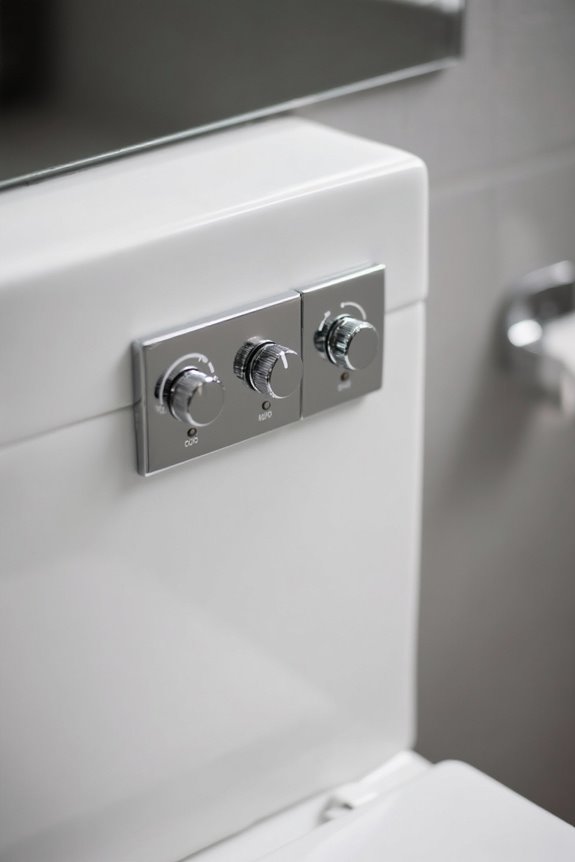
Adjusting dual-flush settings can significantly enhance a toilet’s performance, guaranteeing efficient water usage and effective waste removal. To begin, shut off the water supply and remove the tank lid to access the dual-flush valve. For maximum performance, adjust the GREEN and BLUE dials on the dual-flush mechanism to highest levels; testing effectiveness with toilet paper can help determine if improvements are necessary. Confirm the water level in the toilet tank reaches at least the half-mark of the oval viewing windows in the Duo Flush valve. If the bowl fails to clear properly, fine-tune the GREEN dial for half flush and increase the BLUE dial by one or two settings. Regular maintenance can further verify effective flushing operation and reduce the need for toilet repair. Effective toilet augers provide essential tools during plumbing emergencies, aiding in clearing stubborn clogs when adjustments are insufficient.
Maintenance Tips for Dual-Flush Systems
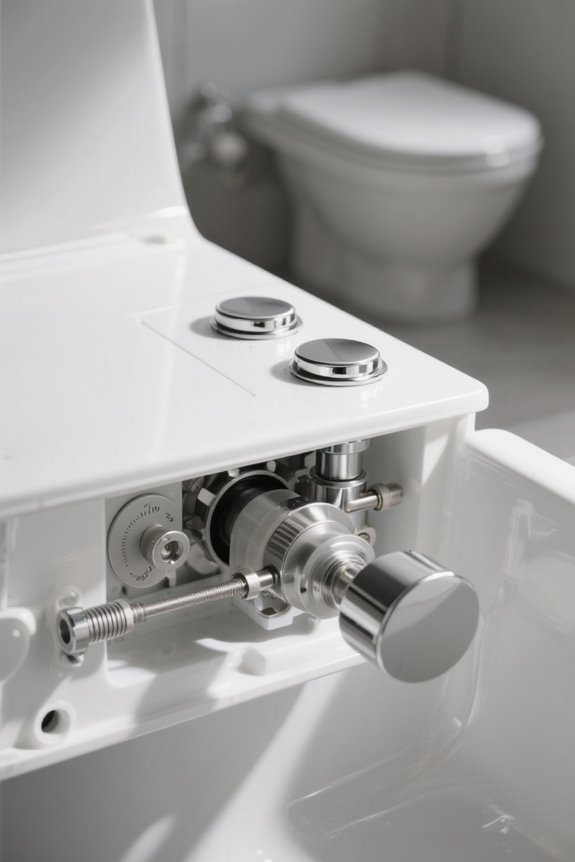
To maintain ideal performance in dual-flush systems, routine inspection and cleaning of the Duo Flush valve and its various components are essential, as mineral buildup can hinder effective flushing. Regularly checking the water level in the tank helps it remains at least one inch below the overflow pipe, optimizing flushing pressure. Users should also test both half and full flush settings with toilet paper, making necessary adjustments to the GREEN and BLUE dials for proper evacuation. Additionally, positioning the refill tube correctly directs water into the overflow pipe rather than the tank, enhancing flush efficiency. Finally, vigilant checks for leaks around the flush valve and overflow pipe guarantee components are replaced as needed to maintain performance and prevent water wastage. For toilet seats, quick-release mechanisms simplify cleaning processes and enhance user convenience.
Water Conservation Benefits of Dual-Flush Toilets
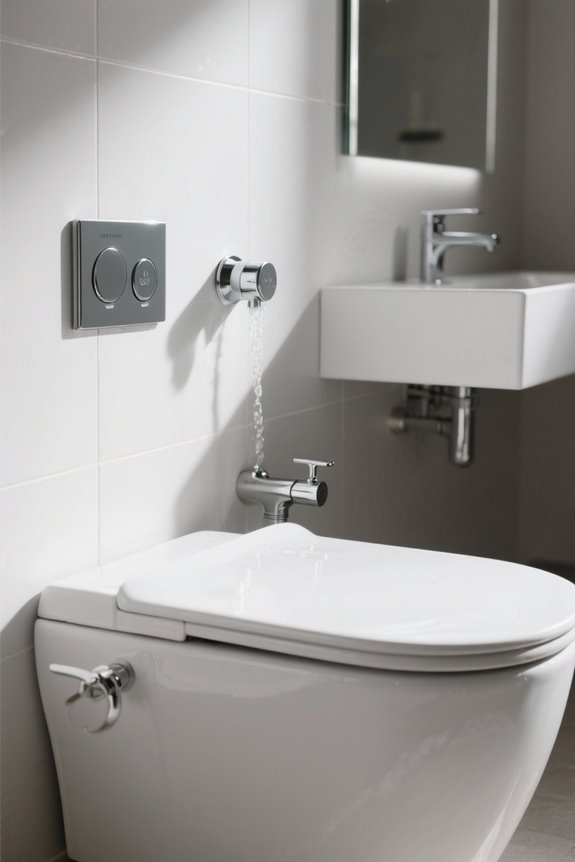
As households increasingly prioritize sustainability, the adoption of dual-flush toilets presents a compelling solution for significant water conservation. These toilets utilize a dual-flush system, typically allowing users to choose between 1.6 gallons per flush (GPF) for solid waste and an impressive 0.8 GPF for liquid waste. Consequently, users can save water, with estimates suggesting a reduction of 20-40% in overall water usage, equating to approximately 13,000 gallons annually for the average household. This dual functionality also enhances flushing power without sacrificing efficiency. By minimizing water consumption, dual-flush toilets alleviate pressure on municipal water supply and sewage treatment facilities, further contributing to broader water conservation efforts while simplifying plumbing system maintenance and potentially reducing toilet repair frequency. Furthermore, using high-quality materials such as eco-friendly silicone and rubber in bathroom fixtures can enhance durability and performance, ensuring long-lasting effectiveness and further supporting sustainable practices.
Upgrading From Traditional to Dual-Flush Toilets
Upgrading from traditional toilets to dual-flush models represents a significant enhancement in water efficiency and waste management within residential settings. Dual-flush toilets provide two options for flushing: a full flush of 1.6 gallons per flush (GPF) for solid waste and a partial flush using only 0.8 GPF for liquid waste, which effectively reduces overall water usage. By making this shift, households can potentially conserve water and save up to 30% on their water bill annually. Furthermore, dual-flush toilets incorporate advanced technologies that guarantee effective waste removal, debunking the myth that less water means less flushing power. This upgrade also bolsters a home’s sustainability profile, supporting environmental conservation efforts through optimized water use and minimizing waste impact. Ground fault detection is another important feature to consider when making upgrades in home appliances, as it enhances safety by reducing shock risks.
When to Seek Professional Help for Dual-Flush Problems
What indicators suggest a dual-flush toilet is in need of professional help? A dual-flush toilet may require expert intervention when issues like ghost flushing or persistent water running occur, often signaling problems with the flush valve and seals. If the full or half flush mechanisms repeatedly fail, despite adjustments, internal component malfunctions might be involved. Significantly, difficulty in detecting leaks or maintaining proper water level, after standard troubleshooting, indicates that professional plumbing services may be necessary. In addition, consistent slow or incomplete flushes can undermine the system’s efficiency in handling liquid waste. Furthermore, if your home utilizes a tankless water heater with smart technology, integrating professional assistance can ensure the overall plumbing system functions seamlessly. Ultimately, if these problems persist or worsen, upgrading to a newer dual-flush model might be a prudent investment for long-term performance stability.
Frequently Asked Questions
How to Make Flush More Powerful?
To enhance flush power, Sarah adjusted her toilet’s water level and cleaned jet holes, implementing flushing efficiency tips and plumbing system upgrades. Such toilet maintenance practices promote waste removal and optimize flush pressure while conserving water.
What Are the Correct Flushing Volumes for a New Dual Flush W/C?
The correct flushing volumes for a new dual-flush toilet include 1.6 gallons for solids and 0.8 gallons for liquids, ensuring flushing efficiency, promoting water conservation, and meeting plumbing standards for ideal waste removal and user satisfaction.
How to Adjust Dual-Flush Toilet Mechanism?
To adjust the toilet mechanism, one must expertly navigate flush adjustments, ensuring water conservation. Following maintenance tips and user guidelines, DIY repairs involve performance testing to enhance flushing technology efficiency and achieve ideal results.
What Is a Good Flush Performance Rating?
A good flush performance rating typically meets flush performance standards, indicated by a MaP score over 1,000 grams, reflecting advances in flushing technology and toilet design innovations that enhance efficiency while promoting water conservation techniques.