As an Amazon Associate, we earn from qualifying purchases. Some links on this site are affiliate links at no extra cost to you. Our recommendations are based on thorough research and editorial judgment.

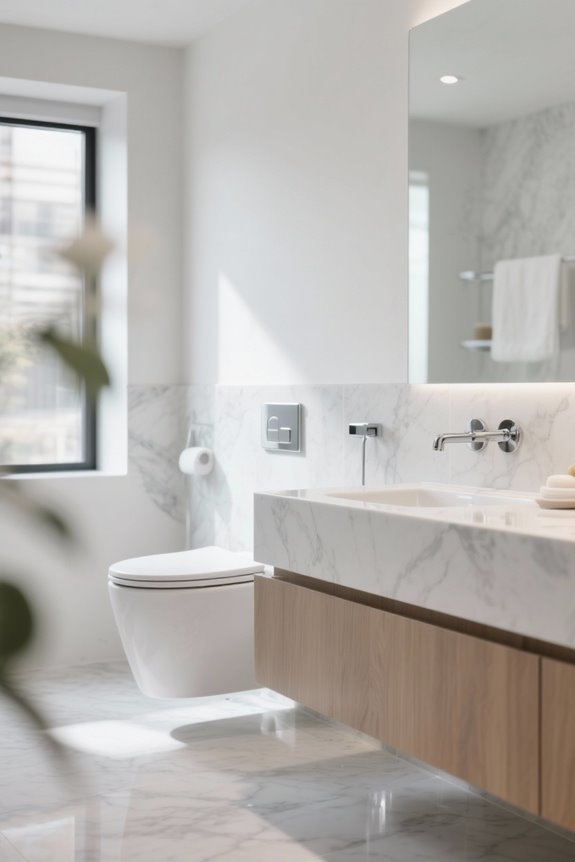
Floor Vs Wall-Mount Toilets: Maintenance Differences

When comparing floor-mounted and wall-mounted toilets, notable maintenance differences arise, particularly in accessibility and cleaning efficiency. Floor-mounted toilets feature exposed tanks and piping, allowing for easier repairs and straightforward cleaning, while wall-mounted models often conceal components, potentially necessitating access panels for maintenance. Additionally, wall-mounted toilets, with their floating design, simplify floor cleaning but may accrue more long-term costs due to complex repairs and specialized parts. Further comparisons reveal even more practical insights into user experience and preferences.
Key Takeaways
- Floor-mounted toilets offer easy access to components, simplifying routine maintenance and repairs for DIY enthusiasts.
- Wall-mounted toilets may require access panels for repairs, increasing complexity and potentially requiring professional assistance.
- Cleaning is generally faster with wall-mounted toilets due to fewer surfaces and less dirt accumulation beneath them.
- Long-term maintenance costs are typically lower for floor-mounted toilets due to their accessible parts and straightforward repair processes.
- Wall-mounted toilets often necessitate structural modifications for repairs, adding to maintenance challenges and costs.
Maintenance Accessibility of Floor-Mounted Toilets
You may be interested

When considering the maintenance accessibility of floor-mounted toilets, it is important to note that these models offer a straightforward design that greatly simplifies upkeep tasks. Homeowners benefit from the easily accessible components, allowing for quicker repairs without specialized tools. The exposed tank and piping make it easier to clean, as they provide a clear view of all visible parts, facilitating standard maintenance. This accessibility proves advantageous for DIYers, who can perform routine servicing with confidence and minimal effort. In comparison to wall-mounted toilets, floor-mounted models eliminate complications linked to hidden mechanisms, ensuring that minor issues or leaks can be addressed conveniently, ultimately enhancing the overall user experience by minimizing maintenance-related frustrations. Additionally, selecting a durable material for your toilet seat, such as high-density plastic or wood, can further simplify maintenance by ensuring longevity and reducing the frequency of replacements.
Maintenance Challenges of Wall-Mounted Toilets
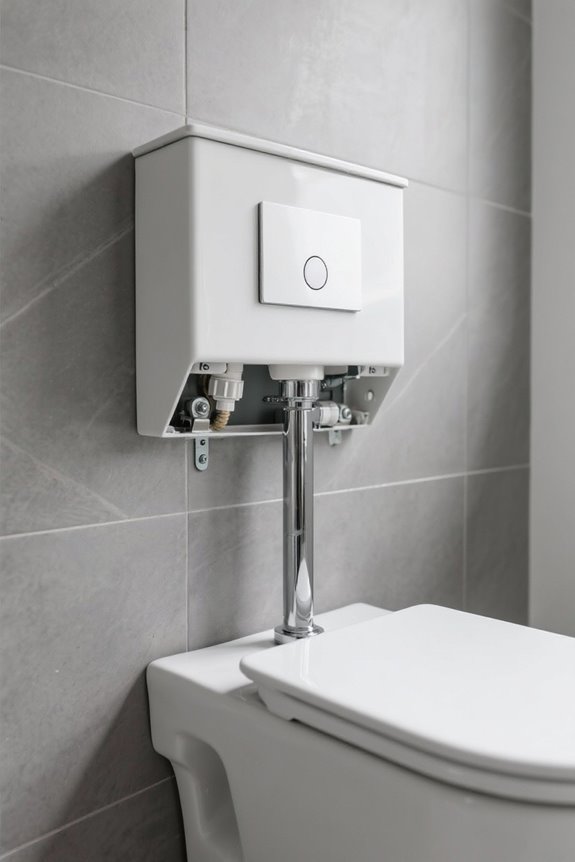
Maintaining wall-mounted toilets presents several notable challenges that can complicate repairs, primarily due to their unique design and installation requirements. Accessing hidden components often necessitates the installation of access panels, complicating maintenance compared to the straightforward approach of floor-mounted units. Additionally, repairs may require professional assistance, as parts for wall-mounted toilets are typically less accessible in local stores, leading to potential delays. The structural requirements for installation may also mean that addressing maintenance issues requires wall modifications, further increasing complexity. Consequently, long-term maintenance costs could be higher, driven by the intricacies of repairs and the potential need for specialized parts or services, which can deter homeowners from opting for wall-mounted fixtures in favor of more conventional designs. It is essential to consider waterproof protection levels when choosing fixtures, as high-moisture areas can exacerbate maintenance challenges.
Cleaning Efficiency: Wall-Hung vs. Floor-Mounted
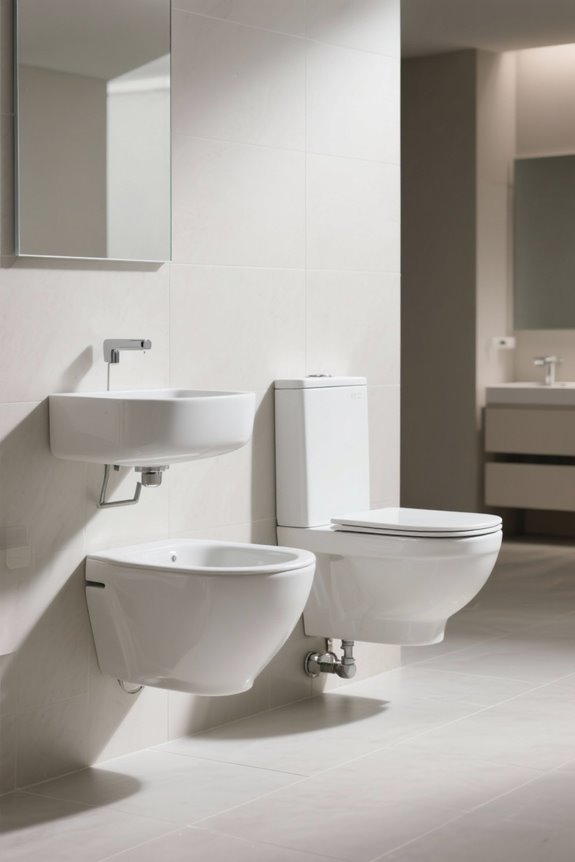
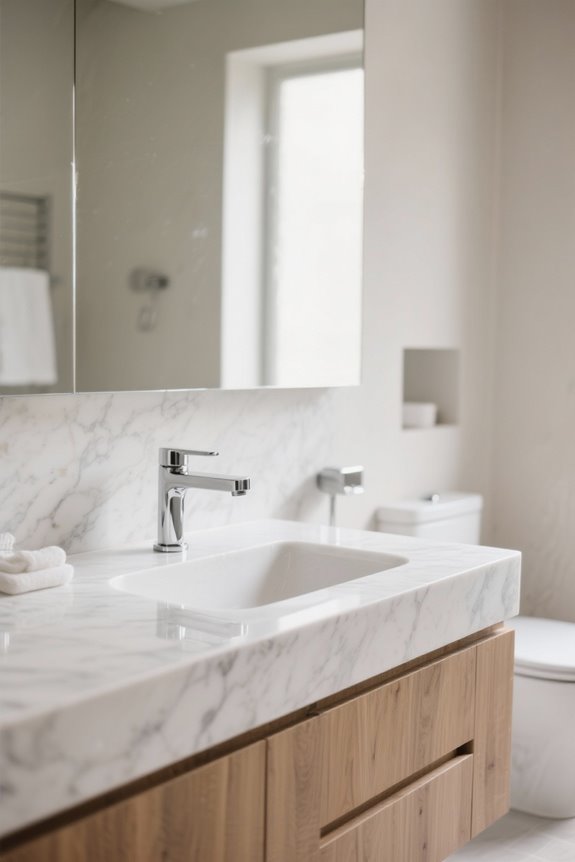
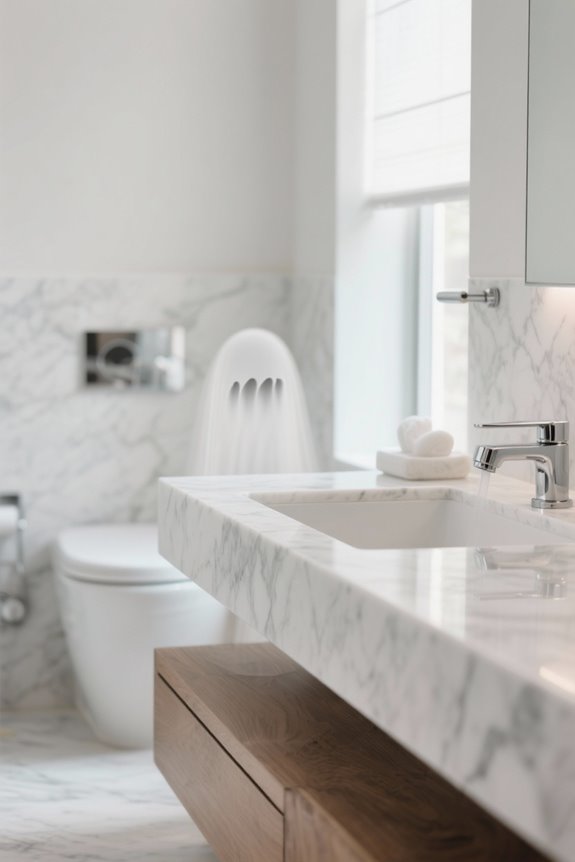
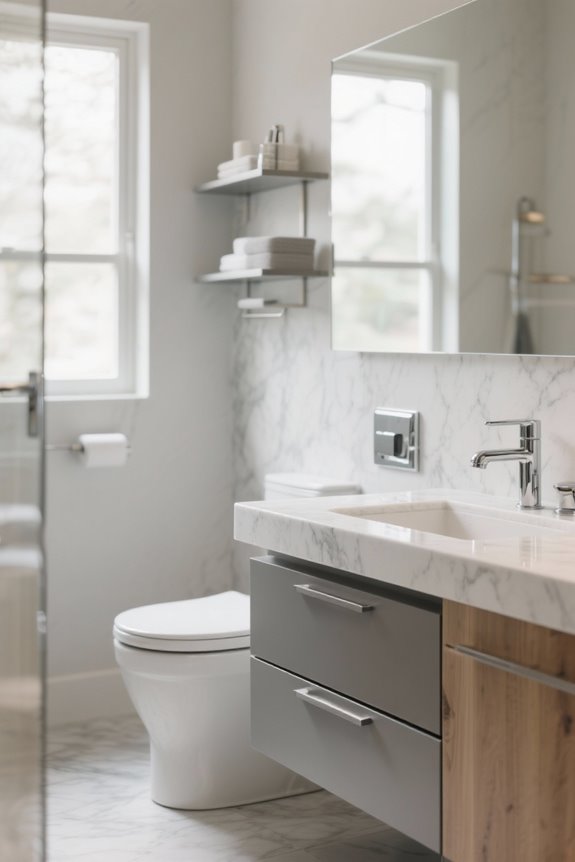
While wall-hung toilets offer distinct advantages in cleaning efficiency, understanding their operational context compared to floor-mounted options provides valuable insight for homeowners. Wall-mounted toilets, with their floating design, enable easier access to the floor beneath, minimizing dirt accumulation and facilitating hassle-free mopping. Unlike floor-mounted toilets, which feature larger bases and tanks that collect dust and bacteria, wall-hung designs have fewer nooks and crannies, leading to less grime and a more hygienic experience. Additionally, many wall-hung models incorporate antibacterial surfaces, enhancing overall cleaning efficiency and reducing long-term maintenance needs. Although floor-mounted toilets provide simpler access to plumbing components, their exposed tanks and larger surface areas often necessitate more cleaning time, making hygiene a more demanding task. Many rustproof shower curtain rods also enhance bathroom aesthetics with their sleek designs, providing a complementary stylish upgrade to the modern bathroom environment.
Troubleshooting Common Issues
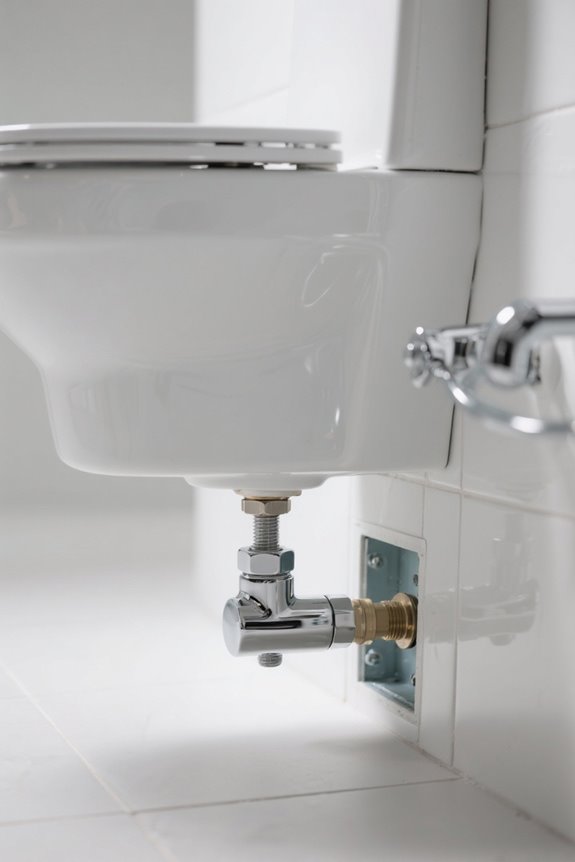
Troubleshooting common issues associated with wall-hung toilets can prove more complex due to their concealed installations, which often necessitate access panels or modifications to the wall itself, thereby complicating repairs compared to the straightforward accessibility found in floor-mounted options. Common issues in floor-mounted toilets, such as clogs or leaks, typically allow for quick resolutions, as homeowners can easily reach and address accessible parts. Conversely, wall-mounted toilets may require specialized tools and expertise during repairs, especially when dealing with faulty flush mechanisms. Additionally, structural issues related to wall reinforcements and mounting brackets can further challenge maintenance efforts, often necessitating professional assessment, thereby extending the time to troubleshoot and resolve these common issues effectively. Homeowners should consider using toilet tank bolt kits for easy maintenance and reliable installation, ensuring compatibility with their toilet models for optimal performance.
Long-Term Maintenance Costs Comparison
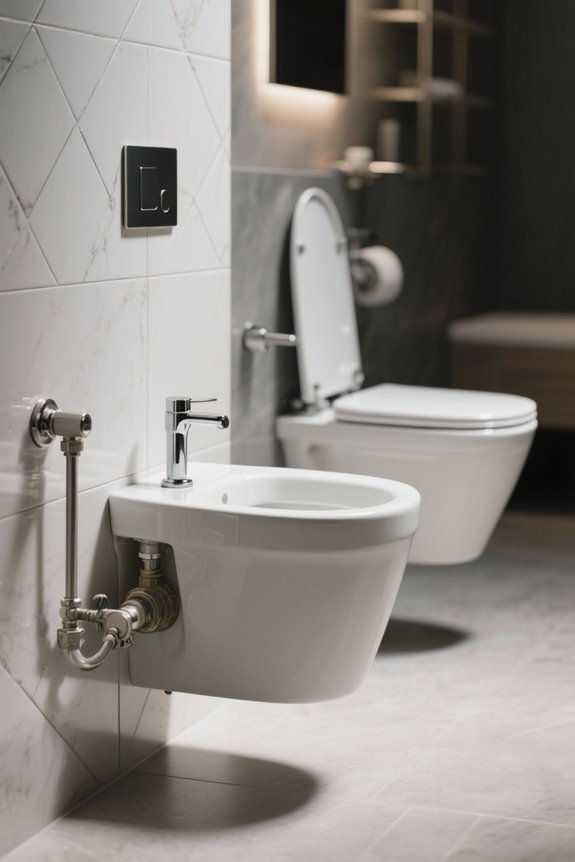
When evaluating long-term maintenance costs, it becomes evident that the structural design of toilets greatly influences their associated expenses. Floor-mounted toilets typically incur lower long-term maintenance costs due to their accessible components, facilitating straightforward repairs and maintenance. In contrast, wall-hung toilets often involve higher costs, as their hidden components require specialized tools or professional assistance for access. Repairs on wall-hung models may necessitate wall modifications or the installation of access panels, potentially increasing repair expenses. While both toilet types can feature water-saving flush mechanisms, wall-hung toilets could lead to elevated long-term costs if concealed plumbing components require frequent attention. Additionally, the availability of parts tends to favor floor-mounted toilets, further reducing long-term maintenance expenses. Just like static cling films, reusability without losing adhesive qualities can be an important factor in determining long-term cost-effectiveness, as it ensures that maintenance or replacement needs are minimized.
User Experiences and Preferences in Toilet Maintenance
Toilet maintenance experiences vary considerably between floor-mounted and wall-hung models, largely due to design and accessibility factors. Users of floor-mounted toilets frequently report easier maintenance, as these toilets allow direct access to plumbing components without the need for special tools or wall modifications. In contrast, wall-hung toilets often present challenges, with hidden components requiring cumbersome access panels, resulting in complexities that can lead to higher repair costs. Many homeowners enjoy how floor-mounted toilets facilitate cleaning, despite their larger footprint, while regular users of wall-hung toilets appreciate the floating design that reduces dirt accumulation at the base. Ultimately, plumbing professionals prefer the straightforward accessibility of floor-mounted toilets, which allows for quicker and more efficient maintenance compared to their wall-hung counterparts. Additionally, Korky QuietFILL Platinum provides silent operation and fits 99% of toilets, making it a popular choice for those seeking efficient and hassle-free bathroom maintenance.
Frequently Asked Questions
Are Wall Hung Toilets Harder to Maintain?
Wall-hung toilets can be harder to maintain due to installation complexity and limited repair access. They offer cleaning ease and aesthetic appeal, but durability concerns and higher service frequency may impact long-term cost comparison and plumbing requirements.
What Are the Disadvantages of a Wall-Mounted Toilet?
In the architectural ballet of bathrooms, wall-mounted toilets dance with aesthetic appeal, yet their installation requirements often shroud repair accessibility in shadows, increasing maintenance costs amid plumbing complexity and weight limitations, despite promising flushing efficiency and design flexibility.
Which Is Better, a Wall-Mounted or Floor Mounted Toilet?
Determining which toilet is better depends on preferences for installation ease, space efficiency, and aesthetic appeal. Wall-mounted models offer design flexibility and improved cleaning accessibility, while floor-mounted varieties excel in plumbing accessibility and cost comparison.
Are Floor Mounted Toilets Better Than Wall Hung?
Like choosing between two paths in a forest, selecting floor-mounted toilets often proves better due to easier plumbing accessibility and repair challenges, while offering durability, comfort height, and cost considerations, despite wall-hung’s design aesthetics and cleaning ease.