As an Amazon Associate, we earn from qualifying purchases. Some links on this site are affiliate links at no extra cost to you. Our recommendations are based on thorough research and editorial judgment.


Understanding Recovery Rate and Peak-Hour Demand

The recovery rate indicates how many gallons of hot water a heater produces in one hour, considerably affecting availability during high-demand situations such as mornings and evenings. Gas water heaters typically achieve recovery rates of 30 to 70 gallons per hour, outperforming electric models, which average around 20 gallons. When selecting a water heater, understanding recovery rates and first-hour ratings is essential for meeting a household’s hot water needs. Additional insights await regarding optimizing hot water availability.
Key Takeaways
- Recovery rate measures how quickly a water heater replenishes hot water, crucial for high-demand scenarios.
- Higher recovery rates ensure consistent hot water supply during peak times, like morning showers.
- Gas water heaters typically have recovery rates between 30-70 gallons per hour, outperforming electric models.
- Properly calculating recovery rate aids in selecting the right water heater for household needs.
- Consider tank capacity and first-hour ratings to manage simultaneous hot water demands effectively.
What Is Recovery Rate and Why Does It Matter?
You may be interested



The concept of recovery rate in water heaters is pivotal for homeowners who require a reliable supply of hot water, particularly during periods of peak demand. The recovery rate quantifies the number of gallons of hot water a heater can produce in one hour, meaning that higher recovery rates lead to a more efficient hot water supply for simultaneous uses like showers and dishwashing. Gas water heaters are known to exhibit higher recovery rates—averaging between 30 to 70 gallons per hour—compared to electric models, which typically provide around 20 gallons per hour. This difference largely stems from the BTU input, where a higher BTU enhances the temperature rise, enabling quicker replenishment of hot water and ensuring sufficient availability during high-demand times. An 18kW tankless water heater can offer impressive energy efficiency with ratings up to 99.8%, ensuring continuous hot water even during peak-hour demand.
Importance of Recovery Rate in High-Demand Situations

How does the recovery rate of a water heater influence its effectiveness during high-demand situations? The water heater recovery rate is significant, as it dictates how swiftly hot water replenishes after use, essential for simultaneous activities. A higher recovery rate, often found in gas models, can provide between 30 to 70 gallons of hot water per hour, crucial for larger households or those with multiple bathrooms. During peak demand periods, such as mornings or evenings, this capacity can prevent temporary shortages, ensuring adequate supply for extensive hot water consumption. Thus, selecting a water heater that matches the specific hot water needs of the home becomes important, as inadequate rates can lead to disruptions during peak usage times when consistency is required. Additionally, choosing water heaters with high-grade aluminum-zinc alloys for their anode rods can extend the lifespan of the water heater by providing optimal corrosion protection, further ensuring reliable performance during high-demand situations.
How to Calculate Recovery Rate

Calculating the recovery rate of a water heater requires a straightforward approach that involves determining specific temperature values and applying them in a formula. To find the recovery rate, first subtract the incoming cold water temperature from the desired hot water temperature to determine the required temperature rise. For instance, if the cold water is at 50°F and the hot water desired is 120°F, the temperature rise would be 70°F. The formula for recovery rate, expressed in gallons per hour (GPH), is then: Temp rise (in °F) multiplied by tank capacity (in gallons) divided by 8.33. Consequently, a 40-gallon water heater needing a 70°F increase would yield a recovery rate of approximately 337 GPH, effectively meeting household hot water demands. To ensure energy efficiency ratings are optimized, selecting a heater with high thermal efficiency is crucial for minimizing energy costs.
Recommended Products

Ultra-high efficiency TORNADO FLUSH siphon jet flushing system

Intelligent control system with LCD display

Automatic wash and rinse cycle for easy operation
Factors Affecting Recovery Rate in Water Heaters
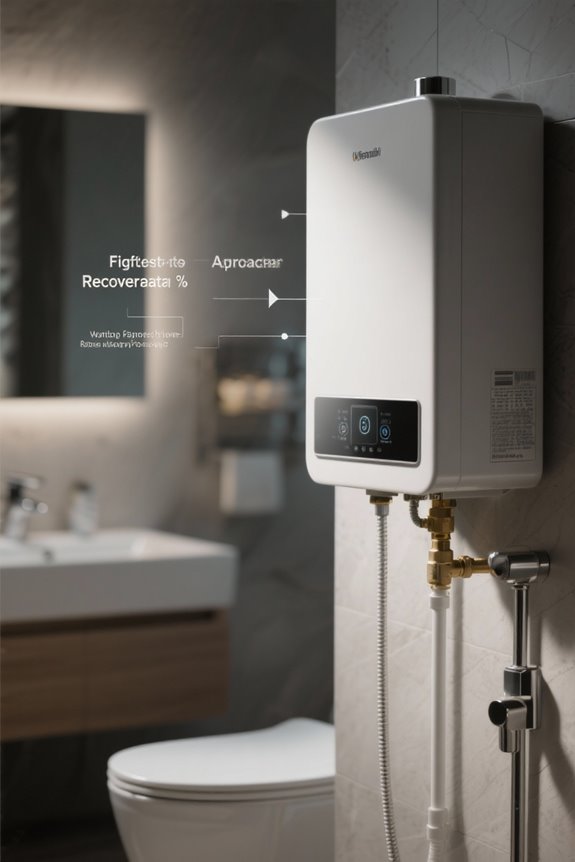
Understanding recovery rate extends beyond calculation, as various factors greatly influence how quickly a water heater can supply hot water. The size of the storage tank plays a critical role; larger tanks generally facilitate a higher recovery rate due to an increased volume of reheated water. Additionally, gas units typically outperform electric models, demonstrating higher recovery rates, thanks to more efficient heating elements. The quality of tank insulation also considerably impacts recovery, as well-insulated tanks minimize heat loss, requiring less energy for reheating. Furthermore, the temperature of incoming cold water affects performance, with colder water leading to lower recovery rates in winter months, while warmer temperatures in summer may enhance heating efficiency, allowing for quicker hot water supply. High Energy Efficiency Ratings contribute to improved recovery rates, as they indicate how effectively a heater converts energy into hot water, reducing overall reheating time.
Recommended Products

【Luxurious Size】: Our spacious home wooden sauna size is 82.67''L*70.86''W*82.67''H for 4-6 Person use. Indoor/Outdoor use, does not take up your indoor space in outdoor use, Transparent full glass door on the front, allowing you to fully enjoy the beautiful outdoor scenery

【Dual-Unit Parallel for 7200W Whole-House Power】This variant includes 2 units of 3600W/3600Wh LFP power stations, supporting parallel connection to achieve 240V/7200W high power output. Easily drives heavy household appliances (AC, dryers, water pumps) and realizes full whole-house backup, covering 99% of home power needs—perfect for large families or homes with high-power demands.

Enjoy professional cooking with this 14 piece cookware set which includes 10 inch and 12 inch Fry Pans, 2 Quart and 3 Quart covered Sauce Pans, 3 Quart and 6 Quart covered Sauté Pans, 12 inch covered chef’s pan and an 8 quart covered stockpot
Understanding First-Hour Ratings
While selecting an appropriate water heater, one of the defining factors is the first-hour rating, which quantifies the total amount of hot water available during the critical first hour of use. This rating is vital for understanding how much hot water will be accessible during peak usage times, like busy mornings when multiple showers or laundry loads occur. The first-hour rating combines the recovery rate with 70% of the tank capacity, offering an extensive view of hot water availability. For example, a water heater with a recovery rate of 40 gallons per hour and a 50-gallon tank would have a first-hour rating of 65 gallons. Consequently, a higher first-hour rating guarantees better support for simultaneous hot water demands in households. Modern water heaters often come with advanced insulation technologies that help in reducing heat loss and optimizing energy use, ensuring a more efficient and reliable supply of hot water.
Selecting the Right Water Heater for Your Needs
Choosing the right water heater involves careful consideration of several critical factors, including recovery rate, tank capacity, and energy efficiency, which ultimately dictate the performance and suitability of the unit for specific household needs. A gas water heater typically boasts a superior recovery rate, often ranging from 30 to 70 gallons per hour, considerably outpacing electric units that average around 20 gallons. Evaluating the first-hour rating, which combines recovery rate and tank capacity, is essential for determining hot water availability during peak usage periods. For households with multiple hot water requirements, opting for a 50-gallon gas unit can minimize tank size while still delivering ample supply. However, larger tanks may lead to increased energy consumption, necessitating careful balance. Moreover, considering energy-efficient systems like condensing water heaters can further reduce long-term operational costs and contribute to environmental sustainability.
Tips for Maximizing Hot Water Availability During Peak Times
Maximizing hot water availability during peak times necessitates strategic planning, particularly in households where multiple users rely on hot water simultaneously for showers, laundry, and dishwashing. To enhance efficiency, stagger the use of hot water appliances, scheduling showers, laundry, and dishwashing at different times to avoid overwhelming demand. Implementing a smart thermostat allows for better management of household temperatures, reducing unnecessary hot water usage. Regular maintenance, including flushing the water heater, is vital to maintaining performance. Additionally, using high-efficiency appliances with superior recovery rates guarantees faster replenishment of hot water. Finally, insulating the water heater minimizes heat loss, allowing a more consistent supply of hot water during peak periods, ultimately promoting user satisfaction while prioritizing energy efficiency. Consider installing a towel warmer with overheat protection to ensure safety and energy efficiency in your bathroom.
Frequently Asked Questions
What Is a Good Recovery Rate for a Water Well?
A good recovery rate for a water well typically ranges from 3 to 5 GPM, ensuring adequate well yield and water quality. Factors like pump efficiency, seasonal demand, and aquifer recharge influence ideal performance.
What Does GPH Recovery at 90 Degrees F Gallons Mean?
GPH recovery at 90 degrees Fahrenheit measures water heater capacity, influenced by temperature effect and efficiency rating. This essential metric informs plumbing considerations, ensuring adequate hot water supply and optimizing energy use during peak demand times.
What Is a Good Recovery Rate for a Hot Water Heater?
A good recovery rate for a hot water heater ranges from 30 to 70 gallons per hour. Efficient installation depends on heater capacity, energy consumption, and desired water temperature, ensuring ideal hot water efficiency.
What Is the Recovery Rate per Hour?
A high-efficiency gas water heater can achieve a recovery rate of up to 70 gallons per hour, enhancing system efficiency. This performance metric fundamentally addresses fluctuations in demand, contributing markedly to effective water management and supply.