As an Amazon Associate, we earn from qualifying purchases. Some links on this site are affiliate links at no extra cost to you. Our recommendations are based on thorough research and editorial judgment.

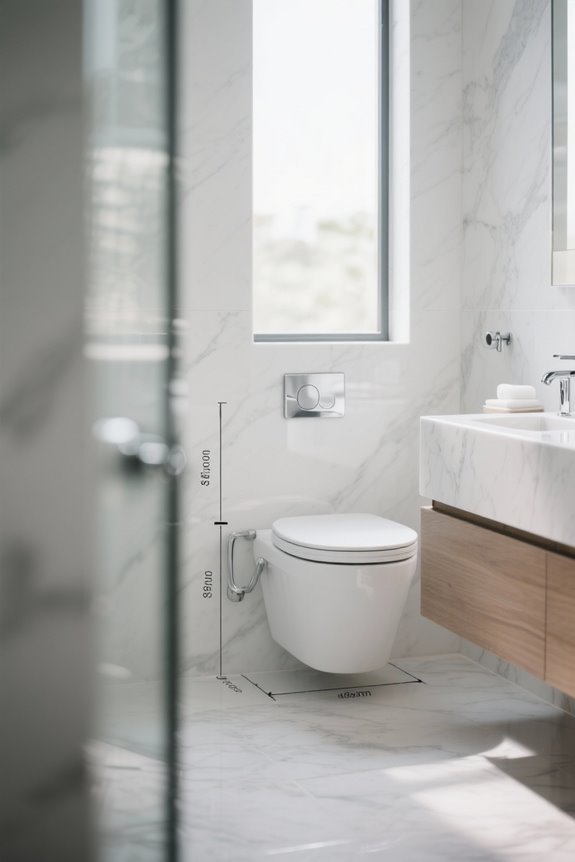
Toilet Clearances and Code Basics for Comfortable Use

Toilet clearances are essential for comfort and accessibility, requiring at least 15 inches of side clearance from the toilet centerline to walls or fixtures, and 21 inches of front clearance, preferably 30 inches. Compliance with ADA standards mandates a toilet seat height between 17 to 19 inches and a minimum turning space of 60 inches in diameter for wheelchair users. Accurate measurements, including a standard rough-in size of 12 inches from the finished wall, guarantee proper installation and usability. This overview outlines key dimensions for ideal toilet setup. Further details can enhance understanding of these specifications.
Key Takeaways
- Ensure a minimum front clearance of 21 inches; 30 inches is preferred for user comfort and accessibility.
- Maintain at least 15 inches side clearance from the centerline of the toilet to adjacent walls or fixtures.
- Comply with ADA guidelines by installing toilet seats at heights ranging from 17 to 19 inches for accessibility.
- Provide a minimum diameter of 60 inches for wheelchair turning clearance in bathrooms to ensure accessibility.
- Measure from the finished wall for accurate rough-in sizes, typically 12 inches, to avoid installation issues.
Importance of Toilet Clearances for Accessibility
You may be interested



Toilet clearances play an essential role in ensuring accessibility for all users, particularly those with mobility challenges, as they define the necessary space surrounding the toilet for safe and comfortable use. The minimum clearance of 15 inches from the center line of the toilet to adjacent walls or fixtures prevents obstruction, while a recommended front clearance of at least 24 inches—preferably 30 inches—enhances user comfort. For ADA compliance, toilet seat heights should range from 17 to 19 inches, accommodating various physical needs. Additionally, a minimum of 60 inches in diameter is necessary for wheelchair turning clearance, ensuring adequate movement space. Proper placement of flush controls on the open side of the toilet allows for easy, one-handed operation, further promoting accessibility for individuals with disabilities. Vertical storage solutions can maximize space in small bathrooms by organizing essential items efficiently, keeping the area around the toilet clear and accessible.
Minimum Clearance Requirements for Toilets
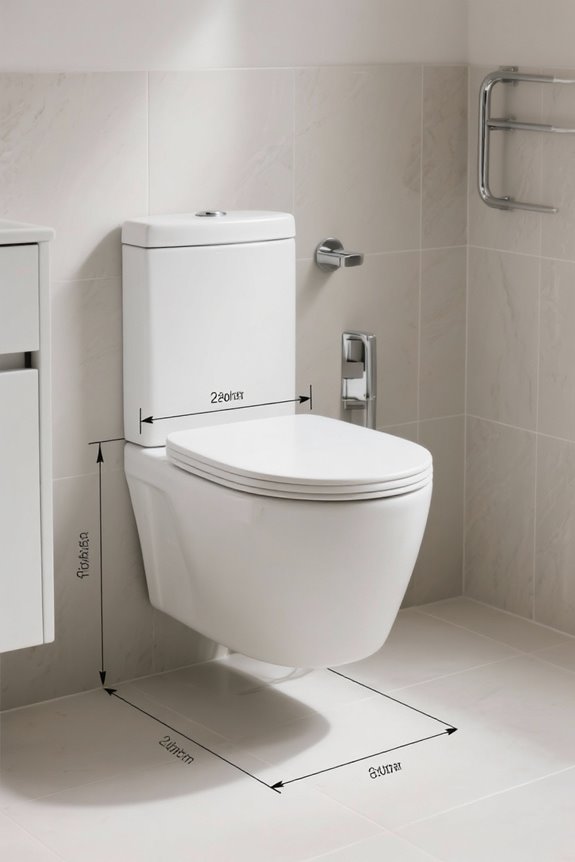
Clearance requirements surrounding toilet installations are integral to ensuring both functionality and user comfort. The minimum clearance in front of a toilet is 21 inches, while a preferred clearance of 30 inches enhances usability. Side clearance from the centermost point of the toilet to adjacent walls must measure at least 15 inches, with an ideal distance of 18 inches for better accessibility compliance. The total space required for a toilet installation should span at least 30 inches in width to facilitate proper access. According to plumbing code, maintaining a minimum of 24 inches from the bowl to any wall or door is necessary to prevent obstruction, while toilet seat height must range from 17 to 19 inches to accommodate users with mobility concerns. Automatic toilet cleaners can contribute to maintaining cleanliness, which is essential for proper toilet use and hygiene.
Measuring Toilet Dimensions Accurately
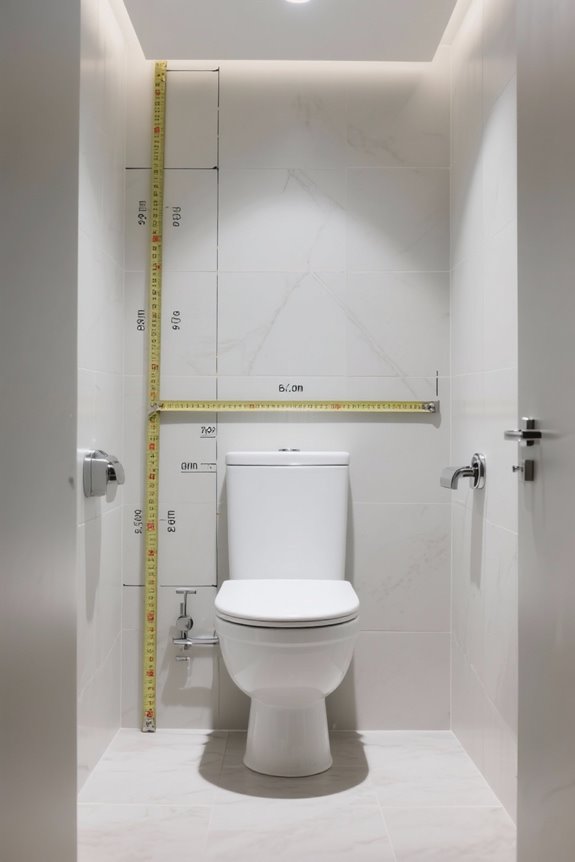
Accurate measurement of toilet dimensions is essential for a successful installation, ensuring that the fixture fits properly within the designated space and adheres to building codes. To achieve this, accurate rough-in measurements should be taken from the finished wall to the center of the toilets, typically 12 inches for standard rough-in sizes, although older homes may feature 10 or 14 inches. Additionally, toilet height is measured from the floor to the tank lid, while bowl height ranges between 15 to 17 inches for standard toilets and 17 to 19 inches for comfort height toilets. Ultimately, ensuring clear floor space and proper clearance from the toilets prevents obstacles, such as doors or cabinets, from impeding utility and access, maintaining a minimum size for user comfort. A gooseneck shower arm offers an ideal solution for enhancing bathroom functionality with adjustable height and improved water flow direction.
Recommended Products

Compact, streamlined one-piece smart bidet toilet with integrated personal cleansing. Elongated bowl offers added room and comfort

LUXELIFT: SAFE and CERTIFIED Complies with the internationally recognized standard for assistive products used in toileting, bathing, and showering, ensuring safety, durability, and quality for individuals with reduced mobility. Shop with confidence knowing your product meets strict healthcare and performance requirements.

HydroMax 1000g MaP Flushing System: Equipped with an advanced flushing system, the G20MAX delivers a certified 1000g MaP powerful flush for superior waste removal. The built-in water tank and booster pump ensure strong and reliable flushing even in low water pressure homes while maintaining quiet flushing operation.
Common Mistakes in Toilet Measurement
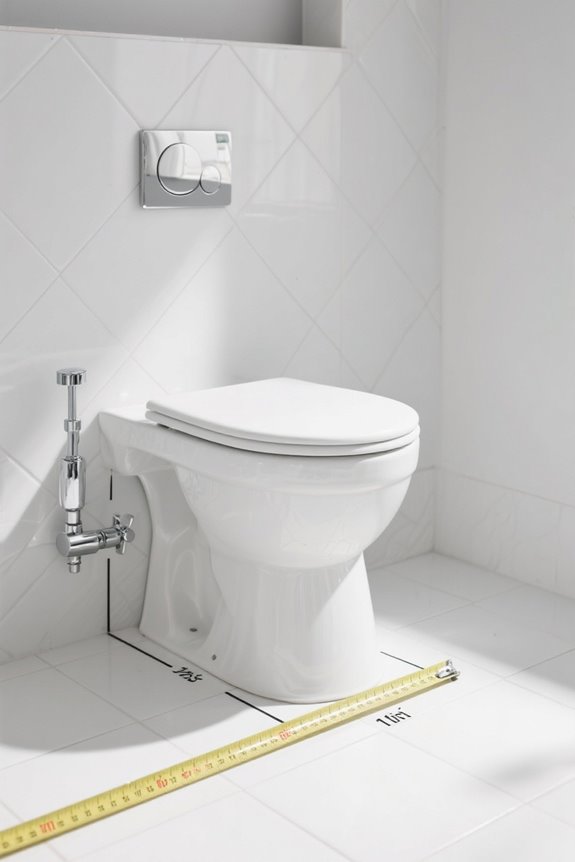
When undertaking a toilet measurement project, many individuals overlook essential details that can lead to significant challenges during installation. A common mistake includes measuring from the baseboard instead of the finished wall, which can result in incorrect rough-in measurements. Additionally, many DIYers fail to account for potential obstacles like doors or cabinetry, affecting necessary toilet clearances. Another frequent error is neglecting to take multiple measurements, particularly in spaces with uneven floors, which can lead to costly mistakes. It is vital to guarantee that the toilet’s centerline maintains at least 15 inches of side clearance from walls, with 18 inches preferred for comfort. Regular cleaning recommended to maintain handle appearance is essential for keeping bathroom fixtures looking new and functioning properly. Also, overlooking a minimum front clearance of 21 inches can compromise usability and safety in bathroom spaces.
ADA Compliance and Accessibility Standards
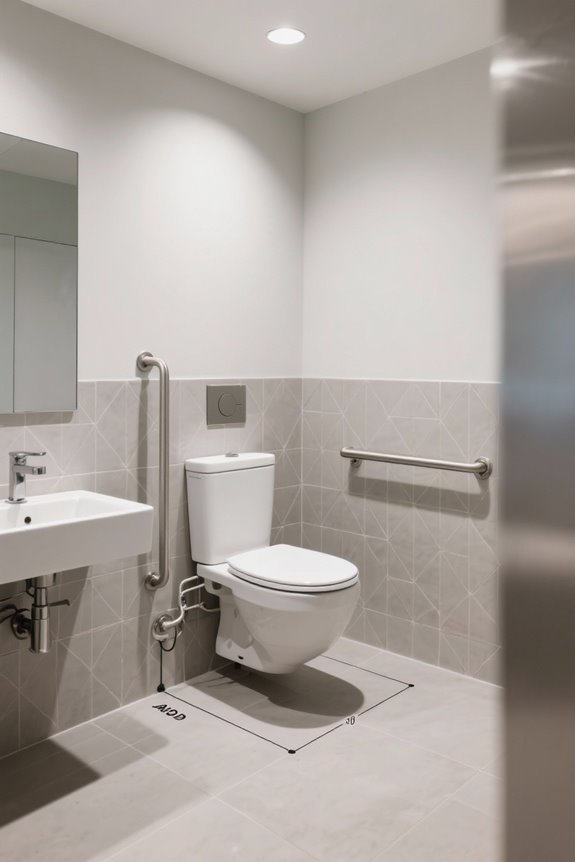
Ensuring ADA compliance in bathroom design is essential for creating accessible spaces that accommodate individuals with mobility challenges. Key standards include a toilet seat height of 17 to 19 inches, allowing users easy access and comfort. A minimum of 60 inches in diameter is necessary for wheelchair turning clearance, promoting safe maneuverability. The flush control should be easily operable with one hand and placed on the open side for accessibility. Side clearance requirements stipulate at least 16 inches from the centerline of the toilet to any adjacent wall or fixture, ensuring that users can navigate without obstruction. Additionally, at least 48 inches of clear space in front of the toilet is required to facilitate movement and enhance usability in compliance with established accessibility standards. Quiet-Close technology in toilet seats can also contribute to a more comfortable and convenient user experience, reducing noise and enhancing accessibility.
Ensuring Comfort Through Proper Toilet Installation
Proper toilet installation not only adheres to codes and regulations but also considerably enhances user comfort and accessibility within a bathroom setting. To achieve this, maintaining a minimum clearance of 21 inches in front of the toilet, with a preferred space of 30 inches, guarantees ease of access. In addition, a minimum of 15 inches of side clearance from the centerline to adjacent fixtures is essential, ideally increasing to 18 inches for optimum comfort. An ADA compliant toilet must offer a seat height between 17 and 19 inches to accommodate diverse mobility needs. Additionally, the International Plumbing Code stipulates at least 24 inches from the front of the toilet to the nearest obstruction, promoting hygiene and facilitating easier cleaning within thoughtful bathroom design. Considering shatterproof materials for bathroom mirrors ensures safety and durability, especially in households with children.
Frequently Asked Questions
What Is the Recommended Clearance for a Toilet?
The recommended clearance for a toilet emphasizes space optimization, safety features, and accessibility standards. Thoughtful toilet placement guarantees comfort, supports hygiene practices, enhances aesthetic appeal, and accommodates family needs during bathroom renovations and plumbing considerations.
What Is the Residential Code for Toilet Clearance?
The residential code for toilet clearance typically includes requirements for toilet layout, plumbing requirements, and bathroom dimensions, emphasizing accessibility standards, ergonomic factors, and installation guidelines to guarantee compliance with local regulations and effective space optimization during renovations.
What Is a Comfortable Space for a Toilet?
Comfortable toilet placement prioritizes proper spacing requirements, ensuring user accessibility and privacy concerns are addressed. Thoughtful bathroom dimensions, fixture orientation, and installation guidelines enhance design aesthetics while considering maintenance considerations and accessibility features for a superior experience.
What Is Considered Comfort Height for a Toilet?
Comfort height for a toilet generally ranges from 17 to 19 inches, enhancing user comfort and meeting accessibility standards. This toilet design accommodates various height variations, improving bathroom ergonomics and usability while following installation guidelines for maximum waste efficiency.