As an Amazon Associate, we earn from qualifying purchases. Some links on this site are affiliate links at no extra cost to you. Our recommendations are based on thorough research and editorial judgment.

Heat Pads Behind Mirrors: Safety and Installation Tips

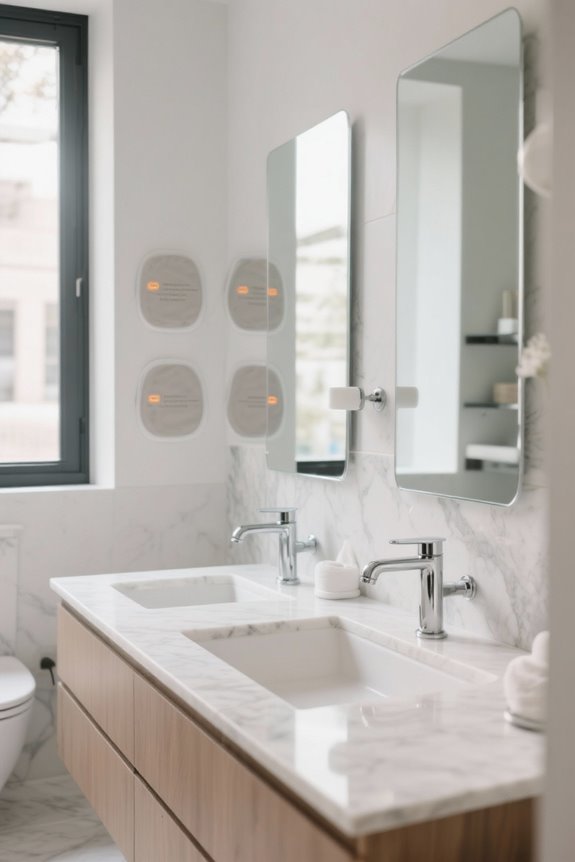
Demister heating pads, typically measuring 50cm x 50cm, effectively prevent mirror fogging by distributing warmth evenly across surfaces, enhancing hygiene in bathrooms. It is essential to cover at least 70% of the mirror while maintaining a 50mm margin for safety. Installation requires cleaning the mirror’s backside thoroughly and adhering to guidelines for electrical connections, including using a qualified electrician. Custom sizes are available, ensuring a tailored fit. Further insights on installation techniques and maintenance are also available for peak performance.
Key Takeaways
- Ensure compatibility with your mirror and prevent damage by using non-overlapping demister units for larger mirrors.
- Clean the backside of the mirror thoroughly before applying the pad to avoid air bubbles.
- Use a qualified electrician for electrical connections, ensuring compliance with safety codes.
- Maintain a minimum 50mm margin from the edges of the mirror to prevent heat damage.
- Regularly check connections and wires for wear to ensure safe and effective operation.
Understanding the Function of Demister Heating Pads
You may be interested



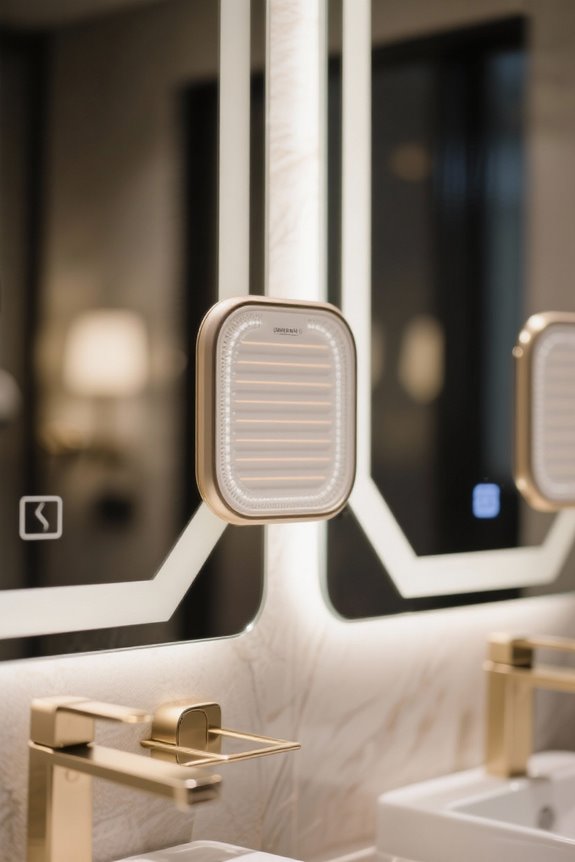
Demister heating pads, which serve as innovative solutions for maintaining clear reflections in bathrooms and other humid areas, function by evenly distributing warmth across the surface of mirrors to prevent fogging. Specifically, a Mirror Demister Pad is a self-adhesive device, typically measuring 50cm x 50cm, designed to be placed behind a mirror. It operates with a power consumption similar to that of a standard light bulb, roughly 50 Watts/hour. For ideal performance, installation should cover at least 70% of the mirror’s surface area, ensuring a consistently heated surface. Additionally, when one installs a mirror with a demister pad, it is vital to leave a 50mm margin from the edges, adhering to safety standards relevant in damp environments. Consider using weather-resistant models for installations in high-moisture areas to ensure long-lasting performance and durability.
Benefits of Using Mirror Defoggers
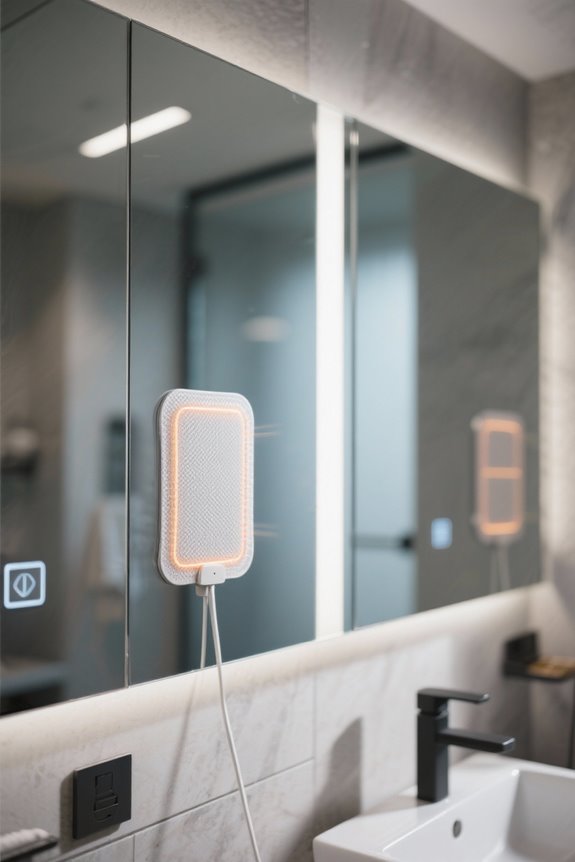
Using mirror defoggers, or heated pads, greatly enhances the user experience in moisture-heavy environments, particularly bathrooms where steam is a common issue. These mirror demister pads eliminate condensation, ensuring a crystal-clear reflection even after steamy showers. They operate efficiently, utilizing energy equivalent to a standard light bulb, keeping operating costs low, averaging just a few cents daily. A Heated Mirror Demister typically begins its function within five minutes of activation, making it convenient as it prevents delays after baths. Additionally, installing these defoggers improves bathroom hygiene by lessening the need for frequent cleaning of fogged surfaces. Custom options are available, allowing users to choose specific sizes and shapes tailored to their mirrors for peak performance, consequently enhancing practicality. Heated Anti-Fog Bathroom Mirror Films apply directly to the mirror surface with a flexible design and low power consumption, enhancing their effectiveness and sustainability.
Compatibility and Coverage Requirements
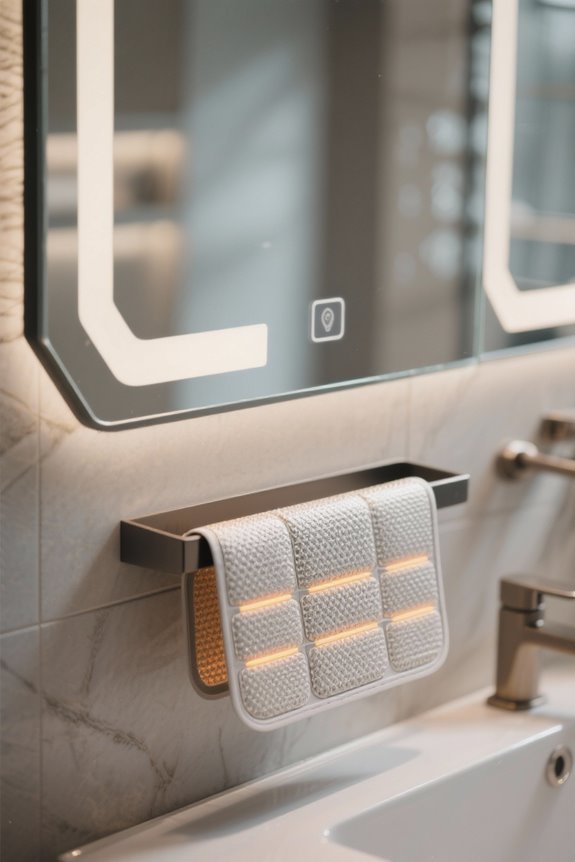
When selecting mirror demister pads, compatibility with the mirror is essential to guarantee proper functioning and to avoid potential damage during installation. The coverage requirements for ideal performance dictate that at least 70% of the mirror surface should be covered with demister pads. In addition, it is important to maintain a minimum 50mm margin from the heating pad edge to the mirror edge to ensure at least 25mm clearance, preventing overheating issues. For larger mirrors, multiple demister units can be combined, provided they do not overlap during installation. Significantly, demisters are not suitable for mirrors featuring cut-outs for lights or sockets, since those configurations may lead to complications in both installation and overall operation, emphasizing the importance of compatibility. Tankless water heaters offer a compact design that fits well in small spaces, similar to the compact nature of demister pads, allowing for efficient use of available space.
Preparation Steps for Installation
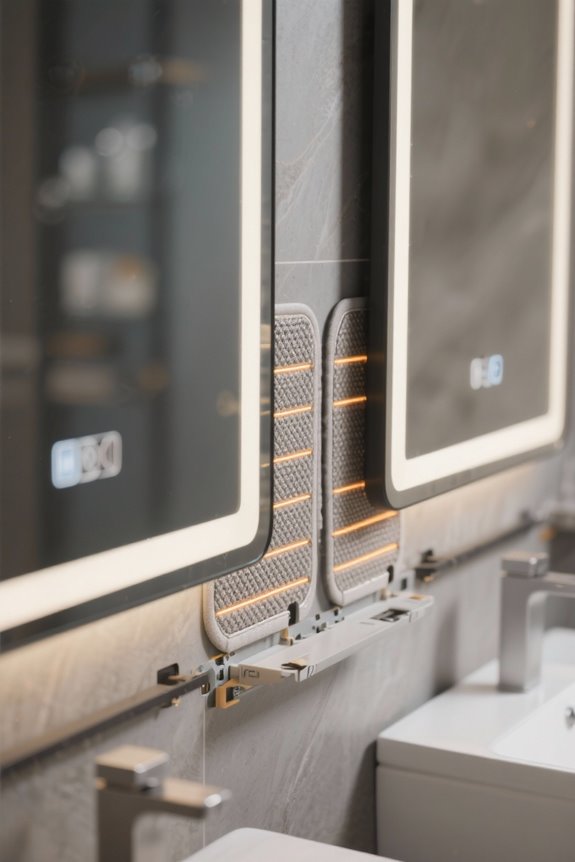
Following the consideration of compatibility and coverage requirements, attention must shift to the preparation steps necessary for an effective installation of heat pads behind mirrors. The process begins with positioning the mirror reflective side down on a stable, level surface, ensuring a suitable workspace. Next, thorough cleaning of the backside is vital to eliminate any dirt or grease, which optimizes adhesion for the demister pad. Prior to placement, the protective safety foil on the pad must be peeled off. Careful positioning follows, ensuring that the demister pad, with its adhesive side down, covers at least 70% of the mirror surface while maintaining a 50mm margin from the edges. It is essential to avoid air bubbles during application, as these can compromise the heating efficiency. Consider utilizing decorative storage solutions to keep your bathroom organized and complement the aesthetic when installing heat pads behind mirrors.
Adhesive and Secure Mounting Techniques
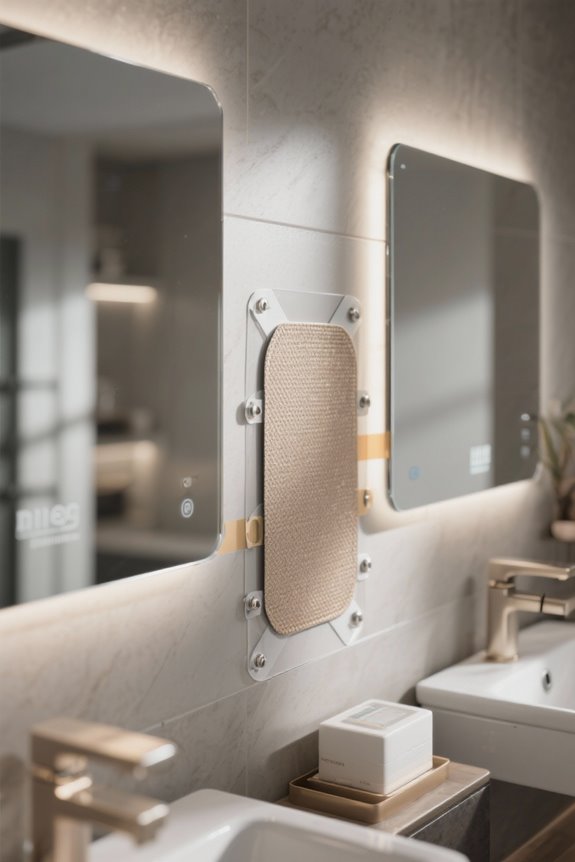
To guarantee a successful installation of heat pads behind mirrors, the choice of adhesive and the secure mounting technique are critical components that cannot be overlooked. Selecting a solvent and acrylic-free adhesive is fundamental for compatibility with the mirror surface, promoting optimal performance of the demister pad. During installation, it is crucial to avoid making additional holes in the mirror, as this can lead to stress or potential damage. If screws are necessary for secure mounting, rubber spacers should be utilized. Maintaining a margin of 50mm from the heating pad’s edge to the mirror edge prevents overheating, while careful positioning without trapped air bubbles underneath enhances adhesion. Applying even pressure post-installation ensures a secure attachment to the mirror. Adhesive shower caddies are preferable for smooth surfaces to ensure strong installation, similar to how a proper adhesive selection is vital for mirror heat pads.
Electrical Installation Guidelines
Successful mounting requires not only proper adherence techniques but also a strong emphasis on safe electrical installation. It is essential to have a qualified electrician handle the electrical connection of the heated mirror, ensuring compliance with safety codes and regulations. For low voltage (12V) models, if the installation occurs outside of zone 1 in a bathroom, a suitable transformer is necessary. However, when situated in zone 1, an SELV isolating transformer must be used to mitigate electrical hazards. The demister should connect through a fused spur to the room’s lighting circuit, allowing for automatic activation with the lights. Additionally, it is important to avoid leaving the demister on for prolonged periods without heat dissipation, which can lead to overheating and potential damage. The use of high-efficiency cartridges in shower filters exemplifies how advanced technology can improve household water quality and safety.
Safety Measures to Consider
While installing a heated mirror demister pad provides significant benefits, including enhanced visibility in humid environments, several safety measures must be strictly observed to confirm secure and efficient operation. To guarantee safe installation, compliance with electrical codes is critical; thus, a licensed electrician should manage wiring tasks. Install the mirror pad with a minimum margin of 50mm from the mirror’s edge to avoid damage, including cracking. Grounding the heating foil prevents capacitance issues, especially with Class II devices. Utilizing a thermostat or timer switch is advisable, as this prevents overheating and avoids long-term heat retention. Additionally, the demister pad should be mounted on a stationary mirror surface, as it is unsuitable for movable installations like medicine cabinets. Consider the moisture resistance of materials when selecting components for heated mirrors, as this ensures durability in humid bathroom environments.
Common Mistakes to Avoid During Installation
When installing a heated mirror demister pad, several common mistakes can undermine its effectiveness and safety, particularly if proper precautions are not taken. First, it is vital to position the demister pad at least 50mm from the edge of the mirror surface to prevent potential heat damage and cracking. Overlapping heating pads should also be avoided, as this may lead to uneven heating, reducing overall efficiency. Additionally, the mirror surface must be thoroughly cleaned to guarantee a strong adhesive bond, as dirt and grease can compromise installations. Finally, demister pads should never be installed on mirrors with cut-outs for lights or sockets, as this can greatly affect the pad’s performance and safety. Using a solvent, acrylic-free adhesive is essential for compatibility with mirror materials. To ensure a secure and hassle-free installation, consider using high-quality materials like solid brass or stainless steel, which are known for their durability and resistance to rust and corrosion.
Customer Feedback and Product Recommendations
As customer feedback consistently indicates, Demista heated mirror pads are renowned for their straightforward installation process and effective fog prevention, making them a sought-after choice for bathroom upgrades. Users frequently highlight their energy efficiency, as these pads consume energy equivalent to a standard light bulb, resulting in impressive cost savings. Available in sizes ranging from 500mm to 970mm, they can easily accommodate various mirror dimensions. Additionally, manufacturers offer custom sizes to guarantee that the mirror fits seamlessly. Many customers appreciate the convenience of wiring the Demista heated mirror pads to bathroom lights, allowing them to activate automatically when the lights are turned on. Overflow drains are crucial to prevent spills and water damage in bathroom installations, ensuring a clean and efficient environment. With a reported 10-year warranty against manufacturing faults, these pads exemplify durability and long-term value in modern bathrooms.
Maintenance Tips for Longevity
To guarantee the longevity and peak performance of heated mirror pads, regular maintenance is essential, particularly in areas that experience high humidity and temperature fluctuations. Users should regularly inspect the connection points and wiring to verify that no visible signs of wear or damage are present, as maintaining electrical integrity is vital for functionality and safety. The mirror’s surface must remain clean and free from grime since this promotes better heat conduction and lifespan. It is imperative to avoid using sharp objects or excessive force when cleaning to prevent damaging the demister pad. Additionally, confirming the installation adheres to recommended margins of 50mm from the edge and covers at least 70% of the surface will optimize heating performance. Incorporating rustproof stainless steel accessories can ensure longevity in humid conditions, complementing the maintenance of your heated mirror pads.
Exploring Custom Size Options
Custom size options for heated mirror pads, which are designed to provide effective demisting solutions for various mirror shapes and dimensions, offer a tailored approach to enhancing both functionality and aesthetics. Custom-sized demister pads are available from manufacturers, allowing for specific adaptations to accommodate diverse shapes, including rectangular, oval, and round mirrors. For ideal performance, it is recommended that these pads cover at least 70% of the mirror surface. In addition, many units come equipped with a self-adhesive backing, simplifying installation. However, since custom units are made-to-order and typically non-returnable, accurate measurements are vital. Manufacturers often provide expert advice, assisting customers in determining the best custom size and configuration to meet their unique installation needs effectively.
Frequently Asked Questions
What Precautions Should You Take When Using a Heating Pad?
Heating pad safety necessitates proper usage by adhering to electrical codes, maintaining adequate margins, using low-surface-temperature pads, installing timers, and ensuring proper grounding. These electric pad precautions minimize risks of burns, overheating, and potential hazards.
Will Heat Damage a Mirror?
Heat can damage a mirror, particularly if the mirror material types are incompatible with the heating source. Different heat tolerance levels and reflective coating effects play significant roles in determining potential heat-related deterioration.
How to Keep Your Side Mirrors From Freezing?
During winter’s icy grip, frozen mirror prevention becomes paramount. Heat pad options, strategically applied, can prevent ice formation. Pair these with winter driving tips for enhanced visibility and safer journeys through the frigid landscape.
What Are Common Mistakes When Using Mirror Hooks?
Common mistakes include incorrect mirror hook placement, exceeding weight limits, and using incompatible surfaces. Users often neglect to secure hooks properly or check for electrical wiring, risking instability and potential hazards during mirror installation.