As an Amazon Associate, we earn from qualifying purchases. Some links on this site are affiliate links at no extra cost to you. Our recommendations are based on thorough research and editorial judgment.

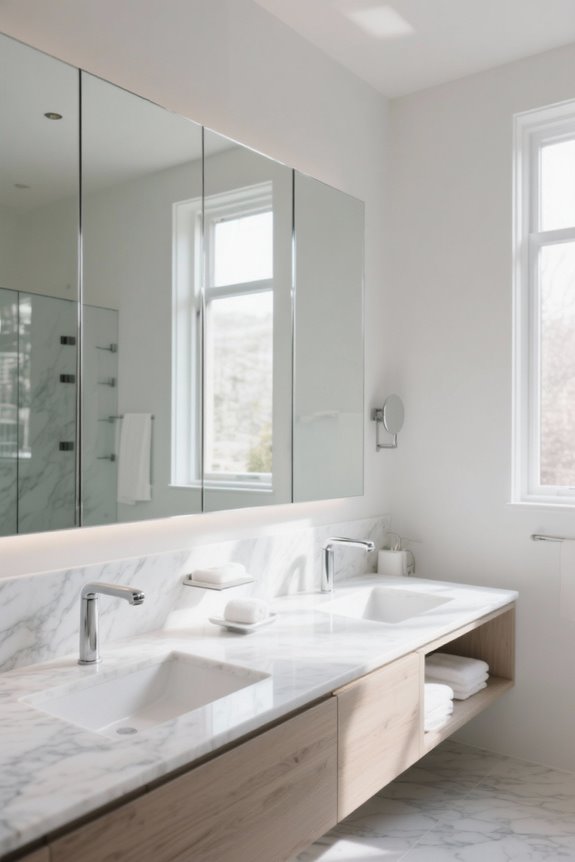
Using Mirrors to Bounce Daylight Deeper Into the Room

Using mirrors to bounce daylight deeper into a room is an effective method for enhancing natural light distribution. By positioning mirrors opposite windows, one can increase brightness by 30-50%. For ideal results, install mirrors at a height of 4-6 feet, ensuring proper alignment to correctly redirect light. High-quality mirrors with glossy finishes improve reflectivity, while shatterproof materials enhance safety. Experimenting with different angles further amplifies light penetration, creating a more luminous space. Discover more strategies for effective light enhancement.
Key Takeaways
- Place mirrors opposite windows to maximize natural light reflection, potentially increasing brightness by 30-50% in the room.
- Install mirrors at eye level, approximately 4-6 feet from the floor, to optimize the capture of incoming daylight.
- Align mirrors at strategic angles to enhance light diffusion and minimize shadows throughout the space.
- Experiment with mirror placement to discover unique light patterns that can brighten darker corners effectively.
- Choose larger, high-quality mirrors with glossy finishes to improve reflectivity and maximize daylight bouncing deeper into the room.
Understanding the Science of Reflection
You may be interested



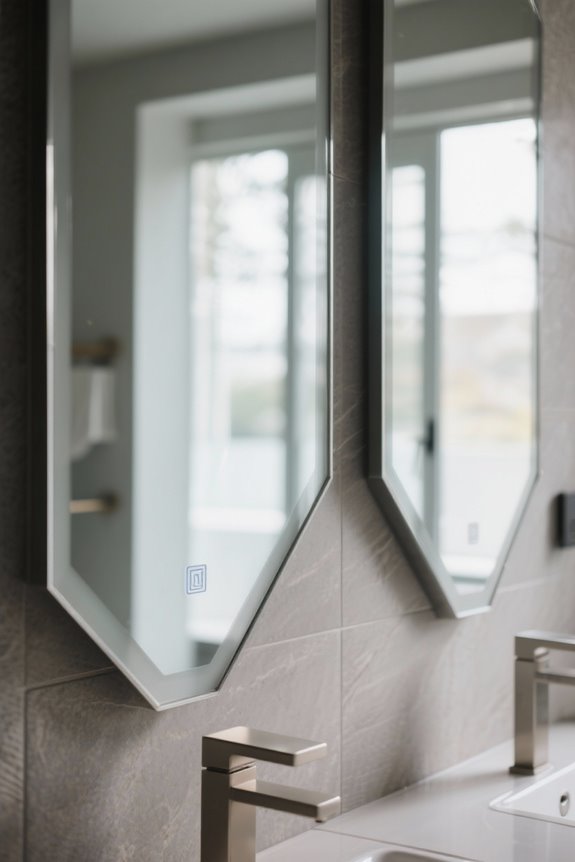
Understanding the science of reflection begins with the fundamental law that governs this phenomenon: the angle of incidence equals the angle of reflection. This principle enables mirrors to effectively redirect light throughout a space. By strategically placing mirrors opposite windows, homeowners can maximize light and enhance daylight projection deeper into rooms, greatly amplifying brightness while reducing reliance on artificial lighting. High-quality mirrors, often made with silvered or aluminum backing, exhibit superior reflectivity, enhancing both natural and artificial light sources’ diffusion patterns. Experimentation with angles and positions can reveal ideal lighting configurations, maximizing light spread in darker areas. Consequently, the strategic use of mirrors minimizes shadows, resulting in a more uniformly illuminated environment tailored to diverse living spaces. For those looking to incorporate both style and function, wall-mounted clocks can complement mirrored setups, enhancing room aesthetics while maintaining utility.
The Angle of Incidence and Reflection
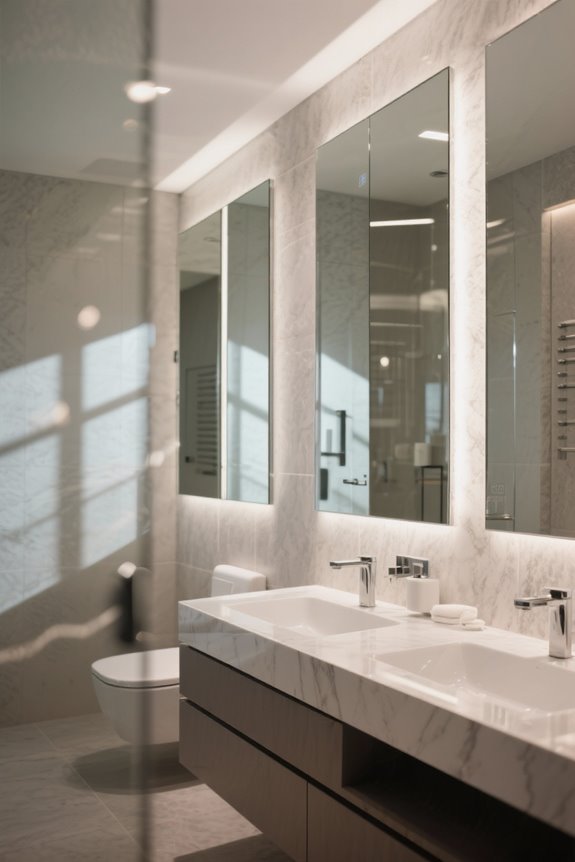
The law of reflection states that the angle of incidence, which measures the angle between the incoming light ray and the normal line perpendicular to the mirror surface, is equal to the angle of reflection, the angle at which the light ray exits after bouncing off the mirror. Proper alignment of mirrors is essential for strategically directing light rays, as misalignment can hinder effective light bouncing, resulting in some areas remaining dim. By positioning mirrors at ideal angles, homeowners can manipulate light to enhance depth, softening shadows while distributing brightness more evenly. This understanding of angles allows for maximizing natural light throughout a room, demonstrating how precise placement can markedly improve illumination and overall ambiance. When selecting mirrors, consider those with adjustable lighting features to further enhance the ambiance by controlling illumination levels and color temperatures.
Strategic Placement for Maximum Impact
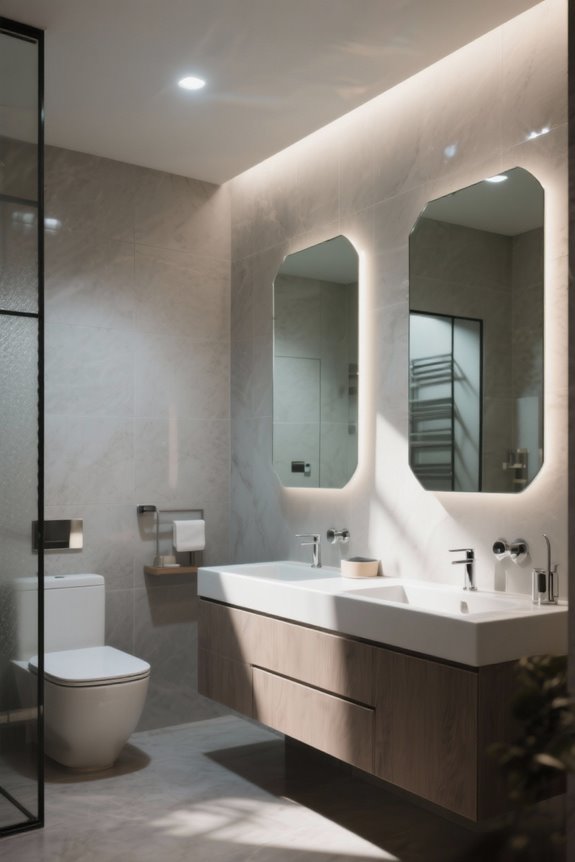
How can the strategic placement of mirrors transform the natural lighting in a room? Effective mirror placement can maximize natural light and enhance overall ambiance. By strategically placing mirrors at eye level, they can optimize light reflection from windows, allowing sunlight to bounce light deeper into the space. Adjacent mirrors along walls can illuminate throughout the room, reducing shadows and creating a layered lighting effect. In smaller areas, mirrors positioned near light fixtures help expand artificial lighting coverage, minimizing dark spots. Experimenting with placements may reveal unique patterns of light that create a brighter space, inviting a more open atmosphere. Some adhesive wall mirrors offer shatterproof materials that enhance safety, making them ideal for homes with children. Overall, proper mirror positioning is key to efficiently enhancing natural and artificial light sources.
Recommended Products

48x 84 Inch activity mirror kit. The product is copper and lead free

Massive 118" Wide Full-Body Viewing Area: With an impressive 118" expanded width and 71" height, this extra-large mirror delivers a complete head-to-toe reflection. Perfect for dance studios, fitness centers, golf swing practice, group training, and professional posture correction.

PROFESSIONAL GYM MIRROR - Shatterproof tempered glass 2X safer than standard mirrors with exclusive safety backing for home gyms and dance studios.
Placing Mirrors Opposite Windows
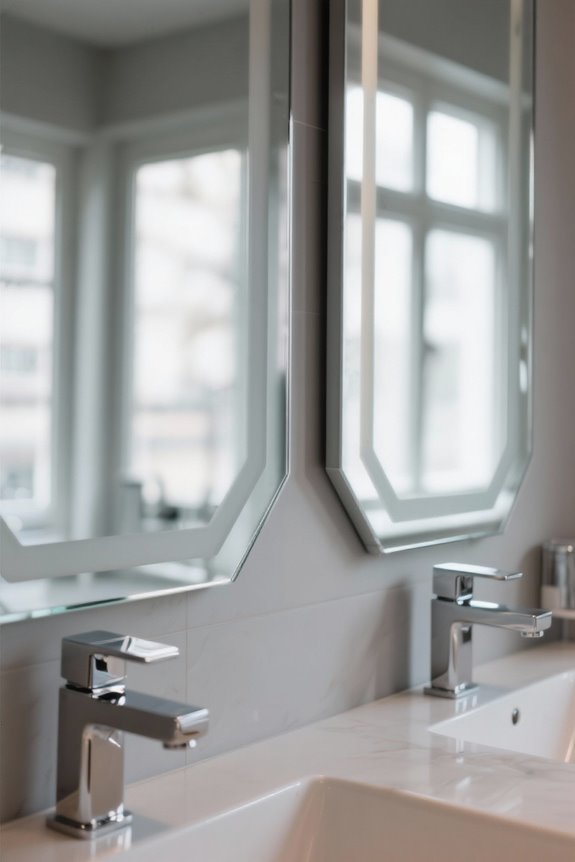
Placing mirrors directly opposite windows stands out as a highly effective strategy for amplifying natural light within a room, often leading to an increase in brightness by 30-50%. This arrangement not only reflects light but also enhances distribution to darker corners, creating a more inviting atmosphere. The angle of incidence equals the angle of reflection; consequently, proper alignment is essential for maintaining the light’s trajectory. When placing mirrors, one should consider the room layout and aim to install them at a height of 4-6 feet from the floor. Care should be taken to avoid reflecting undesirable views, such as walls or clutter, to maximize aesthetic benefits while ensuring ideal light reflections throughout the day. Additionally, choosing mirrors with anti-fog technology can maintain clarity even in humid conditions, ensuring consistent light reflection.
Recommended Products
ENJOY THE PERFECT REFLECTION IN ANY ROOM: These home gym mirrors feature low-iron tempered glass for clear, bright images. It's copper and lead-free with a double-layer primer for HD reflections and durability, and the silver backing prevents warping and distortion, even in high-humidity conditions

UNIQUE FRAME DESIGN: this full-body mirror on the frame installs a mirror, creating a frame-free feel. The unique and elegant appearance will become the bedroom, the sitting room, the dresser, the cabinet, the porch, and the porch ideal decoration wall mirror.

Beveled Edge Elegance: Expertly crafted with a precision-cut beveled edge, this frameless mirror brings a refined, modern touch to your space. The sleek design adds depth and sophistication, blending effortlessly with any décor—perfect for the bathroom, bedroom, entryway, or hallway.
Leveraging Light in Darker Rooms
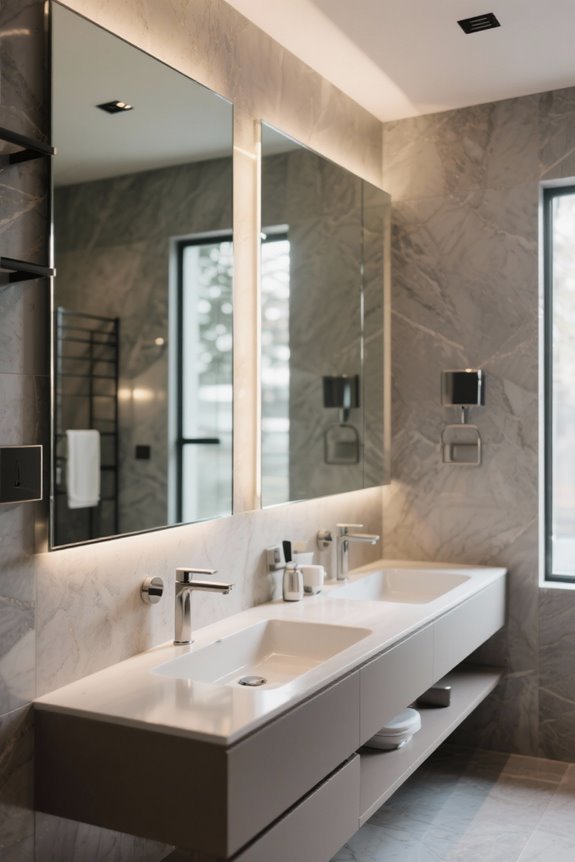
Although darker rooms often present a challenge for maintaining adequate lighting, strategically leveraging mirrors emerges as a practical solution to greatly enhance brightness and ambiance. By strategically placing mirrors near light sources such as sconces or lamps, homeowners can amplify illumination, reflecting and diffusing light while minimizing dark spots. Large mirrors can notably improve light distribution, creating balanced luminosity, especially in basements or spaces with limited windows. Adjusting angles allows for the effective redirecting of available light, ensuring corners receive adequate illumination without relying solely on artificial lighting. Additionally, proper mirror placement can increase perceived spatial volume, making dark rooms feel more open and inviting. Regular adjustments maximize effectiveness, accommodating variable daylight intensity throughout the day. Incorporating full-length mirrors with high-definition reflection can further enhance the light distribution, creating a clearer and brighter space.
Recommended Products
【Beveled Aluminum Frame】Experience TokeShimi 48 x 32 medicine cabinet with precision beveled edges that amplify light and depth. Framed in durable aluminum engineered to be 65% lighter than wood, this corrosion-resistant, moisture-proof mirror cabinet installs effortlessly and outlasts traditional frames
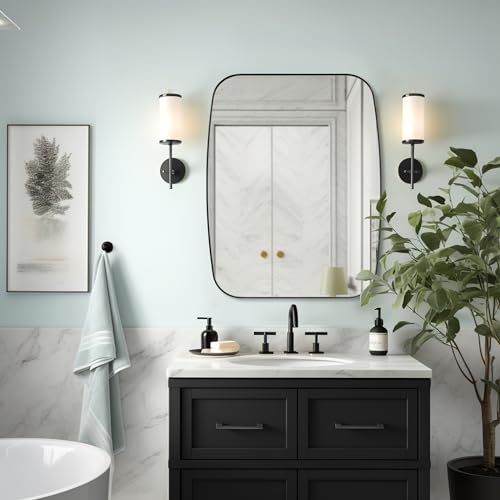
Excellent Performance: A sleek, modern stainless steel metal frame surrounds a unique oblong mirror; sets it apart from traditional oval or rectangular mirrors; matte black finish complements your bathroom; adds light and space to the room

Elegant LED frame: Dimmable LED lights for even and pleasant lighting and their 5x magnification function help capture every detail accurately
Choosing the Right Mirror for Your Space
Choosing the right mirror for a space involves considering various factors that affect both functionality and aesthetics, as each choice can significantly influence how light interacts within a room. Larger mirrors increase reflective surface area, allowing for improved light reflection and deeper illumination throughout the area. When selecting mirrors, high-quality glass and silvered backing should be prioritized for maximum reflectivity. Additionally, thinner or frameless designs minimize obstruction and enhance light diffusion. The shape of the mirror, whether circular or rectangular, also impacts aesthetics; circular mirrors soften the space while rectangular mirrors lend a modern touch. Ultimately, it is crucial to guarantee that the mirror size complements surrounding decorative pieces to enhance both light quality and visual appeal effectively. Shatterproof glass designs often included in modern mirrors prevent injury from accidental breakage, making them a safe and practical choice.
Selecting Mirror Size and Shape
Selecting the appropriate size and shape of a mirror is essential for enhancing both illumination and aesthetic balance within a room. Larger mirrors, typically measuring 36-48 inches or more, greatly boost light reflection, enhancing the perception of daylight. Rectangular mirrors are well-suited for narrow spaces as they create linear reflections, while round mirrors soften harsh angles, promoting visual balance. The choice of mirror shape introduces dynamic aesthetics; organic shapes contrast with straight lines, fostering a sense of harmony. In addition, minimalist or frameless designs maximize light capture due to their larger surface areas, while proportional sizes maintain visual harmony with existing décor. Choosing mirrors with HD explosion-proof glass ensures safety by minimizing shattering risks while also enhancing the clarity and quality of reflections. Ultimately, these considerations will guarantee effective light enhancement and a pleasing visual environment.
The Impact of Frame and Finish
The impact of frame and finish on mirrors extends beyond aesthetic appeal, considerably affecting their ability to reflect and diffuse light within a space. The choice of frame material plays an essential role; lighter, thinner frames minimize obstruction to light, while thicker, darker frames can reduce the effective reflective surface area by 10-20%. A frameless mirror maximizes reflected light, cultivating an open atmosphere. Additionally, the finish influences light diffusion: glossy finishes enhance reflectivity, whereas matte finishes absorb it. Intricate decorative frames may obstruct reflection, making simplicity a fundamental consideration. Selecting a frame that aligns with the room’s aesthetic while focusing on minimal disruption to light guarantees effective illumination and maximizes the brightness potential of mirrors throughout the area. Smart bathroom mirrors, which feature adjustable color temperatures and dimmable brightness, further enhance a room’s lighting dynamics.
Incorporating Mirrors Into Room Layouts
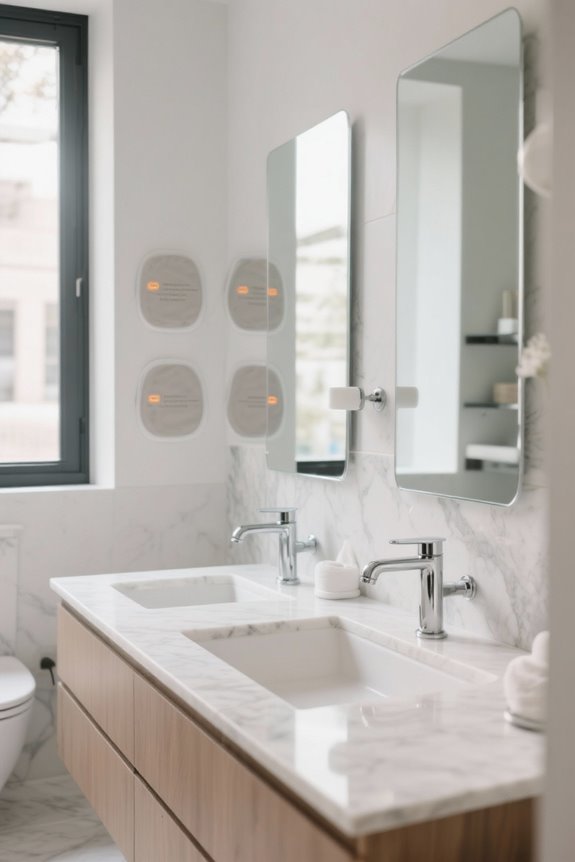
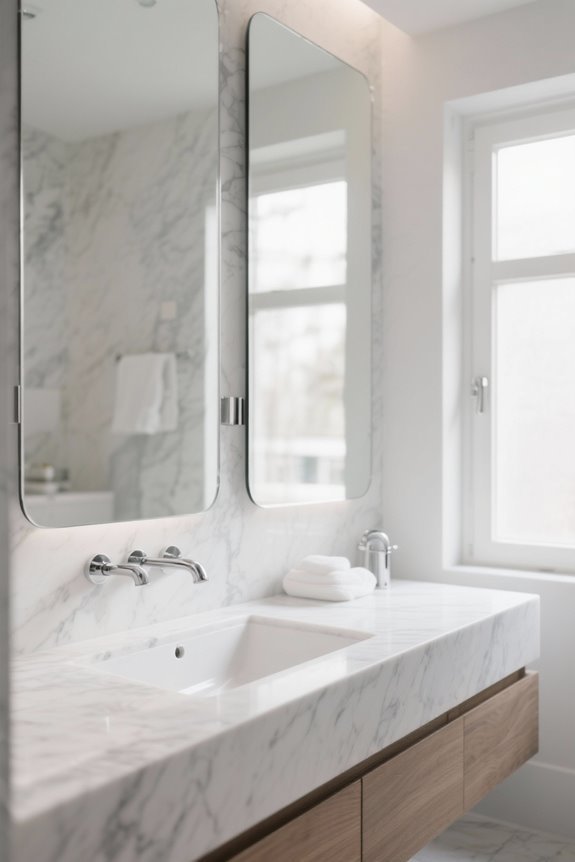
When integrating mirrors into room layouts, it is essential to contemplate not only their placement but also their size and function within the space. Large mirrors positioned behind sofas or above fireplaces effectively reflect daylight, enhancing brightness in living areas. In dining rooms, aligning mirrors with light fixtures amplifies ambient lighting while fostering a sense of spaciousness. Full-length mirrors in bedrooms serve dual purposes, allowing for dressing and increasing natural light penetration. Generously sized mirrors in bathrooms improve visibility for grooming tasks and disperse light efficiently. Additionally, strategically placing mirrors in dark corners or low-light areas minimizes shadows, ensuring a more equitable distribution of available light throughout the room, making all rooms feel more inviting and expansive. Incorporating decorative mirrors can add elegance to various decor styles, enhancing both contemporary and traditional aesthetics.
Simple Tips for Maintaining Your Mirrors
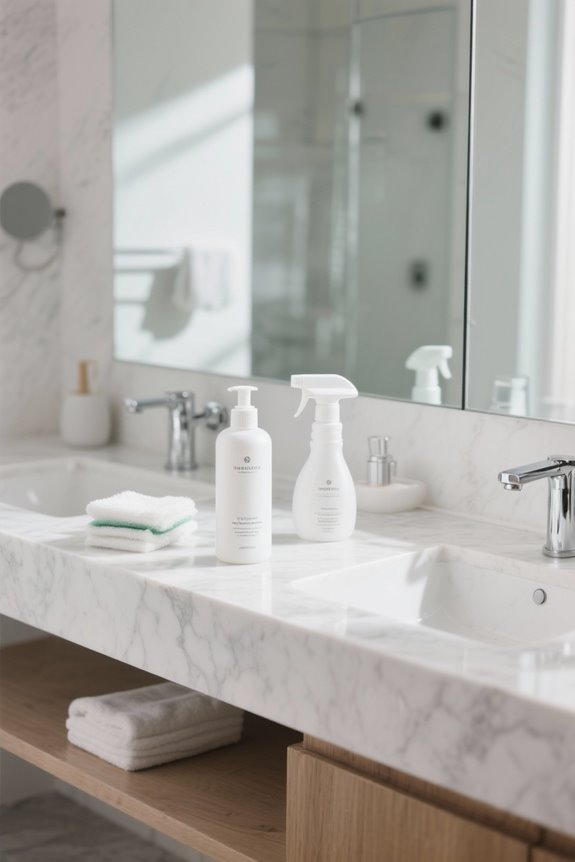
Maintaining mirrors in ideal condition is vital for preserving their reflective qualities and overall aesthetic appeal, and this can be achieved through several straightforward practices. Regularly clean mirrors using a microfiber cloth and a pH-neutral glass cleaner or vinegar solution to maintain clarity and enhance light reflection. In humid environments, guarantee adequate ventilation to prevent desilvering, and consider applying protective coatings to increase durability. Additionally, check mirrors for signs of deterioration, such as loss of clarity or black spots, indicating a need for replacement. It is important to avoid abrasive cleaners that can scratch surfaces and impair functionality over time. Finally, handle mirrors with care during cleaning and transportation, ensuring upright storage to prevent physical damage, delivering ideal results. To enhance privacy, static cling films can be applied to mirrors, offering additional benefits such as UV protection and aesthetic appeal.
Creating a More Luminous Home With Mirrors
Proper mirror maintenance not only guarantees their longevity but also maximizes their potential in enhancing interior lighting. By strategically placing mirrors directly across from windows, homeowners can greatly amplify natural light, allowing it to penetrate deeper into the room. Larger mirrors, ideally with silvered or aluminum backing, can enhance brightness levels by capturing and redistributing light effectively, increasing illumination by 30-50% depending on the placement. For best results, mirror placement at eye level, approximately 4-6 feet from the floor, captures light best while minimizing unsightly reflections. Experimenting with angles, particularly near lamps, enhances artificial light, contributing to a more inviting overall atmosphere and helping to create a brighter space by reflecting sunlight effectively throughout the home.
Frequently Asked Questions
Can You Use Mirrors to Redirect Sunlight?
Yes, mirrors can redirect sunlight effectively. Strategic mirror placement, considering sunlight angles and window proximity, enhances natural light diffusion. Larger reflective surfaces improve energy efficiency, benefiting room size and contributing to aesthetic appeal in interior design.
Does Putting a Mirror in a Room Make It Brighter?
Can a mirror truly transform a space? Indeed, strategic mirror placement enhances ambient brightness through reflective surfaces, optimizing natural lighting and creating spatial enhancement, while adding visual interest to interior design and improving overall room illumination through effective light diffusion.
How to Bounce Light With Mirrors?
To effectively bounce light with mirrors, one should consider mirror placement near windows, adjust light angles, utilize reflective surfaces, and align decorative mirrors with color palettes that enhance space and optimize natural lighting throughout the room layout.
How to Create Depth With Mirrors?
To create depth with mirrors, strategic placement enhances light reflections and depth perception, fostering an illusion of expansion. This reflective arrangement achieves design balance, contributes to room ambiance, and elevates the aesthetic appeal of space.