As an Amazon Associate, we earn from qualifying purchases. Some links on this site are affiliate links at no extra cost to you. Our recommendations are based on thorough research and editorial judgment.

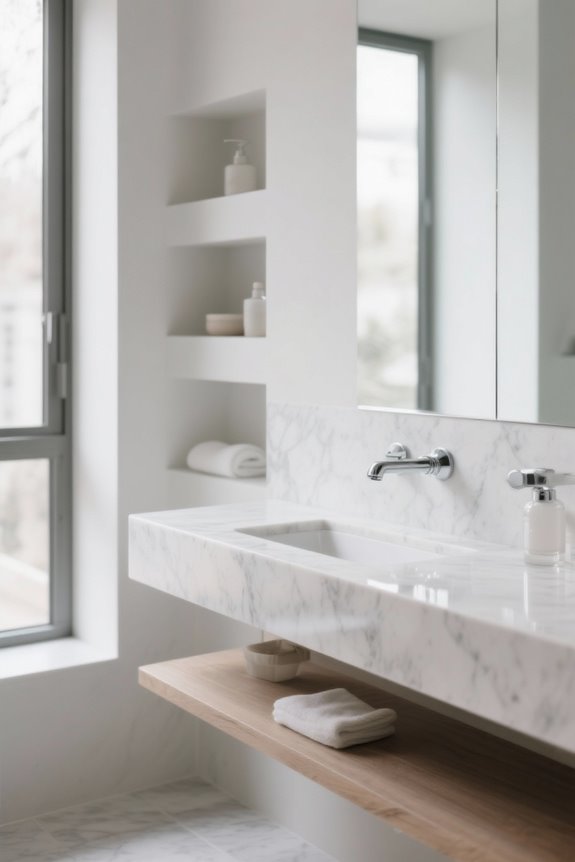
Styling Niches and Ledges: Practical Aesthetics

Niches and ledges in shower design enhance practical aesthetics by providing organized storage. Niches, typically 3.5 inches deep, integrate into wall structures, while ledges offer prominent surfaces along walls for easy access to products. Both options promote a clutter-free environment, yet ledges are increasingly favored for their sleek appearance and suitability for bulkier items. Waterproofing and high-quality materials, like rustproof stainless steel, are essential for durability and functionality. Discover more about how these features can elevate bathroom remodeling.
Key Takeaways
- Incorporate contrasting materials in niches to create a striking visual focal point while enhancing overall aesthetics.
- Use uniform tiles for both niches and ledges to achieve a seamless look, minimizing visual clutter.
- Opt for deep niches to accommodate various product sizes, ensuring practical storage without overcrowding.
- Select rustproof stainless steel for ledges to enhance durability while maintaining a modern and sleek appearance.
- Position ledges at accessible heights for easy organization, promoting both functionality and an aesthetically pleasing design.
Understanding the Purpose of Niches and Ledges in Shower Design
You may be interested


In modern bathroom design, the integration of shower niches and ledges serves essential functions that enhance both aesthetics and practicality. Shower niches, embedded into the wall, provide a seamless storage solution that merges with tile patterns for an elevated visual appeal. Conversely, shower ledges extend from the wall, offering ample surface area for organizing multiple products, making access straightforward, albeit taking up additional space. While traditional niches often demand complex installation and considerable waterproofing efforts, ledges present a simpler, cost-effective construction option. Shower niches allow customization in various shapes and sizes, suitable for specific design preferences, whereas ledges can stretch along a wall, catering to larger shower setups. Both methods promote organization, markedly reducing clutter and fostering an efficient bathroom environment. Additionally, integrating features like Vitamin C shower heads can transform the shower into a spa-like sanctuary, enhancing both skin and hair health with advanced filtration systems.
Advantages of Shower Niches: Functionality and Aesthetics
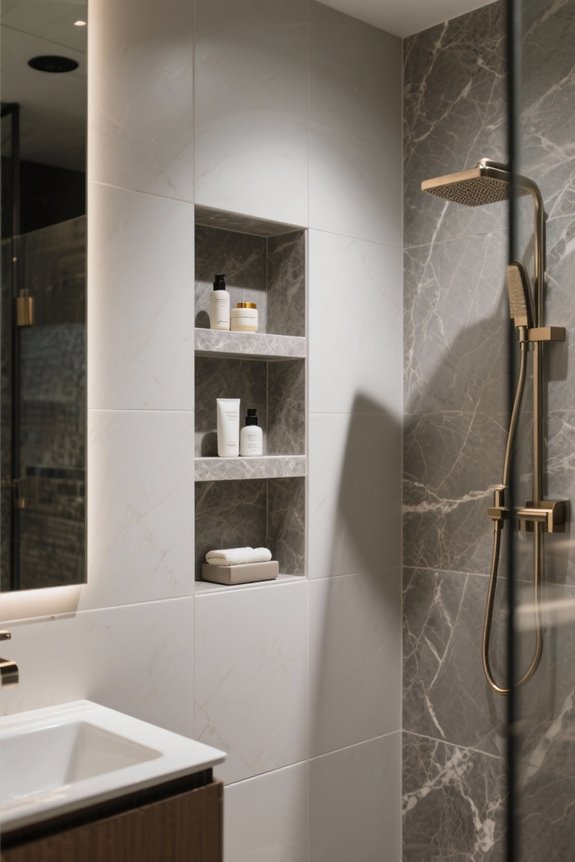
Shower niches provide considerable advantages in both functionality and aesthetics, as they are designed to integrate seamlessly into the wall structure of the shower, thereby enhancing the cohesive look of the bathroom. Offering a practical storage solution, shower niches feature customizable dimensions, allowing them to accommodate various product sizes, which streamlines organization. By keeping items off the floor, these niches not only minimize clutter but also considerably reduce the risk of accidents. Additionally, the choice of contrasting materials or statement stones can turn a shower niche into a visually striking focal point, enhancing functional aesthetics. Overall, properly designed niches contribute to a serene bathing experience, fostering relaxation by eliminating the visual chaos typically associated with bath products. Incorporating features like sloped bottoms prevents water pooling and enhances the functionality and longevity of the niches.
The Rise of Shower Ledges: A Modern Alternative
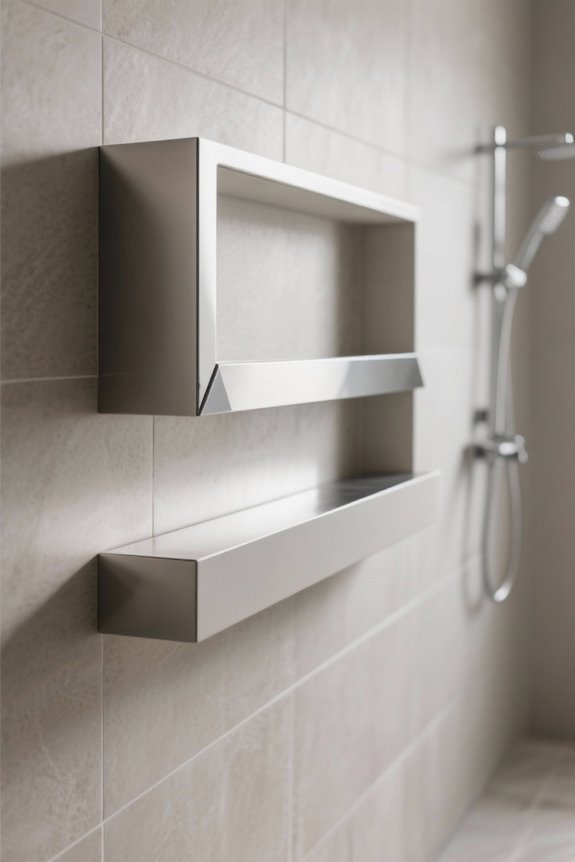
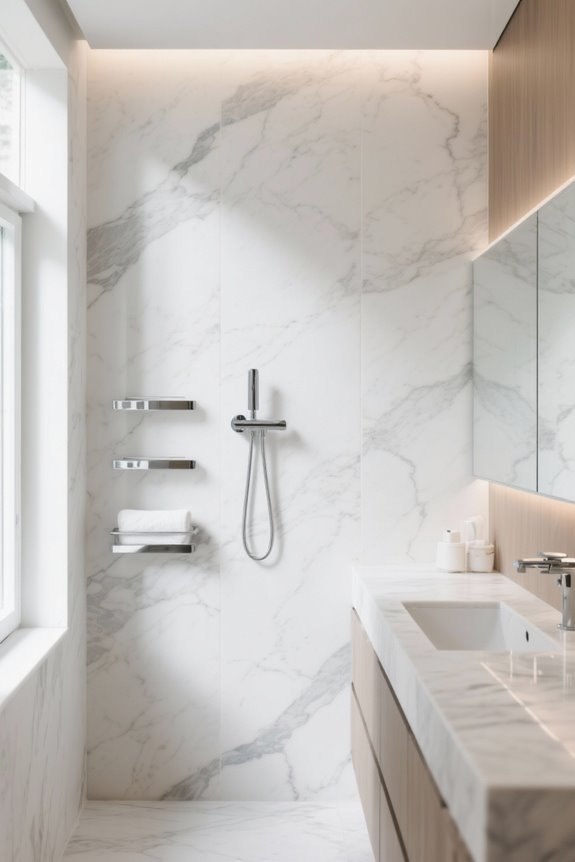
How does the modern bathroom evolve to accommodate changing preferences and lifestyles? The rise of shower ledges represents a significant trend in bathroom renovation, offering a sleek and contemporary alternative to traditional niches. Unlike niches that often utilize contrasting tiles, shower ledges blend seamlessly with the surrounding tiles, which minimizes visual clutter and enhances design cohesion. User feedback indicates that ledges facilitate easier organization and provide accessible storage for common grooming tasks, such as shaving. While ledges typically require more floor space, their design versatility allows for the accommodation of bulkier items, making them ideal for users purchasing larger products. This practical aesthetic choice aligns well with the needs of modern showers, ensuring functionality without sacrificing style. A notable advantage of shower ledges is their ability to complement rustproof stainless steel materials commonly used in modern shower organizers, enhancing durability and corrosion resistance in humid environments.
Key Design Considerations for Niches and Ledges
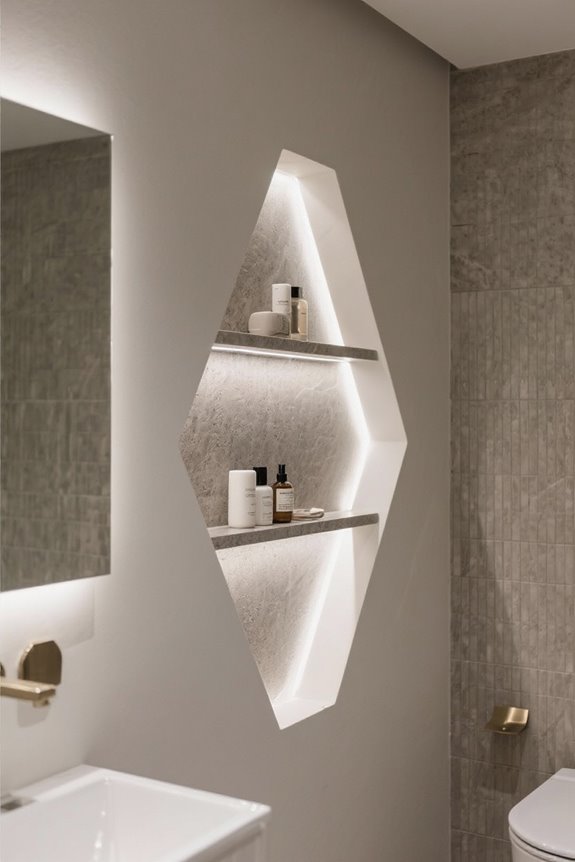
The incorporation of niches and ledges in modern bathroom designs necessitates careful attention to several key factors that influence their functionality and visual appeal. Determining the size of your niche is essential as standard designs typically require a depth of about 3.5 inches, which guarantees they can accommodate various personal care products. Ledges, on the other hand, provide ample storage and can extend along an entire wall, offering a prominent organizational solution while enhancing overall aesthetics. Employing uniform tile installation across both niches and ledges minimizes visual clutter, contributing to a seamless look. Additionally, positioning these features at accessible heights is particularly important in smaller bathrooms, promoting practicality without sacrificing style, and ultimately creating an elegant environment. Consider selecting high-quality materials such as stainless steel for shower shelves to ensure durability and resistance to rust in humid environments, enhancing both the functionality and longevity of the design.
User Preferences: Comparing Niches and Ledges
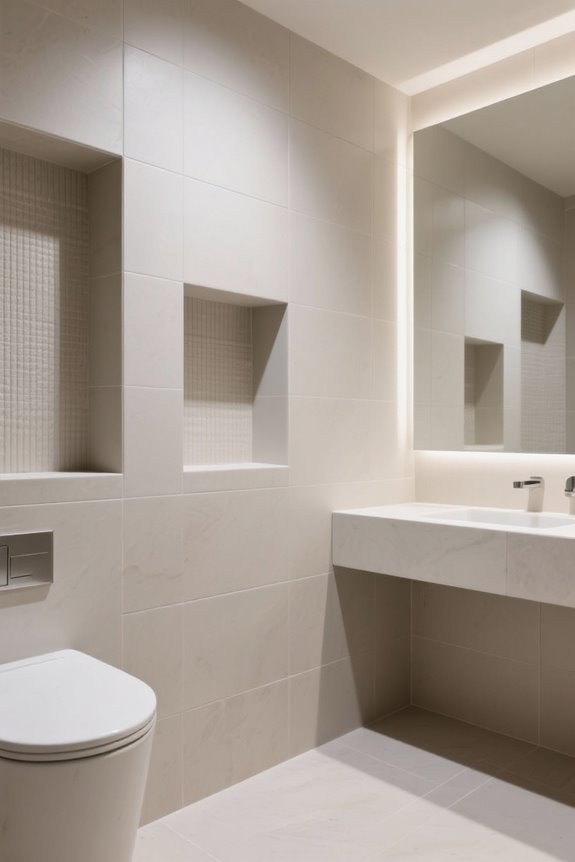
What influences user preferences when comparing niches and ledges in bathroom design? User satisfaction tends to favor shower ledges due to their sleek appearance and practical utility, which promote better organization of grooming products. In contrast, traditional bathroom niches, often featuring dated, contrasting tiles, may not blend as seamlessly with modern fixtures, potentially leading to visual clutter. While shower ledges usually demand more floor space, they offer easier access for everyday tasks like shaving, making them a practical choice. Many users appreciate that ledges conceal clutter effectively, maintaining an organized look. Despite the drawbacks of niches, such as water retention and upkeep, users still value their space-saving benefits, noting that organization can be vital in smaller bathrooms. Additionally, stainless steel shower hoses are a popular choice for bathroom upgrades due to their durability and corrosion resistance, which complement the modern aesthetic of ledges and niches.
Tips for Successful Bathroom Remodeling With Niches and Ledges
Successful bathroom remodeling involving niches and ledges requires careful planning and attention to detail from the outset, guaranteeing that these storage solutions enhance both functionality and aesthetics. Incorporating shower niches early in the design phase allows for customizable dimensions, typically around 3.5 inches deep, which maximizes storage efficiency. Ledges, on the other hand, offer simpler installation and are ideal for organizing shower essentials without extensive construction. Recommended dimensions for ledges are approximately 1200 mm high and 90 mm wide, providing superior usability. Choosing high-quality materials guarantees durability and seamless profiles. It is also vital to take into account maintenance; while niches can reduce visible clutter, they may trap moisture, and ledges may require more frequent cleaning due to exposure. For a stunning bathroom upgrade, consider seamless designs that often feature in high-quality shower wall panel kits, providing a polished look that complements niches and ledges.
Frequently Asked Questions
What Materials Are Best for Creating Shower Niches and Ledges?
High-quality tile options and stone finishes are ideal for shower niches and ledges, providing durability and aesthetic appeal. Waterproof materials, such as fiberglass and acrylic, enhance longevity while preventing moisture damage in wet environments.
How Do I Waterproof a Shower Niche or Ledge Effectively?
To effectively waterproof a shower niche or ledge, one should apply appropriate waterproofing techniques, avoid common mistakes like inadequate sealing, and choose suitable sealant options, as improper waterproofing can lead to 75% of shower leaks.
Can I Install a Shower Niche or Ledge Myself?
Yes, one can install a shower niche or ledge themselves by following DIY installation tips. Essential tools include a level and tile cutter, while safety considerations like protective gear are vital for a successful installation.
What Are the Cost Differences Between Niches and Ledges?
Like comparing apples to oranges, niche design trends often incur higher initial costs due to customization, while ledge functionality generally offers a more budget-friendly option. A thorough cost comparison analysis can reveal significant differences.
How Do I Clean and Maintain Shower Niches and Ledges?
To clean and maintain shower niches and ledges, regular cleaning techniques include using mild detergents or vinegar. Maintenance tips emphasize drying surfaces post-use and mold prevention through proper ventilation and the application of waterproof sealants.