As an Amazon Associate, we earn from qualifying purchases. Some links on this site are affiliate links at no extra cost to you. Our recommendations are based on thorough research and editorial judgment.

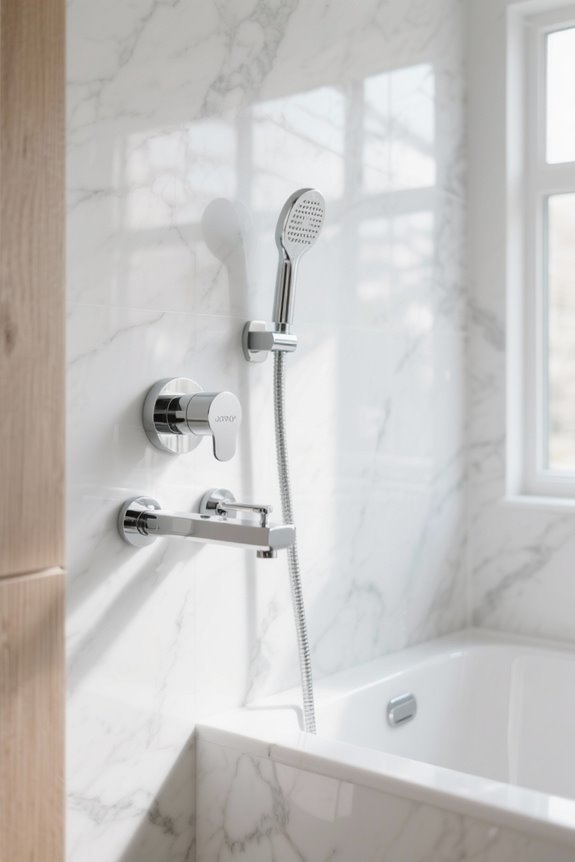
Shower Temperature Drift: Causes and Simple Diagnostics

Shower temperature drift often arises from simultaneous use of plumbing fixtures, such as flushing toilets or running appliances, which can disrupt water pressure. Worn shower cartridges and pressure-balancing valves may also contribute to fluctuations, affecting the mixing of hot and cold water. Diagnosing the problem requires simple checks, including observing water flow patterns and manually testing thermostats. Regular maintenance of water heaters and plumbing systems is essential for consistent temperatures, which can improve overall user experience. More insights are available about this topic.
Key Takeaways
- Temperature fluctuations can occur due to simultaneous use of appliances or fixtures, affecting water pressure and temperature stability.
- Worn-out shower cartridges and malfunctioning mixing valves can hinder proper hot and cold water mixing, leading to inconsistent temperatures.
- Regular maintenance of pressure-balancing valves is essential to prevent spikes or drops in temperature during multiple plumbing activities.
- Periodic descaling and cleaning of water heaters, cartridges, and mixing valves can help maintain consistent hot water supply and prevent mineral buildup.
- Conduct diagnostics by checking for nearby simultaneous fixture use and evaluating water heater settings to identify possible causes of temperature drift.
Common Causes of Shower Temperature Fluctuations
You may be interested
Shower temperature fluctuations are a common issue that can stem from various underlying factors, each of which impacts the consistency of hot and cold water delivery. Simultaneous use of appliances like dishwashers and washing machines may alter water pressure, leading to noticeable temperature changes during showers. Additionally, worn-out shower cartridges and malfunctioning mixing valves hinder effective hot and cold water mixing. In older plumbing systems, mineral buildup in pipes restricts water movement, contributing to sudden shifts in water temperature. Moreover, improperly installed or crossed water lines exacerbate these inconsistencies. Finally, an undersized or dated water heater may struggle to meet increased hot water demands, causing fluctuations that particularly affect larger households where water use is substantial. Tankless models maintain efficiency even in colder environments thanks to self-modulating technology, which adjusts heating based on incoming water temperature.
Diagnosing the Issue: Quick Checks and Observations
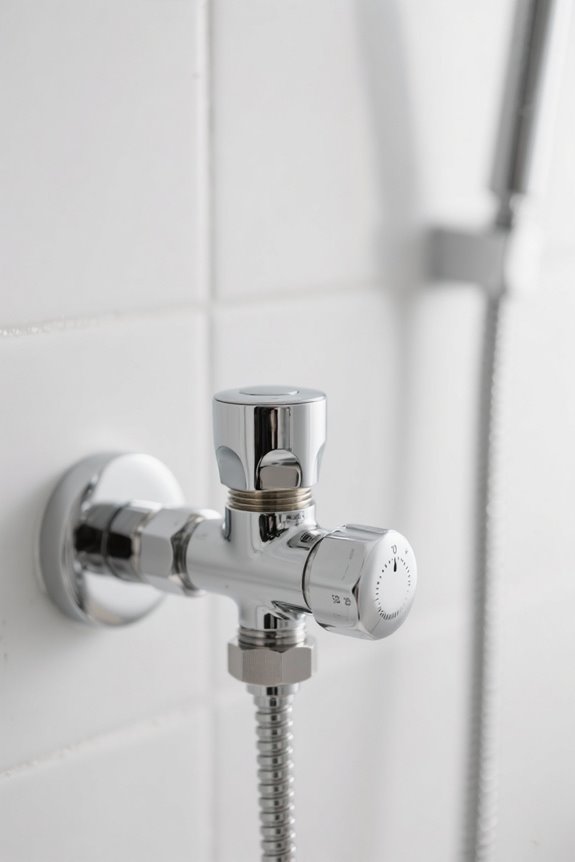
Diagnosing issues related to fluctuating shower temperatures requires a systematic approach that involves a series of quick checks and observations. First, running hot water for two minutes at the farthest fixture from the water heater establishes a baseline temperature for comparison. It is vital for the hot outlet pipe near the heater to exceed this temperature, indicating proper water heater function. Next, with the cold supply off, listening for water flow helps identify potential crossover issues in the plumbing system. Evaluating the recirculation pump settings is key, as excessive operation can inadvertently raise the cold water’s temperature. Finally, using a thermometer to calibrate the mixing valve guarantees that it maintains consistent temperatures during water flow, reducing sudden temperature fluctuations experienced while showering. Additionally, considering the importance of flow rate in shower heads can help in maintaining consistent water pressure and temperature, enhancing the overall shower experience.
The Role of Pressure-Balancing Valves
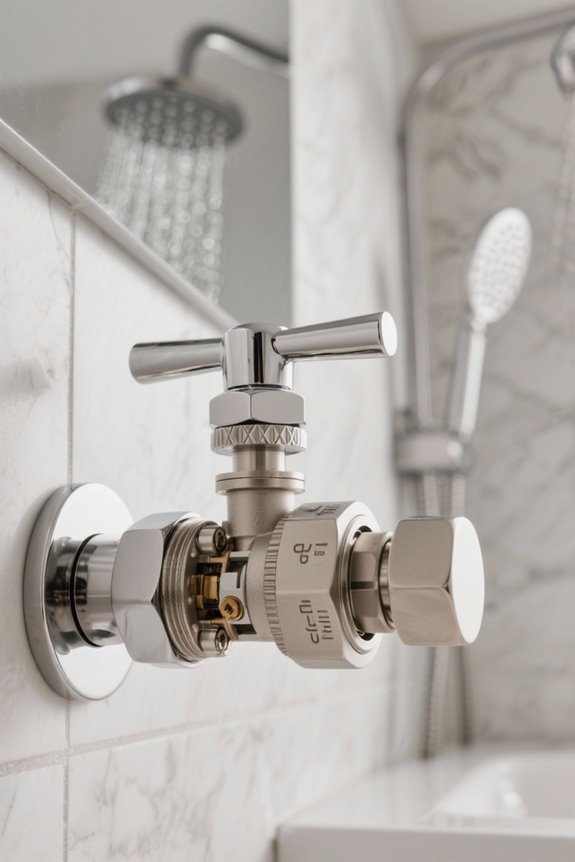
A well-functioning plumbing system plays an important role in ensuring a consistent showering experience, with pressure-balancing valves at the forefront of maintaining stable water temperatures. These valves are engineered to detect variations in water pressure from hot and cold supply lines, automatically moderating the flow to prevent disruptive temperature fluctuations. When multiple fixtures operate simultaneously, such as when someone flushes a toilet, a malfunctioning pressure-balancing valve may cause sudden spikes or drops in temperature, leading to an uncomfortable shower. Regular maintenance of these valves is essential; neglect can result in diminished performance and safety. Upgrading to high-quality pressure-balancing valves greatly enhances user comfort by ensuring consistent water temperatures, thereby improving the overall shower experience for all users. Durable materials like brass or stainless steel ensure longevity, offering reliable performance and enhancing the valve’s lifespan.
Recommended Products

Single handle controls both on/off activation and temperature settings.

EVERYDAY LUXURY: Brushed Gold finish features a mix of classic gold tones and modern brushed texture, adding sophisticated, contemporary glamour to any room

COMBO SAFETY KIT: Ideal for any hazardous environment, this emergency safety station combines a dual-aerated eyewash and a full-coverage emergency shower in one compact unit
Impact of Water Heater Performance
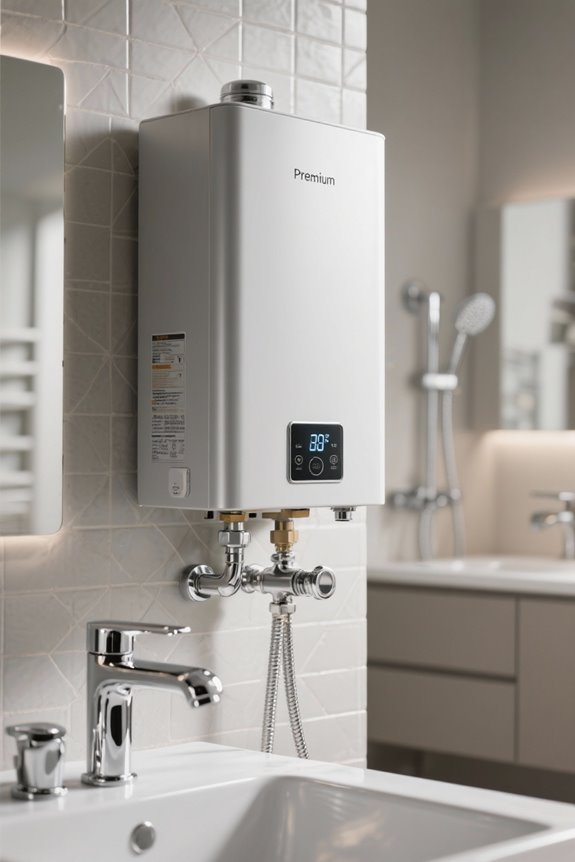
While proper maintenance of a home’s plumbing system is essential for an enjoyable shower experience, the performance of the water heater also greatly influences water temperature stability. Water heaters must meet specific demands to provide a consistent hot water supply, as showers typically consume between 2 to 14 gallons per minute. If factors like cracked dip tubes or old valves compromise performance through leaking or thermostatic mixing, temperature changes may occur, causing an unpleasant shower experience. Regular maintenance, including descaling, is critical to prevent mineral buildup, ensuring stable shower water temperature. In addition, inadequate thermostat calibration can lead to fluctuations, making periodic checks essential, especially in households with increased hot water demands that require a balanced flow from an adequately sized water heater. Energy-efficient water heaters may qualify for tax credits, which can offset initial costs and enhance long-term savings.
Assessing Plumbing and Pipe Conditions
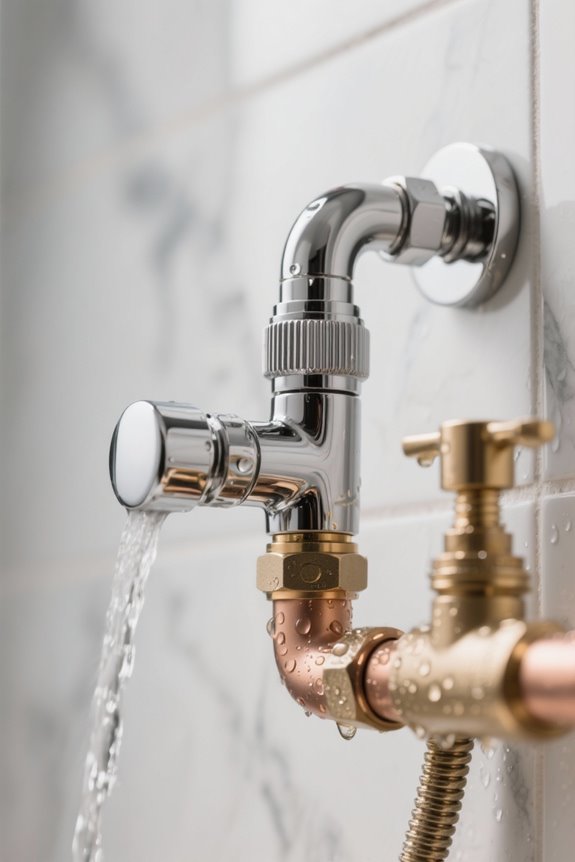
Evaluating the conditions of plumbing systems and pipe integrity is essential for ensuring a consistent and pleasurable showering experience, particularly in homes with aging infrastructure. Older homes often utilize smaller pipe diameters, which can restrict water flow, leading to temperature inconsistencies during showers. Inspecting plumbing for cracks or corrosion is vital since these issues can greatly hinder hot water delivery. Additionally, measuring water pressure with a gauge can identify potential blockages, while examining for mineral buildup around valves and fixtures reveals hard water issues that contribute to inconsistent temperatures. Regular evaluations of water quality and flow will help maintain a steady hot water supply, improving the overall shower experience and ensuring ideal temperature settings for users. A mirror with effective anti-fog technology can enhance grooming convenience and ensure clear reflections even in steamy environments.
Professional Solutions for Persistent Issues
Ensuring a steady flow of hot water requires more than just routine inspection; professional solutions play a pivotal role in addressing persistent plumbing issues that disrupt shower temperature stability. Expert plumbers conduct diagnostic services to evaluate water heaters, optimizing their performance by checking dip tubes and adjusting thermostat settings, thereby enhancing the supply to the water. Evaluating and, if necessary, replacing mixing valves can eliminate temperature swings, ensuring a consistent blend of hot and cold water. Installing pressure-balancing valves effectively prevents fluctuations during simultaneous fixture use, promoting stable and enjoyable shower experiences. Regular maintenance performed by licensed technicians addresses hard water issues, improving flow and temperature consistency by descaling pipes and fixtures, thereby enhancing overall shower performance and reliability for homeowners. Selecting a reliable temperature pressure relief valve is essential for safety in water heating systems, as it helps control pressure build-up and prevents potential hazards.
Maintenance Tips for Consistent Shower Temperatures
A thorough maintenance strategy is essential for ensuring consistent shower temperatures, as neglecting regular upkeep can lead to undesirable fluctuations in water supply. Regular cleaning and descaling of shower cartridges and mixing valves prevent mineral buildup, a common reason for changing water temperatures. Homeowners should not hesitate to call professionals if issues persist after routine maintenance. Testing the water at the farthest fixture provides clarity on temperature delivery. It is recommended to check water temperatures after running hot water for two minutes. Furthermore, proper calibration of thermostatic mixing valves, ensuring accuracy with a thermometer, is vital. Scheduling biannual maintenance checks for homes with heavy usage helps preemptively identify temperature issues caused by nearby fixtures or simultaneous demands, such as flushing the toilet. Tool-free installation options are ideal for user convenience, as they can be quickly adjusted to maintain consistent shower performance without the need for professional assistance.
Frequently Asked Questions
Why Does the Temperature of My Shower Keep Fluctuating?
The fluctuating temperature of shower water often stems from pressure fluctuations, valve malfunctions, thermal expansion, plumbing issues, or water heater inefficiencies. Additionally, faucet design can influence consistency, causing unexpected variations in shower water temperature during use.
Why Is My Shower Cycling Between Hot and Cold?
The shower cycled between hot and cold due to valve issues, plumbing problems, and installation errors. Pressure imbalances disrupted temperature regulation, causing erratic mixing, while the water heater struggled to maintain consistent warmth amidst the chaos.
Why Is My Water Temperature Fluctuating Hot and Cold?
Water temperature fluctuates due to plumbing issues affecting shower pressure, faulty temperature sensors, or malfunctioning mixing valves. Additionally, a problematic water heater or degraded shower fixtures can cause inconsistent hot water delivery during use.
How to Tell if a Shower Mixing Valve Is Bad?
Drifting water temperatures, akin to a fickle breeze, signify mixing valve symptoms. Sudden fluctuations, inconsistent nearby fixtures, and weak regulation hint at valve replacement signs. Regular maintenance and proper diagnostics mitigate hot water issues and guarantee comfort.