As an Amazon Associate, we earn from qualifying purchases. Some links on this site are affiliate links at no extra cost to you. Our recommendations are based on thorough research and editorial judgment.

Calculating Water Use for Frequent Baths Vs Showers

When comparing water usage for frequent baths versus showers, baths typically consume between 35 to 50 gallons per use, whereas a standard 10-minute low-flow shower uses about 25 gallons. Daily bathing can lead to an annual water consumption of approximately 14,600 gallons. In contrast, daily showers result in about 9,125 gallons. Consequently, switching from baths to showers can save around 5,475 gallons annually, effectively highlighting the impact of one’s bathing habits on overall water conservation. Exploring further can reveal additional insights on effective water-saving practices.
Key Takeaways
- An average bath consumes between 35 to 50 gallons of water, while a 10-minute shower uses about 25 gallons.
- Daily bath users can consume approximately 14,600 gallons annually, compared to 9,125 gallons for daily shower users.
- Switching from daily baths to showers can save about 5,475 gallons of water each year.
- Baths cost about $195.68 annually, while showers only cost around $64.54, making showers more economical.
- Reducing shower duration significantly conserves water, as each extra minute of showering adds 2.5 gallons.
Water Usage Comparison: Baths Vs Showers
You may be interested


When evaluating water usage between baths and showers, it becomes essential to examine the statistics that illustrate considerable differences in consumption and environmental impact. An average bath consumes between 35 to 50 gallons of water, whereas a typical 10-minute shower utilizing low-flow showerheads uses only about 25 gallons, equating to approximately 2.5 gallons per minute. By swapping daily baths for showers, individuals can reduce water consumption considerably, saving roughly 5,475 gallons of water annually. This reduction not only minimizes individual water costs—from an average of $195.68 for baths to $64.54 for showers—but also considerably bolsters overall water conservation efforts. Consequently, showers emerge as a more sustainable choice in the quest to save water and lessen environmental footprints. Additionally, using efficient appliances like 18kW tankless water heaters can further enhance energy savings and reduce overall utility costs.
Estimating Water Consumption for Baths
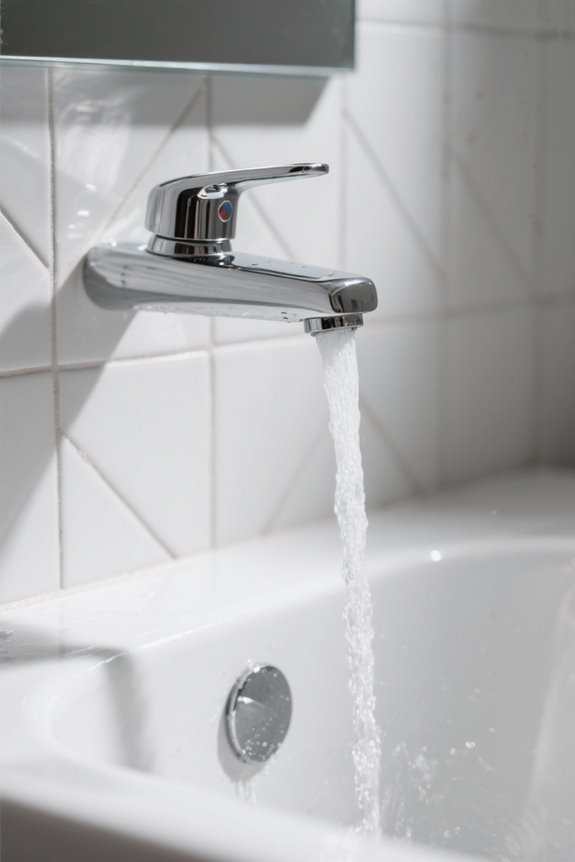
Estimating water consumption for baths requires a thorough understanding of the various factors that influence how much water is used during each bathing session. An average bath typically utilizes between 25 to 50 gallons of water, depending on how full the tub is. Filling a bathtub halfway consumes around 25 gallons, while a near-full tub can use up to 40 gallons. On the other hand, a standard 10-minute shower generally uses approximately 25 gallons, making regular bathing capable of considerably increasing household water consumption. By adopting water-saving practices, such as filling the tub only halfway, individuals can reduce annual usage, which may reach around 14,600 gallons for those who bathe daily. This consideration aids in managing energy and hot water use. For those interested in water efficiency ratings, choosing shower heads with a WaterSense label can significantly reduce water usage while maintaining performance.
Shower Duration and Its Impact on Water Use
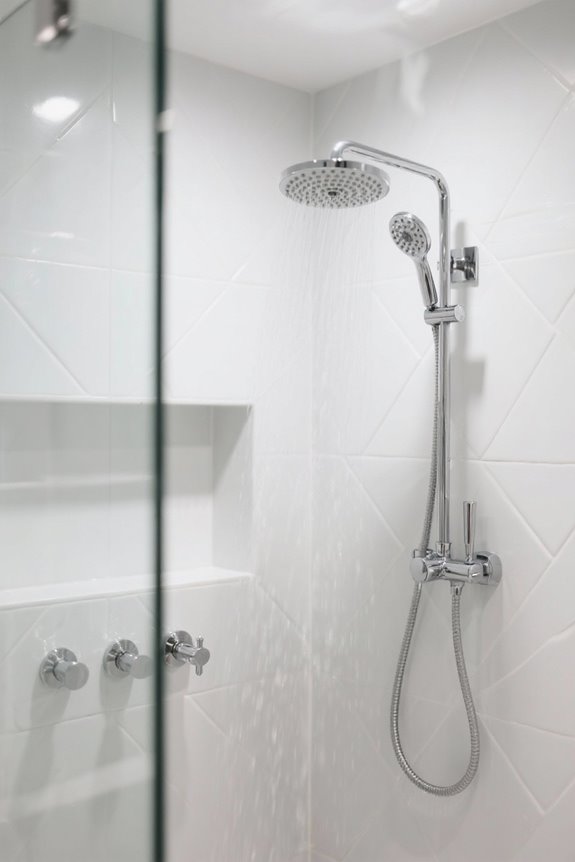
Shower duration considerably impacts overall water consumption, as the average showerhead dispenses 2.5 gallons per minute, translating into notable differences in usage based on the length of each bathing session. A standard 10-minute shower would use approximately 25 gallons of water, making it more water efficient compared to an average bath, which consumes around 30 gallons. However, extending shower time to 20 minutes can result in consuming up to 50 gallons, similar to a bathtub filled to capacity. By reducing shower durations by just a few minutes, households can effectively reduce water waste, as each extra minute of shower time adds 2.5 gallons to total consumption. Tracking and limiting shower time can considerably conserve water in everyday routines. Additionally, incorporating anti-fog technology in bathroom mirrors can enhance the efficiency of grooming routines, indirectly contributing to time and water savings.
Eco-Friendly Practices for Water Conservation
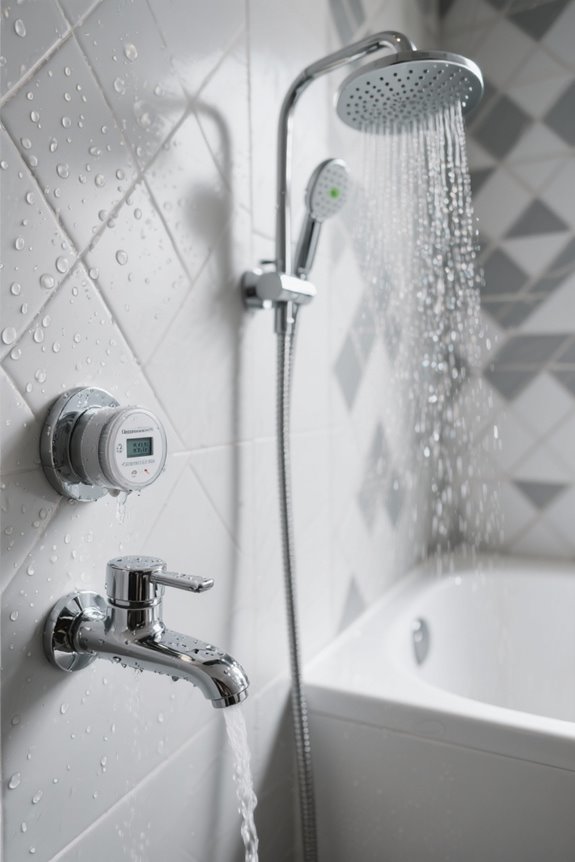
To promote water conservation effectively, households can adopt various eco-friendly practices that not only reduce consumption but also enhance environmental sustainability. For instance, utilizing water-saving showerheads, which operate at 2.5 gallons of water per minute or less, can considerably cut down on water used during showers, potentially saving you money on utility bills. Shortening shower times also provides a worthwhile impact, as a standard 10-minute shower uses approximately 25 gallons compared to 35 to 50 gallons for a bath. Additionally, one can fill the bathtub halfway, which maintains an enjoyable experience while conserving bath water. Turning off the tap while lathering can further save you five gallons of water each session, promoting responsible water usage per person. A focus on energy efficiency in water heating systems can further enhance eco-friendly practices, as condensing water heaters significantly reduce energy consumption and lower greenhouse gas emissions.
Tips for Reducing Bath and Shower Water Use
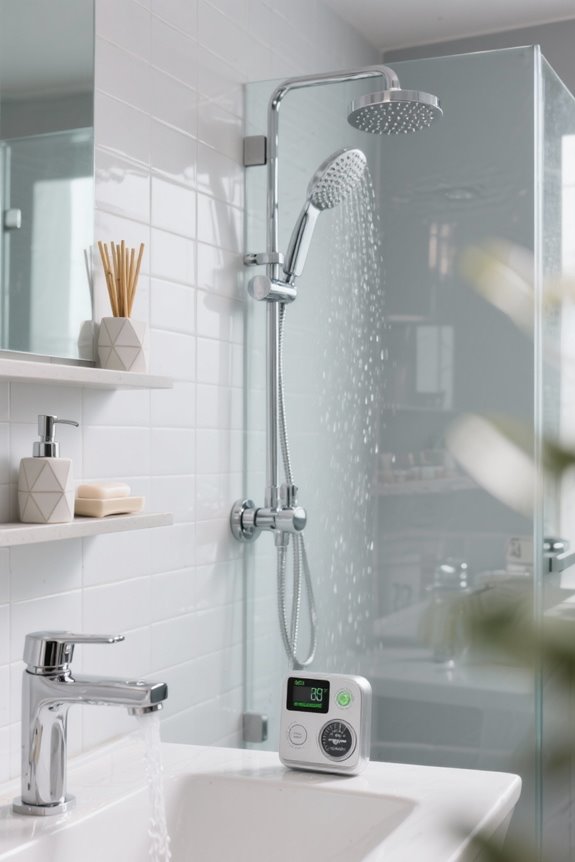
Many households can greatly reduce their water usage by adopting a few simple yet effective tips for both baths and showers. For instance, utilizing low-flow showerheads, which limit water usage to approximately 2.5 gallons per minute, can save considerable amounts of water per shower. Additionally, shortening shower durations to 10 minutes can decrease consumption to around 25 gallons, which is markedly less than the 35 to 50 gallons typically required for an average bath. Homeowners might also consider filling their bathtubs only halfway to achieve a substantial reduction of about 20 gallons per bath. Other techniques, such as the “submarine shower,” where users turn off running water while lathering, also contribute to saving energy and utilizing less water effectively. Installing high-pressure shower heads can also help maintain efficient water usage, especially in areas with low water pressure, without sacrificing the quality of the shower experience.
Calculating Your Annual Water Savings
Analyzing annual water savings reveals significant differences between common bathing and showering habits that individuals may not fully appreciate. Daily shower users consume approximately 9,125 gallons of water annually, whereas those who take baths, even in half-filled tubs, consume around 14,600 gallons. Consequently, this difference results in an impressive savings of approximately 5,475 gallons each year for those opting for showers, equating to about 7.3 hundred cubic feet (CCF) of water. This savings translates to notable financial benefits, as annual showering costs are estimated at $64.54 per person, compared to approximately $195.68 for bathing. Shifting from daily baths to showers not only conserves water, but it also reduces utility expenses, highlighting the importance of developing water-saving habits. When considering eco-friendly choices and materials, opting for showers over baths further supports sustainable living practices by reducing the overall water footprint.
Frequently Asked Questions
Do You Use More Water When You Bath or Shower?
Bathing typically uses more water than showering, impacting water bills and conservation. Family usage reflects varying hygiene habits, while lifestyle choices, temperature control, and daily routines influence preferences towards environmentally friendly showers over fuller baths.
Does It Cost More to Run a Bath or Shower?
Bathing typically costs more due to higher water consumption and hot water heating. Cost analysis reveals that showering is often more energy efficient, influencing daily bathing habits and plumbing systems while minimizing environmental impact under varying water rates.
What Is More Expensive, a 30 Minute Shower or a Bath?
A 30-minute shower, cascading like a waterfall, usually incurs higher costs compared to a bath. Deep tub waters versus steam-laden showers reveal stark cost comparisons, influencing family consumption and eco-friendly lifestyle choices for ideal health benefits.
What Saves More Money, a Bath or a Shower?
Showers save more money due to lower water usage and energy costs, particularly under local rates. Family habits and personal preferences influence choices, but plumbing efficiency and environmental impact favor frequent showering over longer bath durations.