As an Amazon Associate, we earn from qualifying purchases. Some links on this site are affiliate links at no extra cost to you. Our recommendations are based on thorough research and editorial judgment.

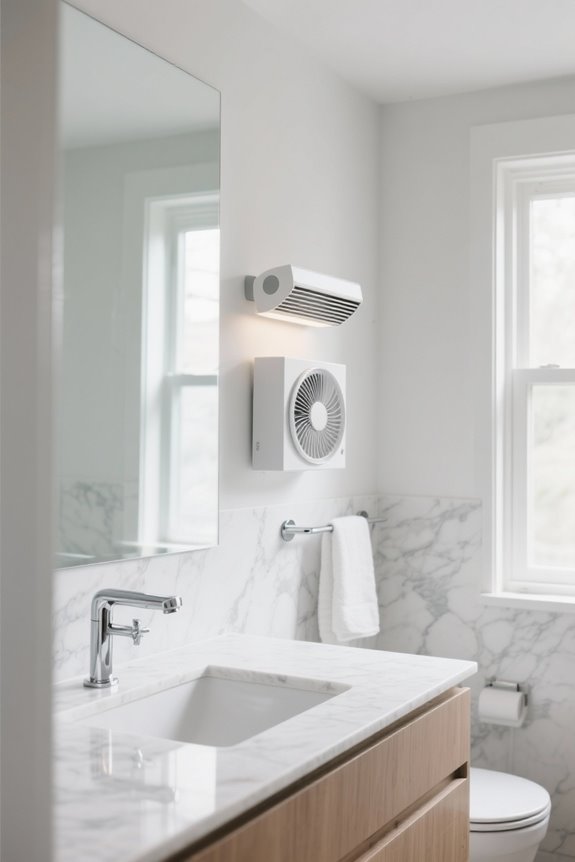
Bath Fan Light Combos: Placement and Brightness Planning

For ideal performance, bath fan light combos should be centrally placed on the ceiling for balanced light and air circulation. Position the unit at least three feet away from water sources to adhere to safety standards. Fan capacities should meet or exceed 1 CFM per square foot of bathroom area, while lighting must provide at least 300 lux for general use and 700 lux for grooming tasks. Proper installation and brightness planning guarantee functional and safe bathroom environments, with more insights available.
Key Takeaways
- Centrally placing the bath fan light combo ensures optimal light spread and airflow, enhancing overall bathroom function.
- Maintain a minimum of three feet distance from water sources for safety compliance and effective steam removal above the shower.
- Aim for a minimum brightness of 700 lux in task areas and 300 lux for general relaxation, using dimmable bulbs for versatility.
- Combine ambient, task, and accent lighting to achieve balanced illumination while positioning fixtures at appropriate heights to reduce shadows.
- Regular maintenance of the fan light combo, including cleaning and inspections, ensures optimal performance and prevents mold and mildew buildup.
Optimal Placement Strategies for Bath Fan Light Combos
You may be interested



When considering ideal placement strategies for bath fan light combos, several key factors must be taken into account to guarantee both effective ventilation and even lighting. The best placement is centrally located on the bathroom ceiling, which enhances the distribution of the bathroom light while improving air circulation. It is advisable to install the fan and light combo at least three feet away from water sources, such as showers and tubs, to comply with safety guidelines. Additionally, placing the unit directly above the shower can effectively remove steam, but this requires a model specifically rated for such conditions. Ensuring the fan runs at a CFM rating of at least 1 CFM per square foot of bathroom space will provide adequate lighting and ventilation. Recommended indoor humidity levels are between 30% and 50%, and maintaining these levels can be efficiently managed by using exhaust fans with integrated humidity sensors.
Recommended Products

VERSATILE FAN COMBO: Ventilation fan helps eliminate , tobacco smoke, and cooking odors in a near-silent performance in rooms up to 140 sq. ft. to keep your house smelling fresh and clean. Uses a 36-Watt Fluorescent light (2-18 watt bulbs included) and 4-Watt nightlight (bulb not included) to provide effective lighting to your surroundings

Bathroom Vent Fan with Light and Heater: Equipped with a powerful 1600W PTC heater for instant warmth plus an energy efficient 3000K LED light panel with adjustable brightness and low power <1W night light

CUT COOLING COSTS: Reduce expensive cooling bills with these shutter exhaust fans designed to keep your space cooler year-round.
Brightness Levels: Guidelines for Your Bathroom
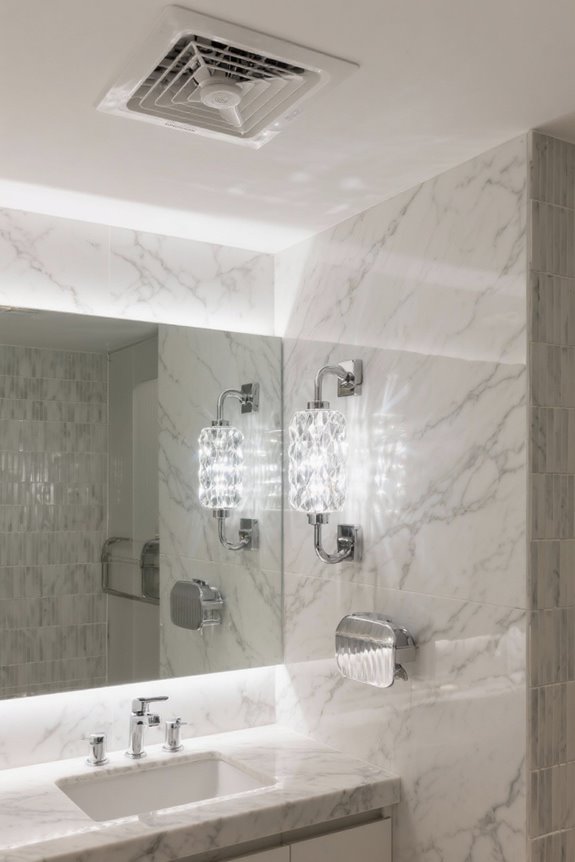
Effective brightness levels in a bathroom are vital for creating a functional and pleasant environment, with specific lighting guidelines tailored to various activities ensuring ideal visibility and comfort. Task areas require approximately 700 lux to facilitate grooming and makeup application, while general relaxation benefits from a minimum of 300 lux that promotes a softer ambient light. Utilizing dimmable bulbs rated between 75 to 100 watts within a fan/light combo allows for versatile brightness adjustments throughout the day. Additionally, regular maintenance, including cleaning fixtures, is important for maximizing brightness levels and ensuring energy efficiency. Monitoring bulb performance for any dimming or flickering can indicate when replacement is necessary, upholding consistent overhead lighting quality in the bathroom. When selecting LED vanity lights, consider energy-efficient options with lumens ranging from 800 to 2000 to optimize brightness while conserving electricity.
Achieving Balanced Illumination
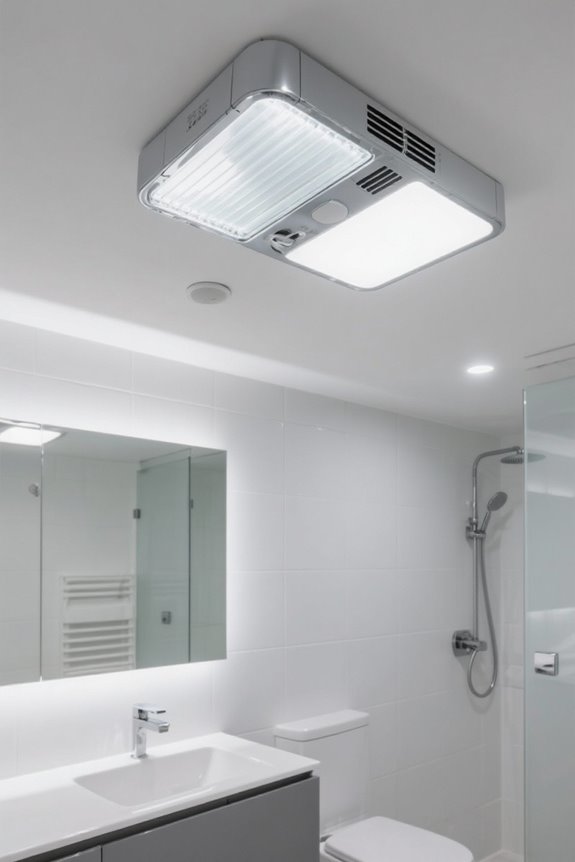
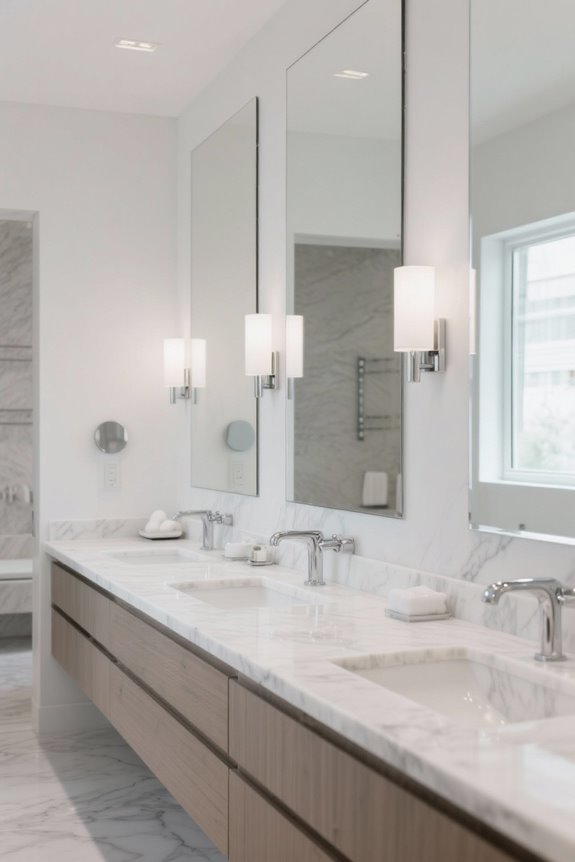
Achieving balanced illumination in a bathroom involves a careful blend of task, ambient, and accent lighting, ensuring that no spaces feel excessively bright or dim. Ideal task lighting at the vanity, ideally around 700 lux, supports effective grooming, while softer settings at about 300 lux create a relaxing atmosphere. To achieve this balance, the main light fixture should be centered over the vanity at approximately 78 inches high, complemented by side sconces positioned 60 inches from the floor to eliminate shadows. Dimmable LEDs offer flexibility for various brightness needs, accommodating morning routines and evening baths with ease. Regular cleaning of light fixtures and choosing bulbs with a color temperature range of 4000K to 6500K enhance the overall illumination and clarity, minimizing eye strain. When selecting bathroom lighting, consider energy-efficient options like those from ECOELER and HALO, which significantly lower electricity costs.
Harnessing Natural Light Effectively
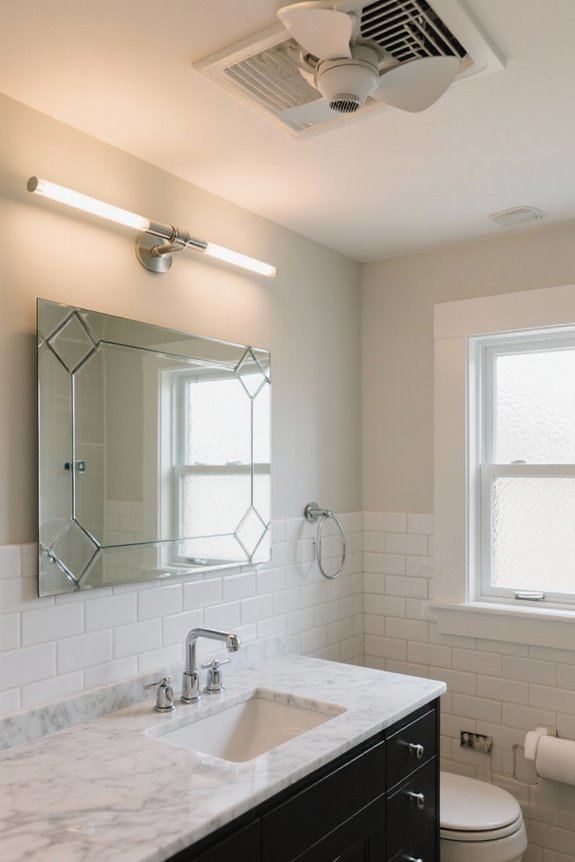
Natural light serves as a powerful tool in enhancing bathroom environments, promoting well-being and effective personal care routines. By implementing strategic window and skylight placements, particularly south-facing designs, one can achieve maximum daylight exposure, diminishing the reliance on artificial light. Utilizing translucent or frosted glass enhances privacy while permitting a gentle diffusion of natural light, adding ambiance. The integration of multiple fixtures and reflective surfaces, such as mirrors and light-colored walls, effectively amplifies the light’s reach throughout the space. Additionally, aligning fan light selections with cooler tones, ranging from 4000K to 6500K, mimics natural sunlight, improving visibility for grooming activities. Proper natural light utilization can also mitigate issues related to poor ventilation, thereby enhancing air circulation in the bathroom. Incorporating dimmable LED technology into bathroom lighting can further enhance the ambiance by allowing for customized brightness levels, thereby reducing energy consumption and improving lighting efficiency.
Choosing the Right Fixtures for Your Space
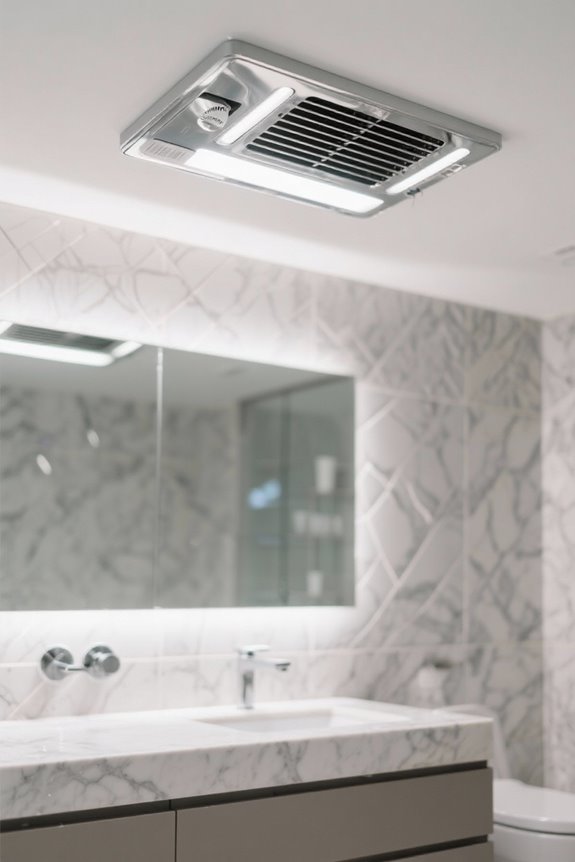
When selecting fixtures for a bathroom, it is essential to contemplate both functionality and design, as the right combination of light and fan units can greatly enhance the space’s usability and aesthetic appeal. For small bathrooms, opting for modern combo units with sleek designs can maximize ceiling space, while maintaining safety is important—choose fixtures rated for damp locations, especially near showers. The recommended ambient lighting levels are 300 lux for relaxation zones and 700 lux for task areas, highlighting the significance of adjusting fixture choices accordingly. Additionally, positioning lighting at eye level around mirrors and incorporating dimmable options can further enhance the grooming experience, making thoughtful fixture selection critical for both practicality and style in any bathroom setting. When choosing shower fixtures, consider options with self-cleaning capabilities to minimize maintenance and enhance performance over time.
Recommended Products
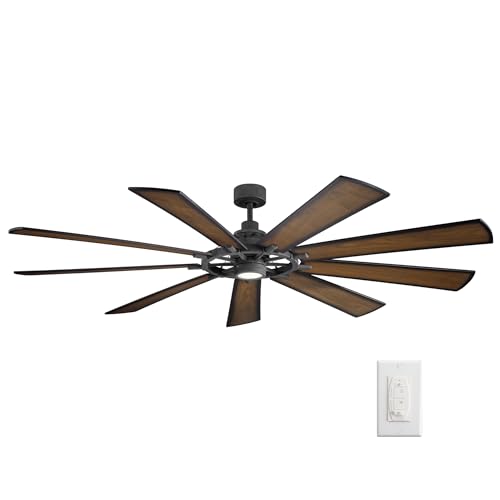
Industrial era black ceiling fan with light in Distressed Black finish can cool rooms and complements many décor styles
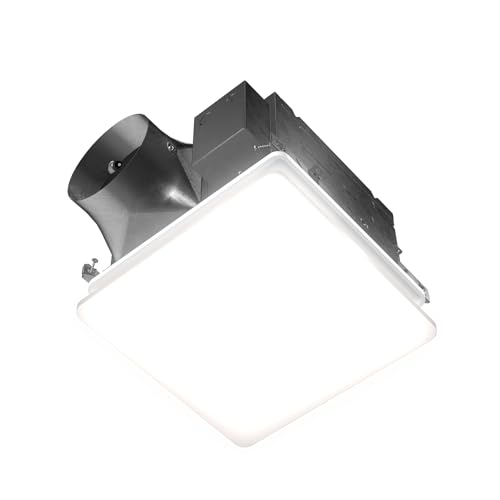
TRUECFM: Guaranteed Performance no matter how complicated the ductwork. Selectable CFM with speed of 110-130-150, maintains CFM through 0.4" static pressure.

【Matter Smart Bathroom Fan Control】Built on the Matter smart home standard for fast, stable connectivity. Works with Alexa, Google Home, Apple Home & SmartThings. No hub required. Control essential functions via voice, app or remote.
Enhancing Functionality With Layered Lighting
To enhance functionality in a bathroom, layered lighting serves as a strategic approach, combining different types of illumination to create an adaptable and effective environment. This includes overhead ambient lighting, which provides a soft, widespread glow for daily navigation, alongside task lighting placed around mirrors to achieve around 700 lux, ensuring sufficient visibility for grooming tasks. One fixture alone may not suffice; consequently, incorporating multiple layers adds depth to the bathroom feel. Wall sconces should be installed approximately 60 inches from the floor, while overhead fixtures must be positioned to minimize glare. Additionally, utilizing dimmable bulbs ideally rated between 75 to 100 watts offers flexibility, allowing users to adjust lighting levels according to their specific needs and activities throughout the day. A Vitamin C shower filter can also contribute to a healthier environment by removing up to 99% of chlorine, enhancing the overall shower experience.
Common Mistakes to Avoid in Bathroom Lighting
Avoiding common pitfalls in bathroom lighting can greatly enhance both the functionality and aesthetic of the space. A typical mistake involves relying on one overhead fixture, neglecting the need for multiple ceiling fixtures and targeted task lighting, which can lead to unwanted shadows during grooming. Additionally, the absence of dimmable bulbs limits flexibility, preventing users from adjusting light levels for different activities, such as relaxing in a bath or performing detailed grooming tasks. Proper placement is also essential; fixtures should be positioned thoughtfully—sconces mounted 60 inches from the floor help guarantee balanced illumination without glare. In addition, opting for cooler color temperatures in task areas, along with regular cleaning of fixtures, can greatly enhance brightness and visibility in the bathroom. Importantly, selecting energy-efficient fixtures with adequate lumens further ensures optimal lighting while reducing energy costs.
Recommended Products

Modern Staircase Chandelier: Elevate entryways with this gold high-ceiling chandelier; featuring (49 Droplets) and a 128-inch adjustable design, it creates a striking focal point for staircases, foyers, and open spaces

SCULPTURAL CENTREPIECE — The Paget unites 9 LED lights across a 20-inch chrome chandelier frame in a transitional, considered composition. A chrome multi-light chandelier sized to anchor a dining room or entryway.

Unique Design: Sawyer Large Single Tier Open Air Chandelier brings traditional charm with a modern flair ideal for enhancing your indoor or outdoor living spaces
Maintenance Tips to Ensure Longevity of Your Light Fan Combo
Maintaining the light fan combo is an important aspect of guaranteeing its longevity and ideal performance in the bathroom environment. Regularly, homeowners should wipe down the exterior with a damp cloth at least once a month to prevent dust and grime buildup, essential for optimal performance. Every three months, washing the vent cover and vacuuming the fan blades helps eliminate debris, reducing the risk of mold and mildew. Quarterly checks for any unusual motor sounds can reveal potential issues, while inspecting wiring and ducts annually is critical for safety and functionality. Additionally, replacing dim or flickering LED modules guarantees consistent lighting quality, promoting cleanliness and enhancing the HVAC system’s ability to manage humidity effectively, ultimately prolonging the unit’s life. The energy efficiency features of inline bathroom fans make them a great choice for reducing electricity costs while maintaining airflow quality.
Frequently Asked Questions
How to Plan Bathroom Lighting?
To plan bathroom lighting effectively, one should combine ambient lighting options with decorative light fixtures, utilize energy efficient bulbs, integrate natural light, and consider dimmer switch benefits for adjustable brightness tailored to various activities.
How to Layer Lighting in a Bathroom?
Layering lighting in a bathroom enhances functionality; effective ambient lighting strategies provide 300 lux, task lighting options achieve 700 lux, while accent lighting benefits aesthetically. Adhering to fixture height guidelines and ideal lighting color temperature increases visual appeal.
Where Should Recessed Lights Be Placed Over a Bathroom Vanity?
Recessed fixture placement over a bathroom vanity should guarantee ideal mirror illumination, with fixtures mounted 28 inches apart and 60 inches high, using bulb brightness of 75 to 100 watts for effective vanity lighting and height considerations.
Can a Bathroom Exhaust Fan Be on the Same Circuit as Lights Without?
Connecting a bathroom exhaust fan to the same circuit as lights is permissible if adhering to fan circuit compatibility and electrical code considerations. Safety concerns require GFCI protection, with installation guidelines suggesting separate circuits for ideal functionality.