As an Amazon Associate, we earn from qualifying purchases. Some links on this site are affiliate links at no extra cost to you. Our recommendations are based on thorough research and editorial judgment.


Dimming Curves and Why Some LEDs Feel Better at Low Levels

Dimming curves considerably affect how LED lights perform at low brightness levels, with logarithmic dimming curves creating a more natural lighting experience by responding more slowly to changes in intensity. This smoother change minimizes flicker, enhancing user comfort. In contrast, linear dimming curves can produce abrupt changes in brightness, which often misalign with human perception. Properly pairing dimmers and drivers guarantees peak performance. Understanding these concepts is vital for achieving satisfactory lighting in various applications, leading to even more insights ahead.
Key Takeaways
- Logarithmic dimming curves enhance perceived brightness at low levels, creating a more comfortable visual experience for the user.
- Linear dimming can feel abrupt, whereas logarithmic adjustments offer smoother transitions in brightness, especially in dim environments.
- Mismatched dimmers and drivers may lead to flicker or unpredictable dimming, negatively impacting low-level light experiences.
- Customized dimming curves, like soft linear or S curves, can be tailored to fit specific user preferences for better low-level performance.
- Proper driver selection paired with compatible dimming curves maximizes energy efficiency and improves overall user satisfaction in lighting design.
Lighting and the Human Eye
You may be interested



When examining the relationship between lighting and the human eye, it becomes evident that human perception of brightness is not a straightforward process; rather, it is influenced by a range of factors, including the intensity of light and the surrounding environment. The human eye adjusts marvelously to low light conditions, sometimes perceiving a 1% light intensity as approximately 10% brightness. Dimming curves tailored to this nonlinear perception can boost overall dimming performance by ensuring smoother shifts at lower brightness levels. However, poor dimming performance frequently occurs when dimmers and drivers are incompatible, leading to abrupt changes in brightness output. Consequently, optimizing LED lighting with well-configured dimming systems can provide a more natural and comfortable visual experience, especially at lower light intensity settings. Mirrors with HD explosion-proof glass enhance safety and clarity, complementing well-configured lighting systems in creating an optimal visual environment.
Recommended Products

3 Wattage and 4 Color Temperature Options: Our 2x4 LED drop ceiling light fixture features a slide switch, allowing you to select from 40W/50W/60W and 3000K/4000K/5000K/6000K during installation
✅【2 in 1 LED Driver and Dimmer Switch】:By integrating the LED driver and dimmer into a single unit,streamline installation and ensure perfect compatibility. 120v to 24v transformer dimmer switch.This innovative 24v dimmable led driver design connects directly to LED strips for worry-free dimming and fits conveniently within a standard electrical box
2 in 1 LED Driver and Dimmer Switch: First LED Driver + In-Wall Dimmer Switch in one unit, Simplifies LED installation by eliminating compatibility issues between driver and dimmer; Fits in a standard recessed electrical box
Linear and Logarithmic Dimmers
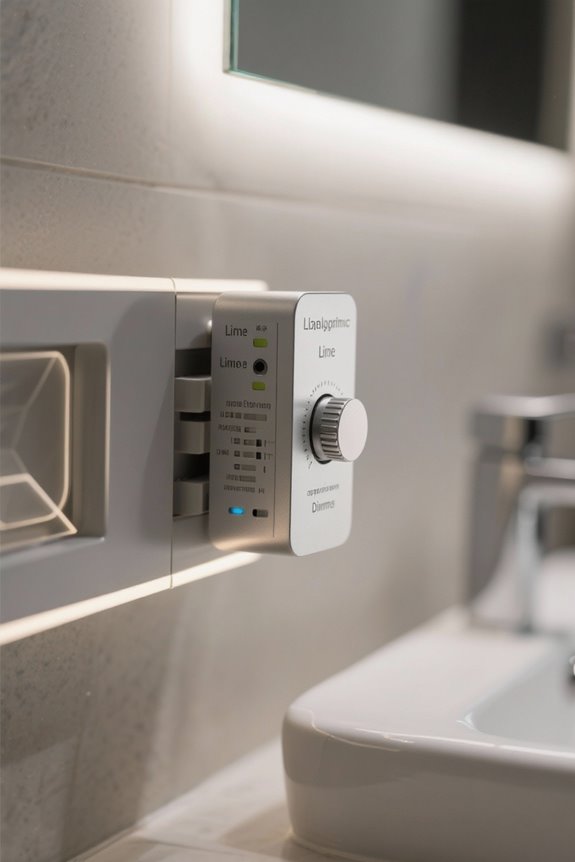
While the choice between linear and logarithmic dimmers greatly impacts the lighting experience, understanding their respective mechanisms offers essential insights for effective lighting design. Linear dimmers present a direct relationship between control signal input and light output, leading to predictable changes in brightness, ideal for straightforward applications. In contrast, logarithmic dimming curves enable softer linear adjustments, allowing for a more graceful dimming effect at lower light levels, enhancing the perceived light level for users. Furthermore, the combination of linear dimmers with logarithmic drivers can create a square-law dimming output, which improves energy efficiency while maximizing dimming range. Designers must navigate these differences carefully to optimize lighting systems for visual aesthetics and functionality, ensuring both user satisfaction and effective use of energy. Incorporating elements like affirmation wall decor can further enhance the ambiance, providing not only aesthetic appeal but also a positive emotional impact in spaces such as bathrooms.
Recommended Products

5-in-1 Forward and Reverse Phase Dimming: ELV / MLV / TRIAC / 0-10V / 1-10V / 10V PWM / Potentiometer.Versatile driver for most high-performance dimming applications: The Adaptive Pro 5-in-1 dimmable Class 2 drivers are designed to operate with any standard MLV / ELV / Incandescent TRIAC (forward phase) dimmer switch or can also be used with secondary side controls systems. Used commonly with Lutron and Leviton receivers and controls for secondary side dimming.

LED DRIVER 24V 200W Magnetic Dimmable LED Transformer Magnitude M200L24DC Inspired LED

【UNIVERSAL COMPATIBILITY】This 5-in-1 driver works with Triac/Phase/MLV/ELV/0-10V/Potentiometer/10V PWM dimmers and is compatible with most AC wall dimmers, including popular brands like Lutron and Leviton, as well as many other household dimmers. It can be used for a variety of applications, including 24V LED Strip Lights, 24V Power Supply, LED modules, LED bulbs, and more
Matching the Driver to the Dimmer
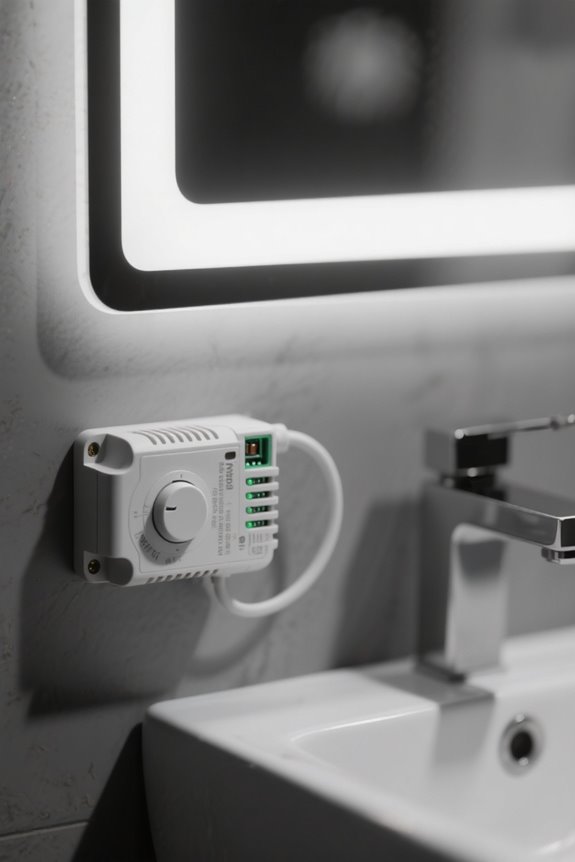
Selecting the appropriate driver for a dimmer is essential for achieving peak performance in any lighting system, as mismatched components can result in unpredictable dimming behaviors and diminish user satisfaction. Linear dimmers provide direct proportional output, but pairing them with logarithmic drivers enhances user experience by creating smoother shifts in brightness, aligning better with how humans perceive light levels. A prime example is 0-10V dimmers, which greatly benefit from logarithmic drivers to improve dimming effects. In dynamic settings, such as DMX-controlled applications, matching the driver’s output signal to the dimmer’s requirements guarantees ideal control and enhances overall functionality. Weight capacity varies significantly, ranging from 40 lbs to 50 lbs to support various items securely. Ultimately, effective matching of these components maximizes the usable range of the dimmer, particularly at lower light outputs where perceived brightness shifts dramatically.
Recommended Products

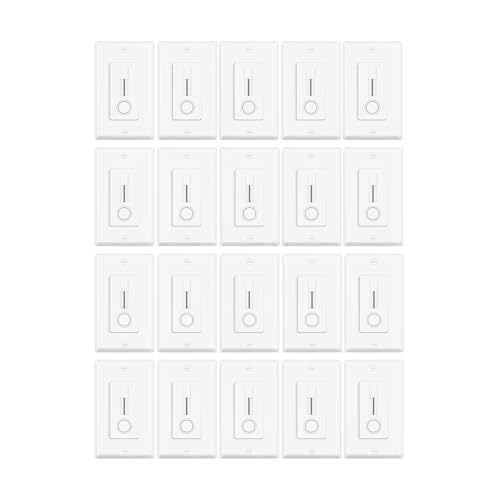
10 pack white 0-10V low voltage LED dimmer switch, 5%-100% dimming ability, provide the best dimming performance for dimmable LED lights.
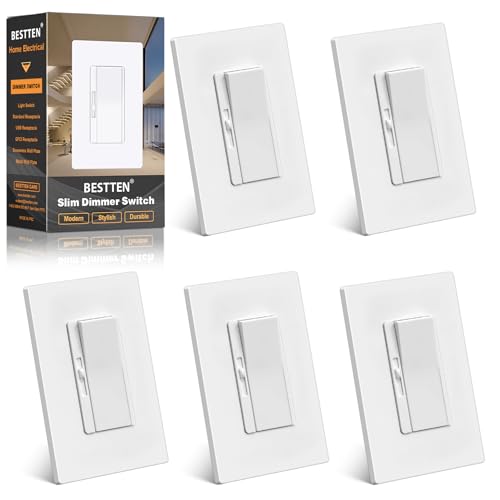
Works only with 0-10V controlled dimmable LED lights and drivers
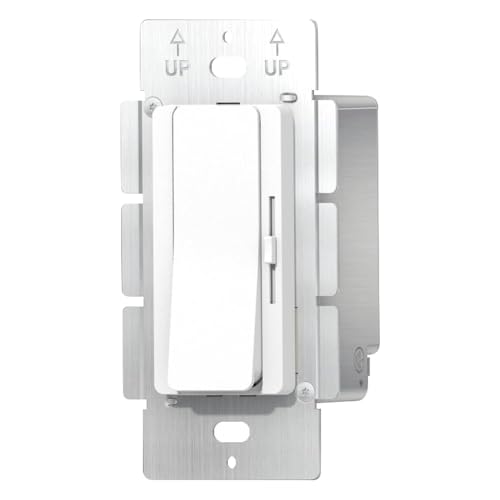
UL Listed class 2 standard 24v for 96W, 5 years warranty, input 120V, UL LISTED CONSTANT VOLTAGE driver+dimmer 2in1
Types of Dimming Curves
Understanding the various types of dimming curves is essential for optimizing LED lighting systems, as each curve interacts differently with light output and user preferences. The linear dimming curve delivers consistent brightness changes directly proportional to dimmer position, although it often does not align with human visual perception. In contrast, the logarithmic dimming curve exhibits a slower response at low levels, creating a more natural experience that aligns better with how the human eye perceives measured and perceived light. Many manufacturers typically use either linear or logarithmic dimming curves for effective performance, as the mismatch can result in undesirable flicker. Custom dimming curves, like S curves, further enhance light control, catering to specific applications and user preferences in brightness of the LED. One similarity to consider is that both dimming curves and expandable bathtub trays focus on enhancing user experiences, whether through optimal lighting or creating a spa-like atmosphere at home.
Recommended Products

【PRODUCT DESCRIPTION]】The 24-channel DMX512 decoder is specially developed for constant voltage LED lamps. It adopts advanced microcomputer control technology, which can convert the RDM-DMX512/2009 standard digital control signal widely used in the world into PWM (pulse width modulation) control signal.It has 24 output channels, each channel can output a maximum current of 5A, and can achieve 65536 levels of grayscale control. It can be used to control monochrome, color temperature, RGB, type lamps.

Industrial level DMX512 Decoder: 5 channels PWM output and common anode.Comply with the DMX512 standard protocols

1st Compatible with the DMX512 standard protocols.
Selecting Dimming Curves in Eldoled Drivers
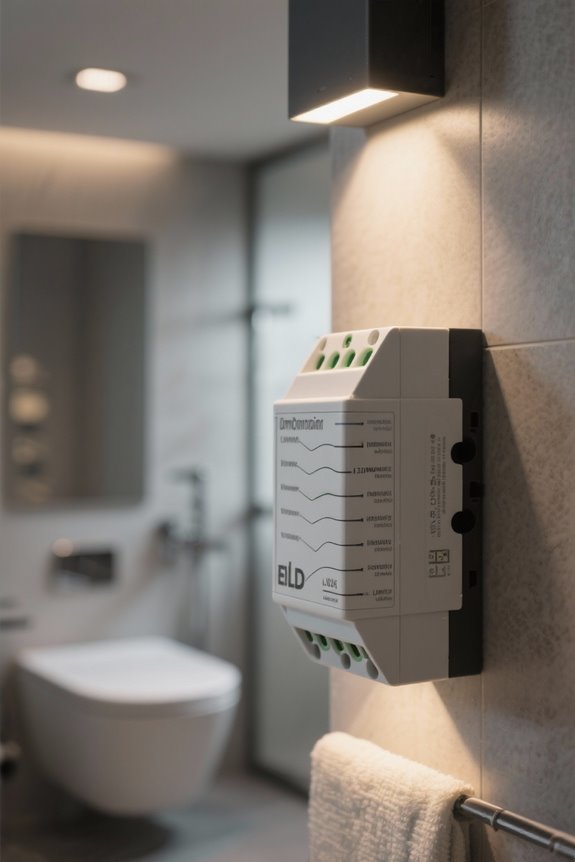
How can one efficiently select dimming curves in eldoLED drivers to enhance their LED lighting experience? eldoLED drivers provide an array of customizable dimming options, including linear, logarithmic, soft linear, and square curves, each offering distinct advantages depending on user preferences and application requirements. Choosing the right dimming curve is essential for optimizing light output, especially at low levels where the visual needs of users come into play. The FluxTool software facilitates the configuration of these drivers, ensuring alignment with DALI controllers that typically utilize linear dimming. By effectively employing logarithmic dimming, one can maximize smooth dimming performance, particularly when using 0-10V dimmers, enhancing the overall lighting experience and meeting specific installation challenges seamlessly. Additionally, using energy-efficient LED technology can further enhance the lighting experience by reducing electricity costs and environmental impact.
Frequently Asked Questions
What Is the Best Dimming Curve?
The best dimming curve, considering dimming quality comparison and user experience factors, tends to be logarithmic due to its compatibility with human perception effects, while ensuring ideal brightness selection and energy efficiency analysis across various application suitability scenarios.
Do Some LED Bulbs Dim Better Than Others?
Some LED bulbs do dim better than others, influenced by LED performance, dimming technology, light quality, color temperature, heat management, flicker issues, dimming compatibility, energy efficiency, lifespan comparison, and specific application needs.
What Is the Difference Between Linear and Logarithmic Dimming Curves?
Linear dimming curves provide a direct linear response in light output, while logarithmic dimming curves offer a slower, smoother progression, enhancing user preferences and dimming performance in lighting applications despite differences in perception, color consistency, and energy consumption.
How Long Does LED Ghosting Last?
Like a whisper of light lingering at dusk, LED ghosting duration varies from milliseconds to several seconds. This ghosting phenomenon, influenced by light quality differences and dimming curve implications, affects human perception and necessitates troubleshooting for peak performance.