As an Amazon Associate, we earn from qualifying purchases. Some links on this site are affiliate links at no extra cost to you. Our recommendations are based on thorough research and editorial judgment.

The Role of Hose Length in Shower Accessibility

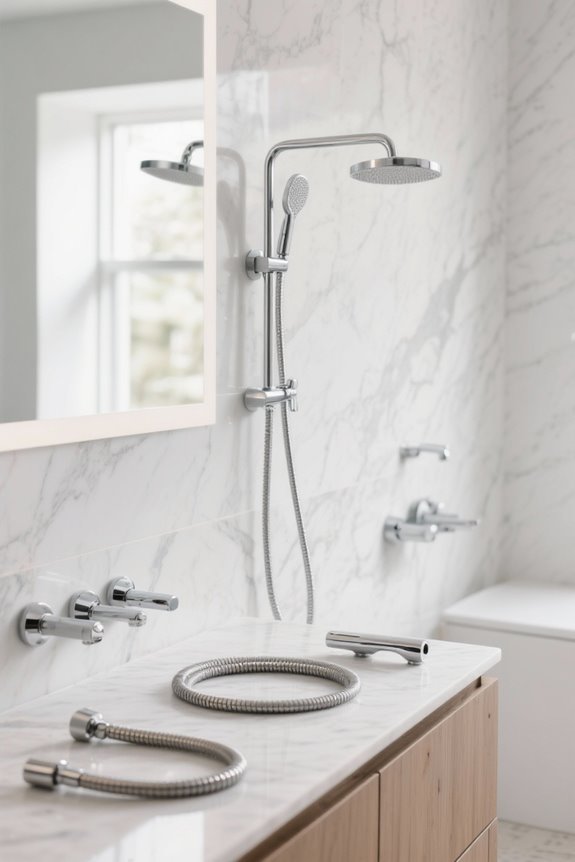
Hose length is crucial for shower accessibility, as it guarantees ease of use for individuals with various mobility needs. Recommended lengths include a minimum of 59 inches, with 63 inches for standing showers and 80 inches for bathtubs. Longer hoses enhance safety by providing freedom of movement, reducing risks of slips, and accommodating different user heights. Utilizing durable, kink-resistant materials further improves functionality. Understanding these specifications can lead to better choices for enhancing comfort and usability in the bathroom. More insights await regarding features and selection criteria.
Key Takeaways
- Hose length is essential for accommodating users with disabilities, ensuring both standing and seated individuals can use the shower effectively.
- A minimum hose length of 59 inches is recommended to ensure accessibility and ease of use for various user heights.
- Longer hoses, between 63 to 80 inches, provide increased freedom of movement and enhance safety by reducing awkward postures while showering.
- Adjustable-height shower heads, combined with adequate hose length, facilitate flexibility and comfort for diverse user needs.
- Kink-resistant hoses help maintain water flow and prevent tangling, which is crucial for users requiring mobility aids.
Importance of Hose Length for Accessibility
You may be interested



When considering the accessibility of handheld shower units, the importance of hose length cannot be overstated, as it plays a critical role in meeting the diverse needs of users, particularly those with disabilities. An ideal hose length, ideally a minimum of 59 inches, guarantees usability across various user positions, whether standing or sitting. This length allows users to easily maneuver the handheld shower head, enhancing showering comfort and reducing strain. Commercial standards suggest lengths of 63 inches for standing showers and 80 inches for bathtubs, promoting freedom of movement. Additionally, personal height and installation type can influence preferred length, reinforcing the necessity of considering individual user requirements. Proper hose length greatly enhances safety by minimizing awkward movements that could lead to falls. A well-thought-out selection of rustproof materials such as stainless steel for shower curtain rods can also contribute to a more durable and aesthetically pleasing bathroom environment.
Recommended Hose Lengths for Different Shower Types
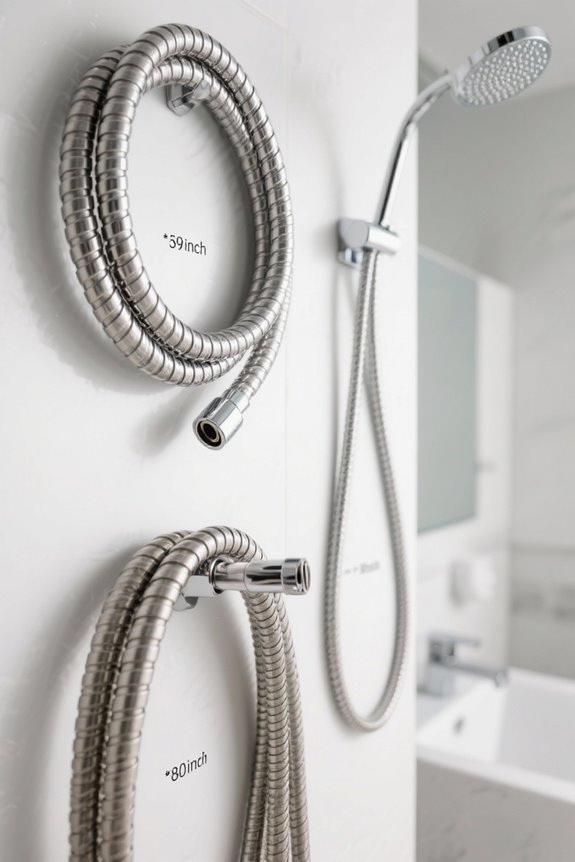
Selecting the proper hose length for handheld shower units is vital for optimizing user experience and accessibility across various types of showers. For standing showers or shower cabins, a recommended hose length of 63 inches provides adequate freedom of movement, guaranteeing comfort during use. In contrast, bathtubs benefit from a longer hose length of 80 inches, which accommodates the full range of motion, allowing users to wash comfortably in various positions. Moreover, hand-held shower units must have a hose length of at least 59 inches to guarantee accessibility for individuals with different mobility needs. It is important to evaluate personalized measurements based on user height and installation type, as this will enhance accessibility and comfort for those requiring assistance during showering. Choosing the right hose length is akin to selecting the perfect compact design for a tankless water heater, as both factors significantly impact user convenience and space optimization.
Recommended Products

Includes showerhead, pressure balance trim with diverter and rough, handheld shower, wallbar, 63-in hose, wall outlet, and 9-in Raindance shower arm

Raindance promises a shower for everyone with different shapes, sizes, and spray modes - so you feel clean and rejuvenated.

Raindance promises a shower for everyone with different shapes, sizes, and spray modes - so you feel clean and rejuvenated.
Benefits of Adjustable-Height Shower Heads
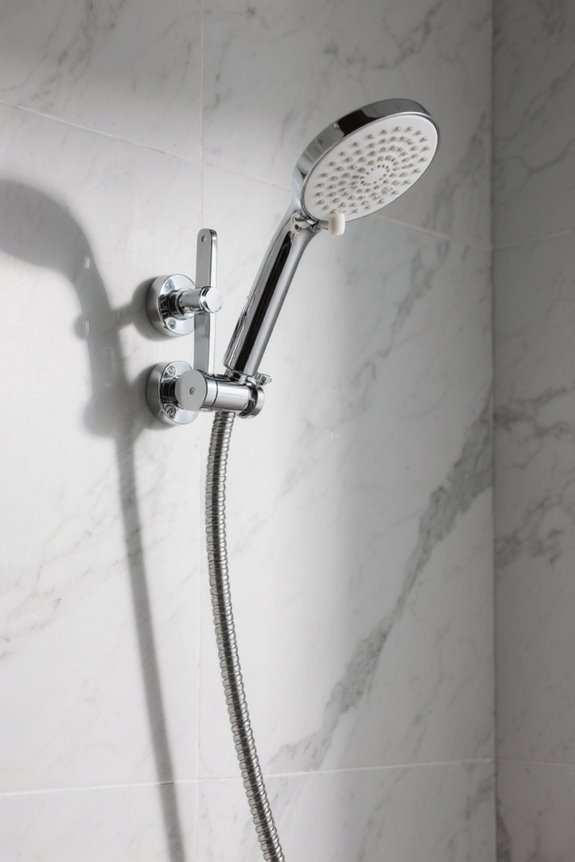
Adjustable-height shower heads serve as a practical solution for users seeking a tailored showering experience, as they allow individuals of diverse heights and abilities to customize the height of the water source to their specific needs. These devices typically feature a vertical slide bar for installation, accommodating both standing and seated individuals, enhancing independence while showering. Compliance with ADA guidelines guarantees that the installation does not obstruct grab bars, which are essential for safety. Additionally, a minimum hose length of 59 inches allows easy access, promoting clear floor space around the shower. By reducing awkward postures, adjustable-height shower heads are beneficial for people with disabilities, making showering a safer and more comfortable experience while aligning with code compliance requirements. Many water-saving shower heads incorporate high-efficiency designs, allowing users to conserve water without sacrificing pressure or performance.
Enhancing Safety With Longer Hoses
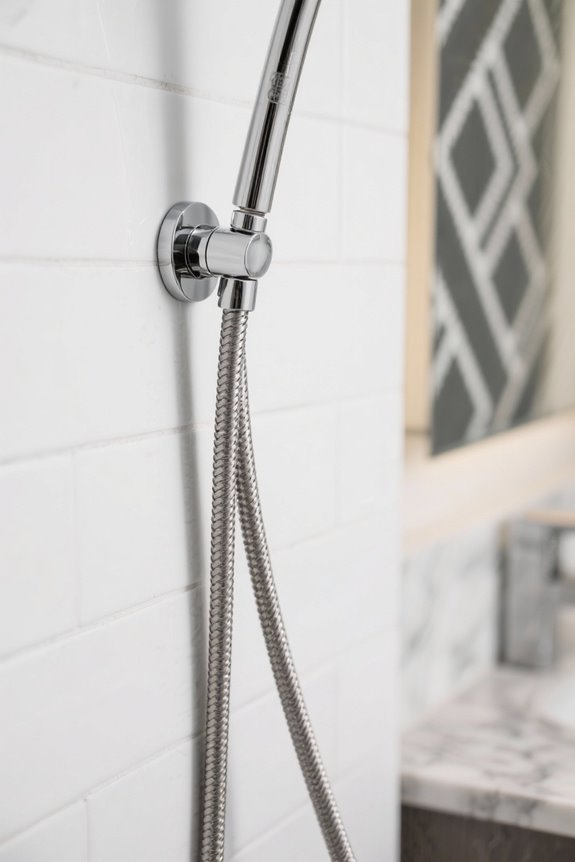
A longer shower hose, typically measuring between 63 to 80 inches, greatly enhances safety and usability for individuals with disabilities, allowing for greater freedom of movement while showering. These longer hoses are essential for shower safety, offering a comfortable reach for handheld shower units, whether users are seated or standing. They considerably reduce the risk of awkward positioning, mitigating the potential for slips or falls. When using mobility aids, longer hoses simplify transfers in and out of the shower, minimizing extensive movements. Additionally, kink-resistant materials guarantee reliable water flow, preventing tangling that could obstruct accessibility. Overall, opting for longer hoses fosters a safer, more user-friendly shower environment that accommodates various needs while prioritizing comfort and efficiency. Furthermore, shower flow restrictors can be integrated to enhance water efficiency without compromising the comfort provided by longer hoses.
Recommended Products

Innovative design: Long lasting hose materials are housed in sturdy metal

Premium Stainless Steel Structure: chrome plated finish resists corrosion and fading, and the inner tube is made of high quality PVC material. 63 inches portable shower hose which features unique double lock design with built-in waterproof washers.This handheld shower head hose replacement is easy to install without tape.

Full length comfort: 80-inch shower hose for great freedom of movement.
Compatibility With Various User Heights
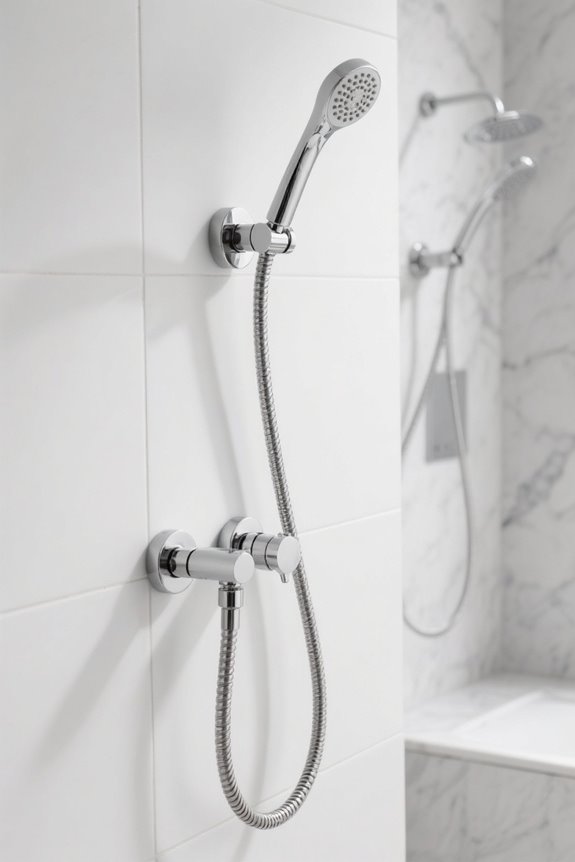
With longer shower hoses improving safety and usability, it’s important to contemplate their compatibility with users of various heights. Standard hose lengths for handheld showerheads are at least 59 inches, accommodating individuals with diverse mobility levels and height requirements. In commercial settings, a 63-inch hose length offers adequate freedom of movement for users showering while standing or sitting. For bathtubs, an even longer hose of 80 inches is recommended, enhancing accessibility for a wider range of user heights. Adjustable-height showerheads mounted on vertical slide bars further facilitate personalized adjustments, allowing users to customize their showering experiences based on individual preferences. Proper hose length considerably impacts usability, ensuring users can access hard-to-reach areas comfortably and effectively. Additionally, bathroom over-door organizers with multiple tiers can enhance storage space, keeping the shower area tidy and improving overall accessibility.
Material Quality Impacting Hose Length Performance
Material quality plays an essential role in determining how effectively a shower hose performs at various lengths, influencing user experience considerably. Hoses constructed from durable metals or high-quality plastics deliver improved longevity, preventing undesirable kinks and guaranteeing reliable water flow. For greater shower accessibility, hose lengths of at least 59 inches accommodate users with mobility limitations, allowing for comfortable maneuverability whether standing or seated. Kink-resistant hoses further enhance performance by minimizing twists, which can impede movement, particularly for handheld spray units used by individuals with varying heights. Selecting hoses made from resilient materials not only supports consistent performance but also ensures that all users benefit from an adaptable and efficient showering experience, setting a vital standard for modern bathroom fixtures. Some cabinet door organizers, such as the Command Large Caddy, also emphasize the importance of material quality to ensure durability and ease of installation.
How Length Affects Shower Experience and Comfort
When considering how shower hose length affects the shower experience and comfort, it becomes evident that the distance between the showerhead and the body plays an essential role in user satisfaction. A minimum hose length of 59 inches for handheld shower units allows users to effectively reach all areas while promoting accessibility. Commercially, a standard length of 63 inches enhances freedom of movement, while bathtubs benefit from an extended 80-inch hose, improving overall comfort. Longer hoses not only eliminate feelings of confinement but also support users in various positions, whether seated or standing. Personal height and installation type further highlight the need for customization, as a suitable hose length appreciably contributes to user convenience and safety during use, ultimately elevating the overall shower experience. Additionally, adjustable shower heads provide flexibility in angles and spray functions, further enhancing comfort and personalization.
Selecting the Right Hose for Your Needs
Selecting the right shower hose is vital for guaranteeing maximum accessibility and comfort, particularly for individuals with varying needs or physical limitations. A standard hose length typically ranges from 63 inches for standing showers to 80 inches for bathtubs, enabling freedom of movement. When addressing accessibility needs, a minimum length of 59 inches is essential for handheld shower units, allowing greater usability. Users should consider their height and shower installation type, as longer hoses often provide ideal comfort by accommodating diverse shower head placements. Additionally, selecting durable materials, such as robust plastics or metal, guarantees longevity and safety. Kink-resistant hoses are also recommended, as they prevent water accumulation and maintain smooth flow, enhancing the overall experience for users with specific needs. Waterproof clocks promote improved scheduling in diverse environments and activities, highlighting their versatility beyond just timekeeping.
Resources for Finding Quality Shower Hoses
A wide array of resources is available for individuals seeking quality shower hoses, thereby guaranteeing accessibility and functionality in their bathing routines. Retailers such as DIY stores, specialty bathroom outlets, and online platforms provide a variety of options. Recommended lengths include 63 inches for standing showers and 80 inches for bathtubs, catering to diverse bathing scenarios. It is advisable to choose certified hoses that guarantee drinking water safety, minimizing harmful contaminants. Additionally, selecting durable materials—whether sturdy metal or modern plastic—contributes to longevity. Kink-resistant features also enhance usability by reducing wear and preventing water accumulation. For enhanced bathroom ambiance, consider using shower lighting options like the Juno LED Adjustable Shower Light, which offers versatile lighting features. Overall, consumers can find numerous quality options that meet their specific needs, balancing practicality and comfort in shower experiences.
Recommended Products

Freestanding Outdoor Shower Material: All the parts of this rbrohant outside shower kit are made of stainless steel, which is super rust resistant in the outdoors, perfect choice for your backyard, garden, poolside or beachside.

【Thermostatic Shower Faucet Set】Thermostatic rain shower system equipped with thermostatic shower valve. Pampers you with thermostatic technology that keeps water at a comfortable temperature each time you shower regardless of changes in water pressure. Brass construction ensures quality, longevity. It is the first choice for winter bathroom shower systems.

4-Function Shower System: Includes 6 body jets, overhead shower, side shower, and handheld shower. Four independent knobs and a control switch make it easy to combine sprays and adjust temperature. Minimalist design with hidden plumbing for a clean finish.
Frequently Asked Questions
Are Longer Shower Hoses Better?
Longer hoses enhance user comfort, offering improved shower flexibility and ease of use. They address installation factors while facilitating cleaning convenience and significant accessibility improvements, making them preferable for diverse needs in various showering situations.
What Are the ADA Requirements for Showers?
ADA guidelines dictate that shower design must include minimum dimensions, accessibility features, and safety standards. Meeting user needs requires adaptive equipment like handheld units, ensuring water conservation while allowing safe, comfortable use for all individuals.
Does Length of Shower Hose Affect Pressure?
The length of a shower hose markedly affects water pressure, influencing flow rate and user comfort. Variations in hose diameter, installation ease, and showerhead design can further complicate pressure dynamics for effective usage.
Is a Shorter Shower Hose Better?
Shorter shower hoses, while praised for space efficiency and installation simplicity, present safety concerns. Although they offer ease of use and maintenance ease, their compact design limits movement, often compromising comfort and accessibility for users.